This is not an easy piece to write. My blog usually celebrates stories, poems, children’s books, teaching resources, author spotlights, and moments of inspiration that remind us why we do what we do as educators and writers. But sometimes, the world around us demands that we look up from our books and ask harder questions.
This post may not fit the usual rhythm of this space, but that’s precisely why it belongs here. Because if we, as educators and storytellers, are not talking about what kind of world we are preparing our children for, then what are we teaching at all?
My hope is that this article offers perspective, clarity, and courage. That it gives you, not just as educators, but as Canadians, a lens through which to understand what’s happening, to recognize the patterns, and to feel empowered to say, “This is wrong.”
Patterns Repeating: Vilification and Dehumanization
History teaches us that mass tragedies never begin with violence – they begin with narratives.
For the Jewish community, the brushstrokes of hate often start with casting Jews as the root of society’s problems, followed by exclusion, scapegoating, and relentless public vilification. The propaganda that swept through 1930s Germany, where Jews were painted as outsiders and subhuman, did not erupt overnight. It grew slowly, normalized by silence and apathy.
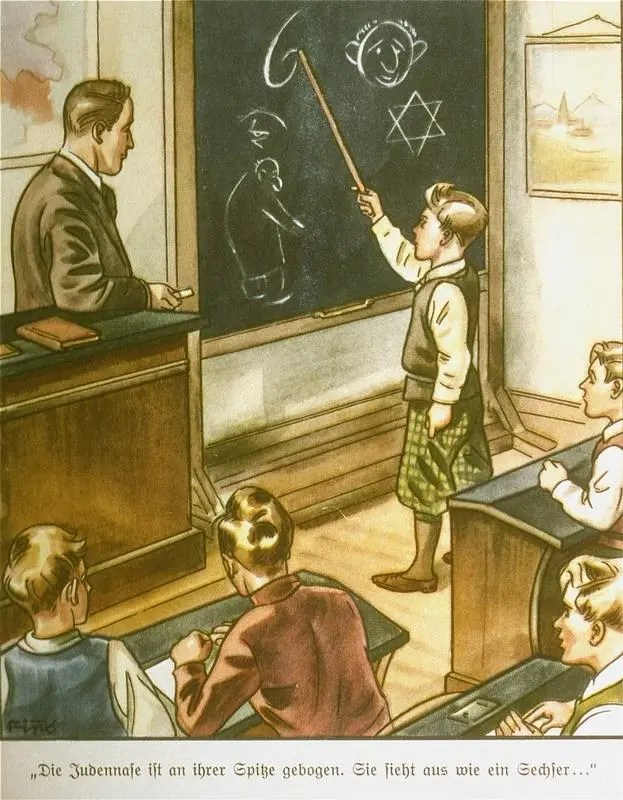
From the 1938 antisemitic children’s book The Poisonous Mushroom. The boy is drawing a nose on the chalkboard, and the caption reads: “The Jewish nose is crooked at its tip. It looks like a 6.”
That process feels disturbingly familiar today. From campus protests to mainstream news outlets, the narratives of victim and oppressor often exclude Jews or justify their suffering. The world’s response to Israel’s struggle since October 7, 2023, highlights this pattern unmistakably. Public marches and campus rallies are often framed as activism but are saturated with slogans and symbols reminiscent of older, dangerous prejudices.
Even more troubling is how these events are met with institutional ambiguity, tacit approval, or outright denial that hatred is taking place at all – especially when Jews are the targets.
A society desensitized to this moral contagion cannot thrive, nor can it survive. History has taught us this well. We said “never again.” Yet here we are, watching familiar shadows reemerge, cloaked in different uniforms, using different phrases, but spreading the same hate.
As educators, we carry a sacred responsibility to help students recognize when language and ideals are being twisted into tools of hate. Education is never neutral when it comes to moral truth. Silence, too, teaches – and if we are not intentional, it teaches indifference. By giving students the tools to identify antisemitism, even when it hides behind the language of advocacy, we not only preserve memory – we protect humanity.
Alarming Statistics: The Evidence of Escalating Hate
The numbers speak for themselves, and they paint a grim picture.
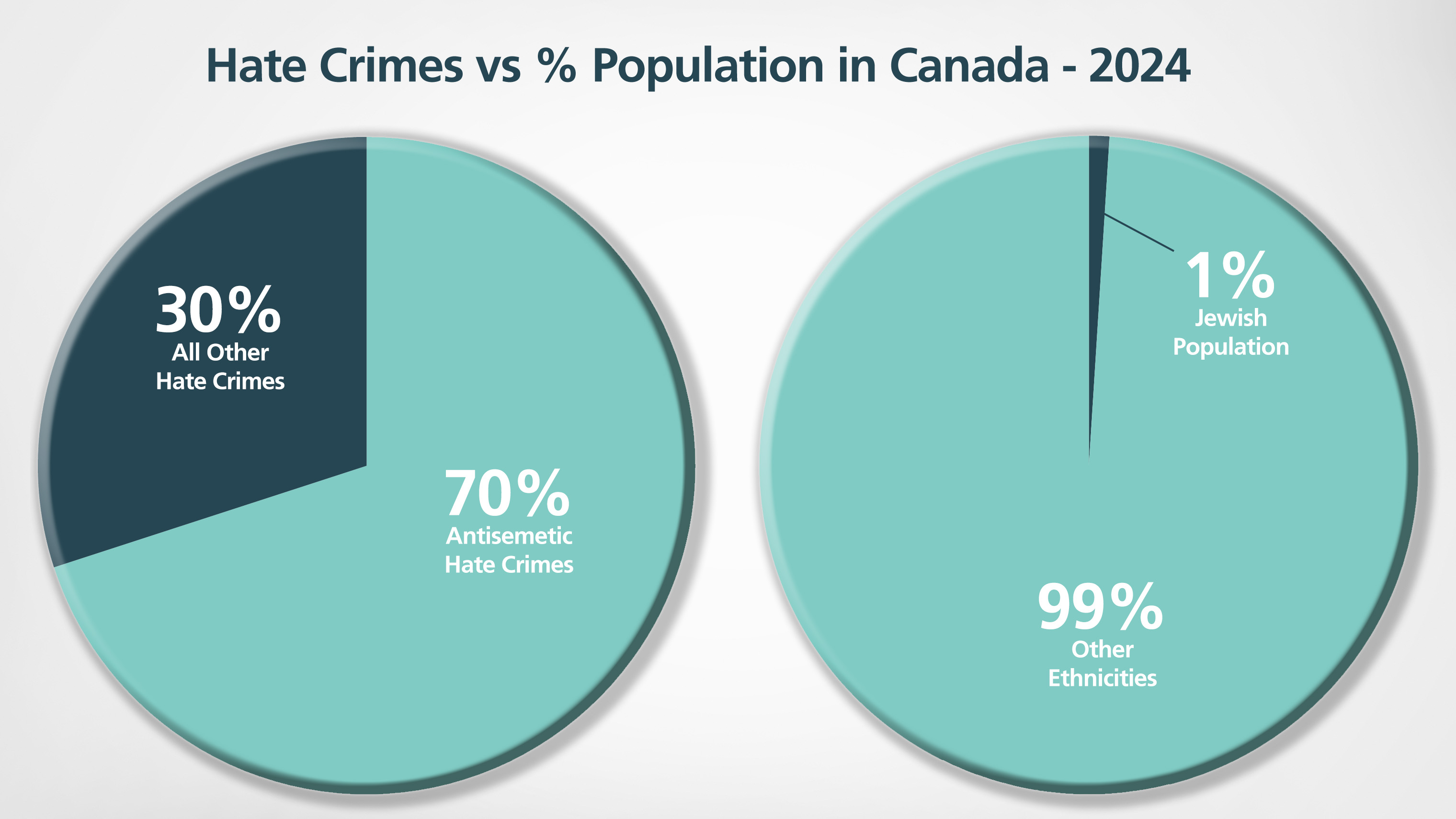
Despite Jews comprising less than 1 percent of the Canadian population, they remain the victims in about 70% of religion-based hate crimes reported to the police, according to recent national data (2023–2024).
In 2024 alone, B’nai Brith Canada recorded 6,219 antisemitic incidents, a staggering 124% increase in just two years. These included violent assaults, threats, and acts of vandalism. Police-reported hate crimes against Jews jumped 71% between 2022 and 2023.
Antisemitism today rarely announces itself outright. It arrives cloaked in moral language, woven into movements that claim to fight for justice. When hatred is framed as activism, it gains moral cover and social legitimacy. What was once condemned as prejudice is now too often excused as advocacy — a dangerous evolution that normalizes hostility toward Jews within the public conscience.
And this isn’t only happening on our streets – it’s happening in our schools.
According to the Government of Canada, nearly three-quarters of all reported antisemitic incidents in Ontario schools occurred within the Toronto District School Board (TDSB) and York Region District School Board (YRDSB)—two of the country’s largest and most diverse educational institutions. These incidents range from antisemitic graffiti to verbal harassment and threats.
These aren’t isolated acts of ignorance. They are warnings. Indicators that antisemitism is not just resurfacing – it is embedding itself into the environments where our children learn and grow.
Institutional Failure: Inclusion That Excludes Jews
Despite these realities, antisemitism often remains a blind spot in many anti-hate and equity initiatives. School boards, universities, and advocacy groups have introduced vital programs addressing anti-Black racism, anti-Asian hate, Islamophobia and LGBTQ+ inclusion. Yet, the fight against antisemitism is frequently absent, diluted, or dismissed as political rather than moral.
Government measures—like Ontario’s expansion of Holocaust education—are welcome but far from enough. Too many anti-hate toolkits and professional development sessions omit or minimize antisemitism, leaving Jewish students and staff isolated, misunderstood, or afraid to speak out.

Inclusion, when practiced selectively, becomes exclusion. When “everyone is welcome—except for Jews,” we are replicating the very logic of the ideologies we claim to oppose.
Diversity Misused: When Inclusion Gives Space to Hate
Diversity is one of Canada’s greatest strengths – an ideal that promises a society where all cultures and identities thrive. Yet, this noble concept can be manipulated, cloaked in progressive language that enables harmful ideologies to flourish in plain sight.
When hate, especially antisemitism, is disguised as advocacy or “legitimate discourse,” it grants prejudice a seat at the table. That distortion creates a paradox: principles meant to unite us are twisted to divide us.

The hate visible in our streets, our schools, and online is not a Canadian value. Canada’s strength lies in genuine respect and moral consistency, not selective empathy. If we fail to defend our shared values, we risk having them redefined by those with ill intent.
Diversity must never be a shield for hate, nor a pretext to silence Jewish voices. True inclusion protects every community and ensures diversity builds bridges – not walls.
Embracing Individual and Collective Identity: Unity as Our Strength
Canada’s multicultural identity is often described as a mosaic – a beautiful blend of differences. But while we celebrate our individuality, we must not lose sight of our collective identity as Canadians.
When society fractures into competing groups, when empathy is distributed based on identity, we lose the cohesion that sustains democracy and peace.

Our enduring strength lies in unity – in the shared values of dignity, respect, and justice. Hate marches on our streets are profoundly un-Canadian and must be unequivocally condemned. Just as we would never tolerate KKK marches, we must not excuse those that target Jews.
Without leadership and accountability, chaos fills the vacuum. Laws meant to protect all citizens must be applied consistently, or they lose their moral power. If we remain silent, we allow others to define what it means to be Canadian, and to rewrite our shared values in the process.
Bridge: From Awareness to Responsibility
The numbers are sobering, but statistics alone do not drive change—people do. Educators, writers, and community leaders hold an extraordinary power to shape the moral imagination of the next generation. Our classrooms, our words, and our silence each send messages about whose pain matters and whose does not.
The presence of antisemitism in our schools, particularly where inclusion should thrive, reminds us that awareness is not enough. What’s needed now is moral courage—the willingness to name antisemitism even when it is uncomfortable, and to ensure that every conversation about equity includes Jewish identity as part of our shared human story.
What We Can Do: Education as the Antidote to Hate
Education has always been the first line of defense against ignorance—and the most enduring force for empathy.
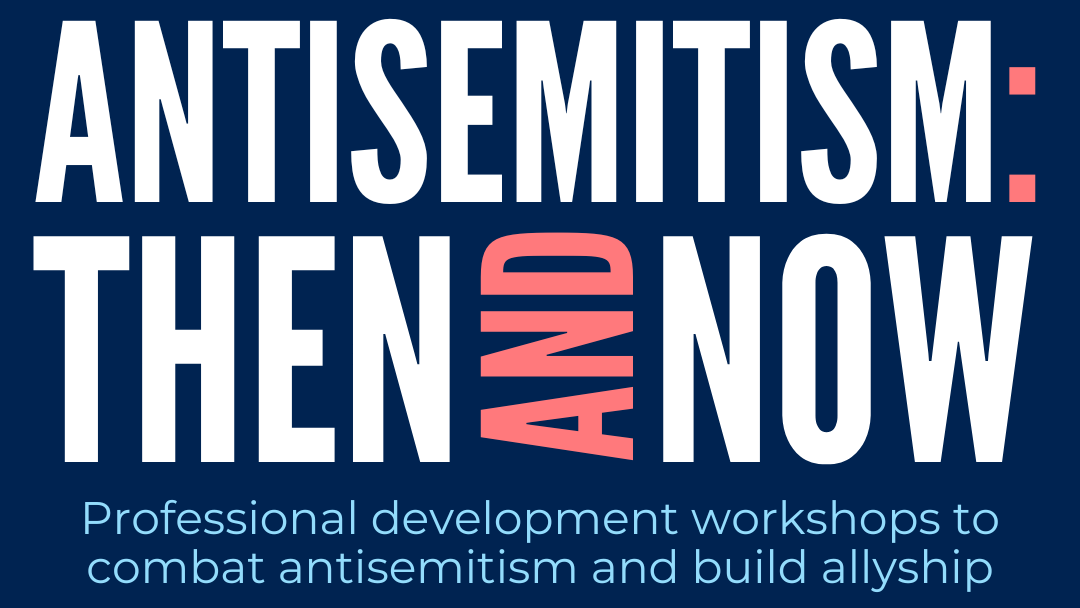
To counter antisemitism, we must make its study and recognition a living part of our educational culture, not a historical footnote. That means ensuring professional learning, curriculum design, and classroom conversations reflect a deep understanding of antisemitism – its history, its modern expressions, and its devastating consequences.
This isn’t about politics. It’s about humanity.
When educators frame these lessons through universal values – fairness, dignity, and moral clarity – they help students see that hate doesn’t exist in isolation. It grows in silence, and it spreads when unchallenged.
We can model true inclusion by:
- Naming antisemitism explicitly in anti-hate policies.
- Including Jewish voices and stories in literature and classroom conversations.
- Teaching critical literacy, so students can recognize when “advocacy” masks prejudice.
- Responding consistently – in tone and in policy – to protect all students equally.
These small acts build moral resilience. They teach that being Canadian means standing up for one another, even, and especially, when it’s uncomfortable.
A Call to Courage
#NeverAgain is not a slogan – it’s a promise. Yet for the past two years, institutions we counted on, to remind us of the dangers of forgetting, are sitting idly by, and in some cases, allowing it to take root in their spaces, yet again.
The same mechanisms – scapegoating, vilification, institutional neglect, and social normalization – are again visible today.
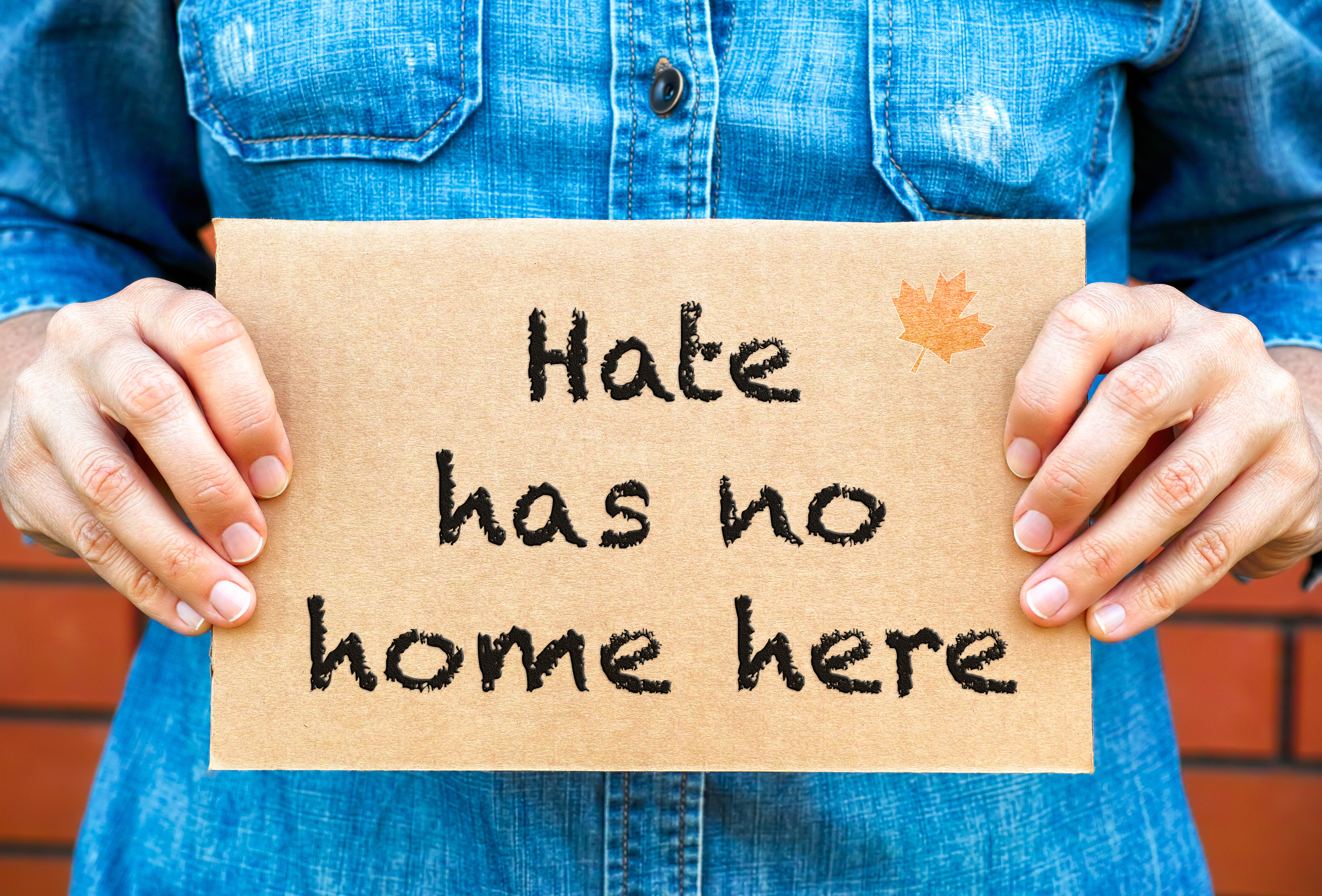
To stay silent now is to let others define what it means to be Canadian, and what it means to be human. To speak up is to affirm that our values are not negotiable.
As educators and writers, we hold a quiet but profound power: the power to shape conscience. The classroom, the page, the conversation, each can become a place where clarity and compassion take root.
Antisemitism will not vanish on its own. But through education, truth-telling, and moral conviction, we can ensure it never finds comfort here again.
Lora
It is my hope that, as educators, we can lead thoughtful conversations about empathy, respect, and truth in our classrooms. If you are looking for a simple place to start, the Antisemitism Teacher Toolkit provides ready-to-use activities and discussion prompts to guide meaningful dialogue.
Because what we teach, and the conversations we choose to have, shapes the next generation’s understanding of justice, inclusion, and humanity.

 Words On A Limb
Educators play a vital role in shaping minds. They need to provide a counter balance to the hate parading on our streets. Otherwise, as you’ve stated, it becomes normalized and is deemed valid. The stats you provided are frightening. Thank you for this very meaningful piece.
LikeLike