A Book’s Journey

Going from an idea to a book, Stan Morris shares how Sarah’s Spaceship Adventure came to be.


A Book’s Journey
By Stan Morris

It is late at night, and I am not asleep.  This is not an uncommon occurrence, and neither is what happens next.  A vision forms.  In this instance, it is of a girl/woman, maybe twenty years old, maybe eighteen.  I hope she’s at least seventeen, because she’s not wearing any clothes, and her hands are tied behind her back.  Continue reading

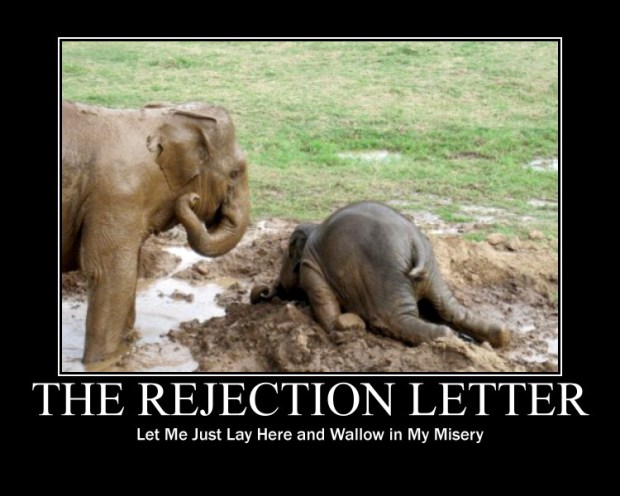
R-R-R-Rejected!

Great article Lynette. Keep going!

Lynette Noni's avatarLynette Noni

rejection-letter1

Rejection sucks. There’s no way to sugar-coat it. In any area of life, rejection – in one form or another – is crushing. It hurts. It chips away at our self-esteem, it kicks the metaphorical spleen of our pride, and it shreds the lingering vestiges of our hope. It’s just plain uncool.

But you know what?

Rejection is also one of the best things we can ever experience.

Without feeling the sting of rejection, we would never have the opportunity to become more than what we are. We’d never need to make the tough choices in life, the decisions addressing what matters most and what price we’re willing to pay to see our dreams come to pass. We would never get to ask ourselves, “What am I truly passionate about?”

We would also never have a reason to then ask, “Are my dreams worth my blood, sweat and tears?”

And…

View original post 1,197 more words

Our newest page: Spotlight on Authors

Hello everyone.  Words on a Limb would like to introduce its newest page, Spotlight on Authors.  It will feature staff interviews with published authors.  We will get a first-hand look at the challenges and rewards of being a writer as well as hear their personal stories.

Check out our latest interviews here.  Please feel free to comment or ask the author any questions you may have in the “Leave a reply” box.

Authors, if you would like to be featured on Spotlight on Authors, please contact us at wordsonalimb@bell.net.

Tips for Young Authors

What Makes a Good Story?
By Aaron Shepard


Good writers often break rules – but they know they’re doing it!

Here are some good rules to know.

Theme

A theme is something important the story tries to tell us—something that might help us in our own lives. Not every story has a theme, but it’s best if it does.

Don’t get too preachy. Let the theme grow out of the story, so readers feel they’ve learned it for themselves. You shouldn’t have to say what the moral is.

Plot

Plot is most often about a conflict or struggle that the main character goes through. The conflict can be with another character, or with the way things are, or with something inside the character, like needs or feelings.

The main character should win or lose at least partly on their own, and not just be rescued by someone or something else. Most often, the character learns or grows as they try to solve their problem. What the character learns is the theme.

The conflict should get more and more tense or exciting. The tension should reach a high point or “climax” near the end of the story, then ease off.

The basic steps of a plot are: conflict begins, things go right, things go WRONG, final victory (or defeat), and wrap-up. The right-wrong steps can repeat.

A novel can have several conflicts, but a short story should have only one.
Continue reading