
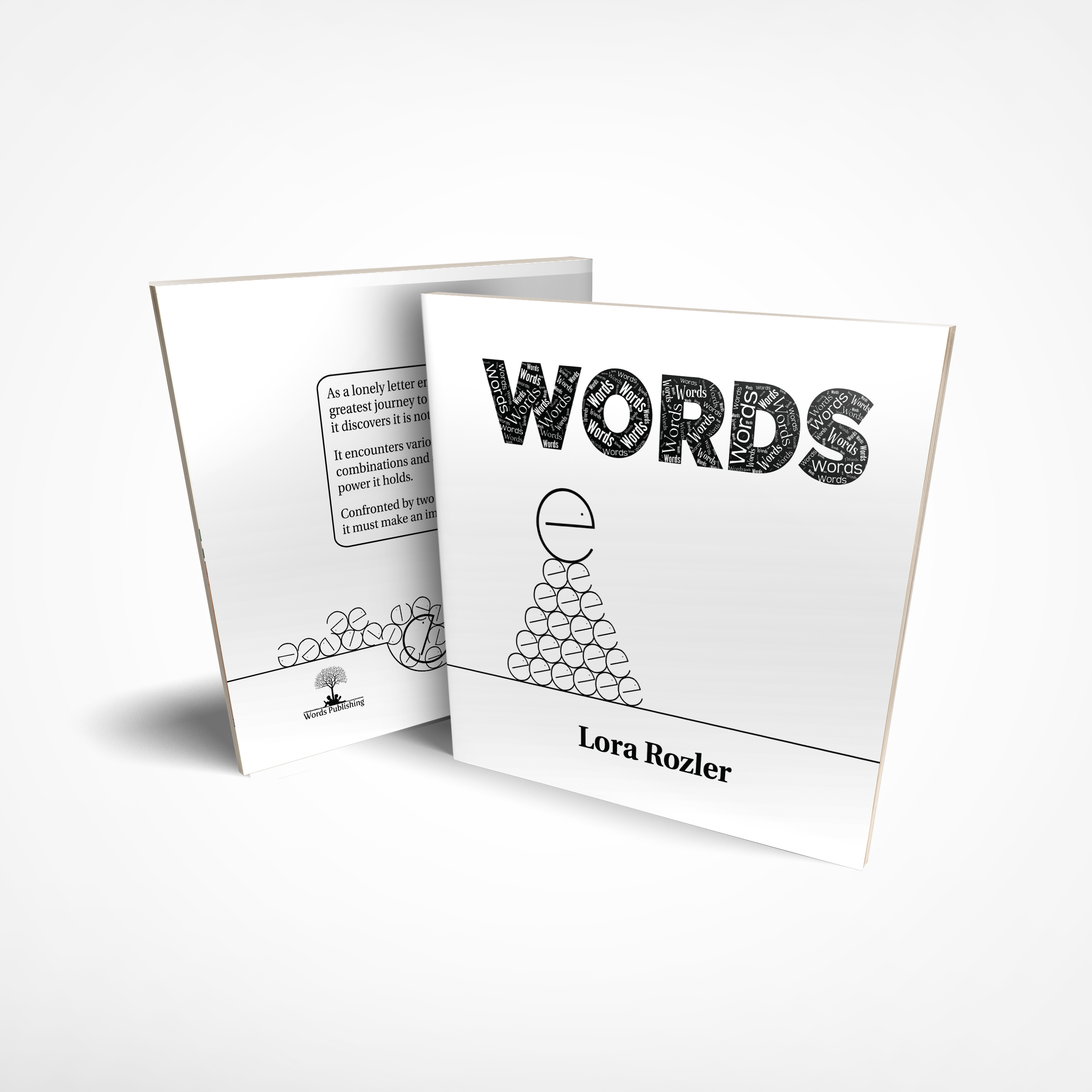
When I first wrote Words, I never imagined how far it would reach. What began as a simple poem, then story about the impact of language quickly became something more. It found a home in classrooms, in family spaces, and in conversations between children and adults. I’ve received messages from teachers using it during morning meetings, parents reading it at bedtime, and students who’ve written to say it made them think differently about the way they speak.
Words opened a door. A door into how the things we say—to others and to ourselves—carry weight. That book was about language, about kindness, about using our words to build rather than destroy. But for a long time, I’ve known there was another story waiting—one that would look inward instead of outward.
And so, I’m proud to introduce The Sack—a thoughtful sequel to Words.
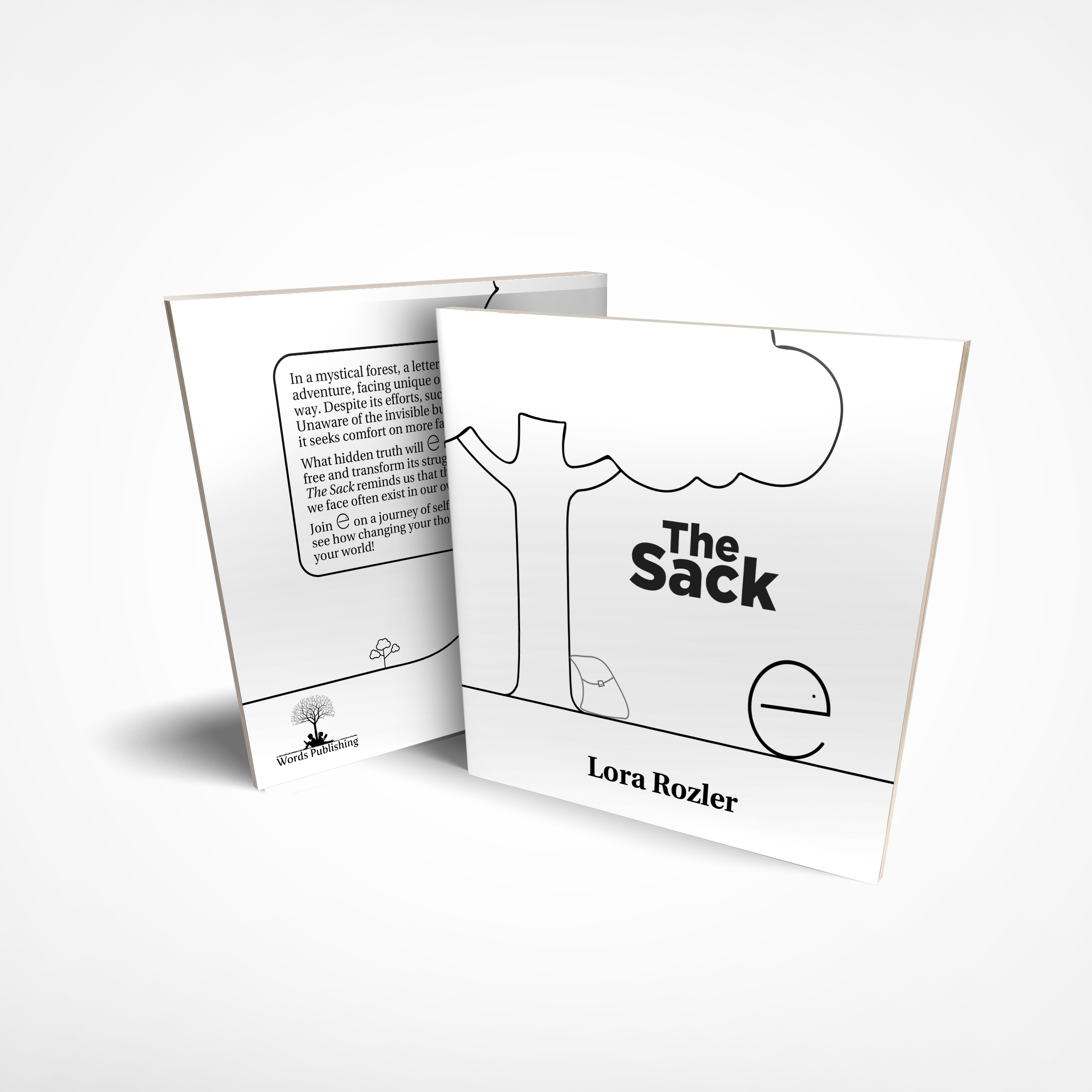
What’s in The Sack?
Where Words explored the language we share aloud, The Sack explores the language we speak to ourselves—the thoughts that live quietly in our minds.
In this story, we meet a familiar character: e. Many readers connected with e in Words, and in this new journey, we follow e once again—this time as it struggles with something less visible, but just as heavy: its thoughts.
Like many children (and let’s be honest, adults too), e carries a metaphorical sack—one that gets heavier with each negative thought it holds onto. “I’m not good enough – doubt“, “No way I can do that – fear” and “What will people think it I fail – worry“. These quiet whispers build up until the sack becomes too much to carry.
But what happens when we pause to notice what’s inside that sack? What if we could choose to let some of those thoughts go?
A Story About Inner Dialogue
The Sack is not just a children’s story—it’s an invitation. An invitation to reflect, to pause, and to listen closely to the stories we tell ourselves.

It’s about emotional awareness. It’s about mindfulness. And most importantly, it’s about agency—the quiet, empowering truth that we get to choose which thoughts we hold onto, and which ones we release.
Educators, in particular, have called Words a valuable classroom resource, and I believe The Sack will be no different. It offers a gentle, age-appropriate way to begin conversations about mental wellness, self-esteem, and the importance of positive self-talk.
Whether it’s shared during a read-aloud, a guidance lesson, or simply left on a shelf for a child to discover, The Sack offers space—space to feel, to think, to explore new challenges.
A Book for All Ages
Though The Sack is written for children (4-12), its message speaks to all of us. After all, we all carry sacks—some heavier than others. And we all need reminders now and then that we can choose what stays and what goes.
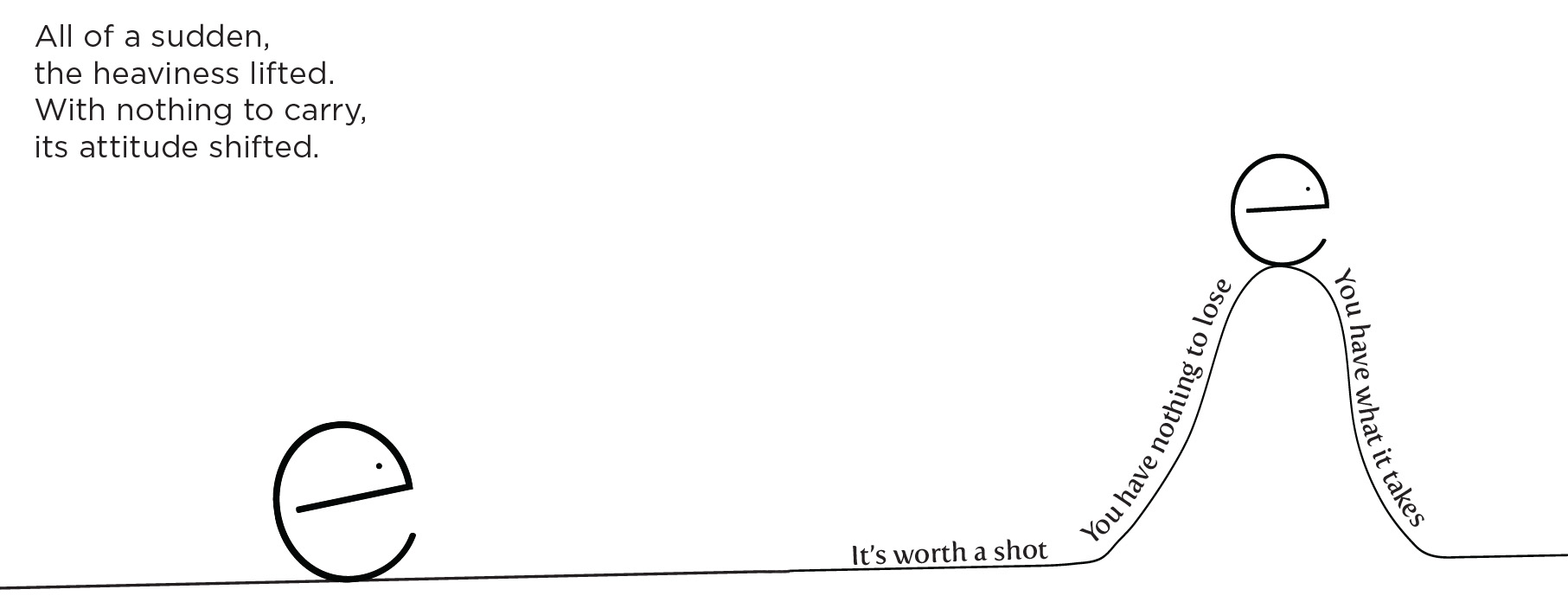
I wrote this book with my Kindergarten students in mind, but also with my own children in my heart. I wrote it for every quiet child who doubts their worth, and for the adult they’ll one day become.
If Words was about what we give to the world, The Sack is about what we carry inside—and how, by choosing what we hold onto or let go, we can rewrite our story and find success.
Whether you can or you can’t,
– The Sack by Lora Rozler
it all begins with a thought.
I hope this story finds a place in your heart, your home, or your classroom. And if it invites even one person to put down a heavy thought and pick up a lighter one, then it’s done exactly what I hoped it would.
Thank you, as always, for walking alongside me—on this limb, with these words.
Teaching Resources Available
To help bring the story into learning spaces, I’ve created free downloadable resources—including reflection questions and writing/drawing prompts—available at lorarozler.com.
Whether you’re planning a mindfulness unit, a social-emotional circle time, or simply want to explore metaphor and meaning, these tools are there to support you.
The Sack is available now on Amazon and other online retailers. If you enjoyed Words, I truly believe this book will resonate just as deeply—perhaps even more so, as we take the journey inward.
Let’s help children (and ourselves) learn to let go of what no longer serves us—one thought at a time.
With warmth and gratitude,
Lora

 Words On A Limb