
 Whoever said sticks and stones may break my bones, but words will never hurt me surely didn’t know what they were talking about!
WORDS HURT!
Bones heal, but left unchecked, the pain caused by words can linger for years.
We can all relate, I’m sure!
A word uttered that stayed with us too long. A word spoken we wish we could take back. A word unsaid we yearned had come to life. Whether we heard it, spoke it, or wished it to be said, one thing is for sure – words, or lack thereof, have a profound impact on our well-being and the way we see ourselves in relation to the world.
Words can build and shape our self-esteem or just as easily tear us apart. The world can be seen as a loving place or the world can seem cruel.
What takes only seconds to utter can leave an imprint for a lifetime.
Over the last couple of weeks it became my goal to share this message with my students. We read many books about friendship, kindness and the power of words, beginning with my very own picture book, Words. Since its original publication in 2015, I have had the pleasure of speaking with many parents and educators who used the book to springboard discussions with children around its various themes: belonging, fitting-in, bullying, friendship, making positive choices, character education, growth mindset, building a community, empowering others, etc. This list is not exhaustive -depending on the angle and your students’ age group, Words can be used to build on many important learning skills and themes.
I’m happy to share these ideas with you in my updated Words Companion Kit,
consisting of classroom lessons and activities, as well as teaching resources.
ACTIVITIES TO TEACH THE IMPACT OF WORDS
Think Before You Speak – Prior to the lesson, cut out an outline of a person (gender-neutral). To avoid race-specific figures, you may want to steer clear
of skin colour construction paper.

Begin by introducing students to their new classmate (you may want to use a number as a name in order to avoid associations with students). Ask students to think of mean and hurtful things they may have heard before. You may want to start by giving an example (i.e., “I once heard …”). Then invite students, one at a time, to come up and direct mean statements at Eleven (i.e., “You look funny” or “I don’t like you”).
 Each time a student makes a hurtful comment, ask them to rip off a piece of Eleven’s’s body and hang onto it. Continue until Eleven is significantly torn up. Then challenge students to reflect on how Eleven must be feeling based on what transpired. Eleven is obviously really hurt. This is where I like to interject and point out phrases we often use to convey wounded feelings, such as feeling torn up, having a broken heart. The emotional context gives these words powerful meaning.
Next, encourage students to think of ways to make Eleven feel better. Certainly an apology would help. Invite the students who insulted Eleven to come up and apologize, while taping its torn limb back with a band-aid. When all the tears have been bandaged, ask students reflect on how the new student looks (better than before but still damaged, broken, hurt, wounded).
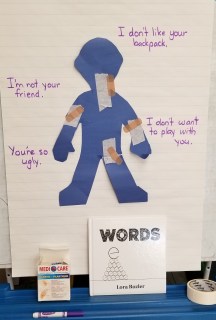 This may be a good time to decipher between physical wounds and emotional ones. Invite students to reflect on the saying, Sticks and stones may break my bones but words will never hurt me. What does it mean? Is it true? Can we change that statement to be reflective of the truth? You may want to collectively write up a revised saying and hang it alongside Eleven. Place Eleven in a visible place around the room as a constant reminder to always think before we speak. As a follow-up, you may want to have students write a reflection about what they learned from this activity.
TAKE-AWAY: Words cannot be unsaid. No matter how much we apologize, their damage cannot be reversed. Though band-aids help with physical ailments, they cannot be placed on a person’s heart. Hurtful words create scars inside us, and if we let them, they can last a lifetime.
Words are like a Tube of Toothpaste – For this lesson, you will need a tube of toothpaste and a plate. Begin by asking students what toothpaste is used for. Brushing our teeth keeping our mouth healthy. Point out to students that toothpaste is very much like words.  Invite a volunteer to squirt toothpaste onto a plate. When he or she is done, ask them to put the toothpaste back into the tube. Obviously this will not be possible. The idea is to demonstrate that much like toothpaste, our words work the same way. When we use the right words to empower others, they bring people joy – just as the right amount of toothpaste does to our teeth. However, if we are not careful with the toothpaste, and we squeeze a lot out, we can easily make a big mess. The same is true with our words – if we’re not careful and if we don’t think before we speak, we can hurt others with the things we say.
TAKE-AWAY: Once a word is spoken, it cannot be taken back no matter how much we apologize and try. While we may forget what we’ve said, the person on the receiving end will remember it for years. Invite students to share experiences and examples of this, and perhaps even share your own stories.
Wrinkled Hearts – For this lesson, you will need to prepare a large cut-out of a heart and select a book that is driven by a character’s unfortunate interaction with others (The Rat and the Tiger, Words, Chrysanthemum). Tell students that you will read a story that shows how important it is to treat each another with respect and kindness.  Hold up the heart and explain that each of us has a heart, which holds our happiness and our good feelings.
Tell students that we will pretend that this heart is the main character’s heart. As you read the story, invite students to come up and crumple the heart each time the main character experiences something hurtful. By the end of the reading, the heart will be crumbled quite a bit. This is a great way to demonstrate how our hearts feels when we get hurt by mean words and actions. Invite students to come up and say nice things to the main character, trying to smooth out its heart, a little each time. Students will quickly notice that no matter how much they apologize and flatten the heart, it will never be the same again.
TAKE-AWAY: It’s hard to fix a wrinkled heart! Mean words leave sad feelings in our hearts, which last for a long time. Bandage the heart and post it around the room as a reminder to always choose words wisely.
Words in the Classroom – There are many powerful picture books that lend themselves beautifully to teaching children about life’s many important lessons. Words is one of them. It is a simple, yet high concept picture book that strives to empower children to make positive choices in their daily interactions with others. A big part of life is, after all, based on the relationships we have with one another. In writing this book, it became very important for me to empower children, to show them how impactful they can be. With this understanding, I can only hope that they use their power for good, for creating loving relationships, through their words and actions.
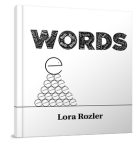
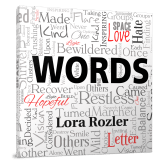
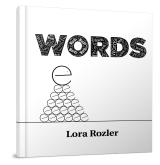
Words explores universal themes of discovery, relationships and the need to belong, with an underlying message about bullying. As a lonely letter that sets off on a journey to find meaning, it encounters various letter combinations and soon discovers the power it holds. It is confronted by two distinct paths and must make an important choice. Words is an evocative tale about how letters become words and words create meaning – meaning which could ultimately build or destroy. Get your copy here.
Depending on your students’ age group and the dynamics of your class, Words can be used to teach a wide array of concepts. Below I have outlined various discussion points and lesson ideas to complement the various themes in the story. Feel free to use them as you see fit in your classroom. Please note that these are just some of the ideas included in the kit. For more lesson ideas and free templates, download the complete kit (link of the bottom of the post).
Building Literacy Concepts – letter identification, letter sounds, word formation, word meaning, sorting words.

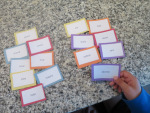
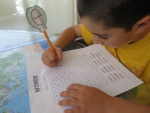


Making Connections: Relating to the Text – Have you ever felt alone? What did that feel like? What do you compelled Little e to set off on a journey? What was it seeking to find? Have you ever had to make a difficult choice? How did you solve your dilemma?
Words and Emotions – What role do words play in our emotions? When is this a positive experience? When is this a negative experience? Why? How can we use this knowledge to improve communication with others?
Exploring Literary Devices – Look for examples of literary devices in the story (allegory, metaphors, personification, symbolism, foreshadowing, imagery). How do these literary devices shape the story line? How would the story go if Little e was a boy or girl?
Word Web – Choose a concept or idea that you’d like to explore with your students. They can be found in the book. See these 2 pages, for example.
 Write the focus word on chart paper and invite students to brainstorm their thoughts, feelings and ideas relating to it. Example:
 What does it look like? How does it feel? What is its purpose? What are its ramifications?
This activity may be used again and again with subsequent readings of the story, while focusing on a different aspect each time.
Words Depicted – Words are heard and felt. One of my favourite follow-up activities to the book involves inviting students to depict words in an art form (music, drama, dance, photography, etc). Examples include creating a collage to depict PAIN, acting out a scene relating to GREED, demonstrating SELF-ESTEEM in a visual art piece, making a diorama to show BROKEN, etc. You may want to assign various words to students or let them choose a word independently. Since words can sometimes mean different things based on their context and people’s personal experiences with them, it’s interesting to see how the same word can evoke different emotions and therefore be represented differently.
I should note that it is not my suggestion that certain words are ‘good’ while others are ‘bad’. A word could be neither. The meaning we give a word is often based on our personal experiences; changing from person to person, from situation to situation. Let’s look, for example, at the word bold. On its own, it is neither negative nor positive. However, in various contexts it can be used to implore daring, fearless, impudence; while in other contexts, it can be shaped to mean confident, straightforward, courageous. Again, neither category being straight-out good or bad. Words aims to explore the feelings and ideas that are generated by word concepts and the meaning behind them.
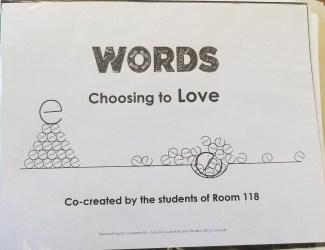
Classroom Book – Invite students to reflect on what it means to love, on a daily basis. How is it shown in our day-to-day interactions with others? Bind these reflective pieces into a class book that the students can enjoy throughout the year. Students love seeing their work in the classroom library.
Apple Experiment
This word experiment on apples was inspired by Dr. Masaru Emoto’s experiment on water. Dr. Masaru Emoto, was a Japanese scientist who revolutionized the idea that our thoughts and intentions impact the physical realm. For over 20 years, he studied the scientific evidence of how the molecular structure in water transforms when it is exposed to human words, thoughts, sounds and intentions.
TAKE-AWAY: Your words have the power to build a person, to empower them, to promote love. Your words also have the power to destroy a person’s spirit, to torment, to spread hate. Words are impactful – choose wisely.
ACTIVITIES THAT ENCOURAGE STUDENTS TO BUILD EACH OTHER UP

Character Web – Place all your students’ names in a jar. Invite each student to draw a name and create a Character Web about their selected classmate. Depending on your students’ age, you may want to precede this activity by brainstorming adjectives and have a list of them accessible around the room. Ask students to think of as many uplifting words as they can to describe this person. Read over the webs prior to presentation and hang them around the room for esteem building and to help enforce a positive classroom climate.
Name Poems – As an alternative to the Character Web, the activity above can be modified for use as an acrostic name poem.
Praise Words – Brainstorm a list of Praise Words and hang them around the classroom. Encourage students to refer to the list throughout the day and use them as much as possible when interacting with others. Some example include: “I like the way you…” “Thank you for…” “I appreciate when you…” “You are really good at…”
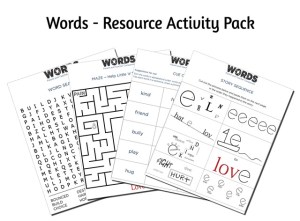
To download a personal copy of Words Companion Kit,
click on the image below.

Words can heal or hurt. They can encourage creativity or dampen a person’s spirits, they can boost self-esteem or destroy confidence, build understanding and compassion or build barriers and apathy. What comes out of our mouth can do a lot of good but conversely a lot of damage. Let’s teach our students to be compassionate, to be kind, to use our words lovingly, always to build.
I’d love to hear your lesson ideas and inspiring literature around this topic.
With love and respect,
Lora


 Where did you grow up?
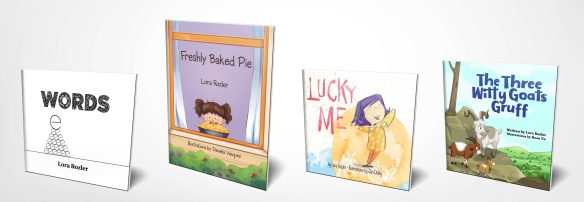
 I wrote quite a bit as a teenager (mostly poetry) but found an audience for my writing in the classroom, writing mainly to support areas of study at school. I eventually discovered a terrific outlet to share my work with others—on my blog (wordsonalimb.com) and associated social media. This allowed me to create a digital library of some of my classroom content. In fact, several years ago, I wrote a poem to teach students about the power of words and their impact. It began to receive positive feedback from students, parents, colleagues, and online subscribers. It soon took a life of its own as an animation and eventually as my first a picture book,

 My most recent title,
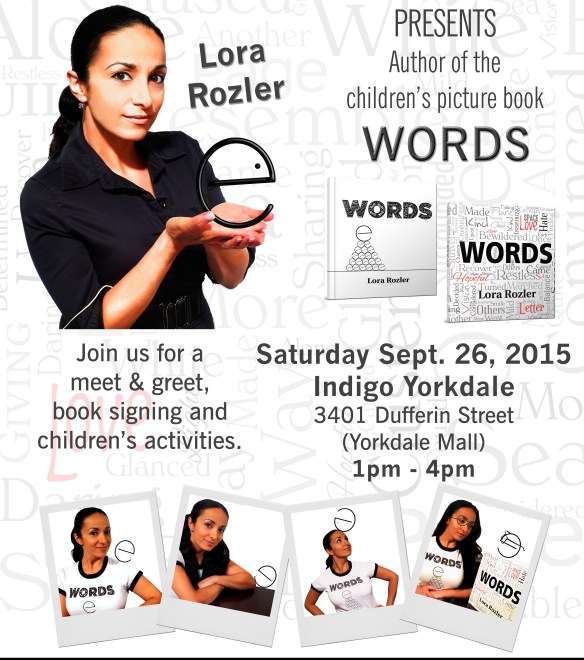
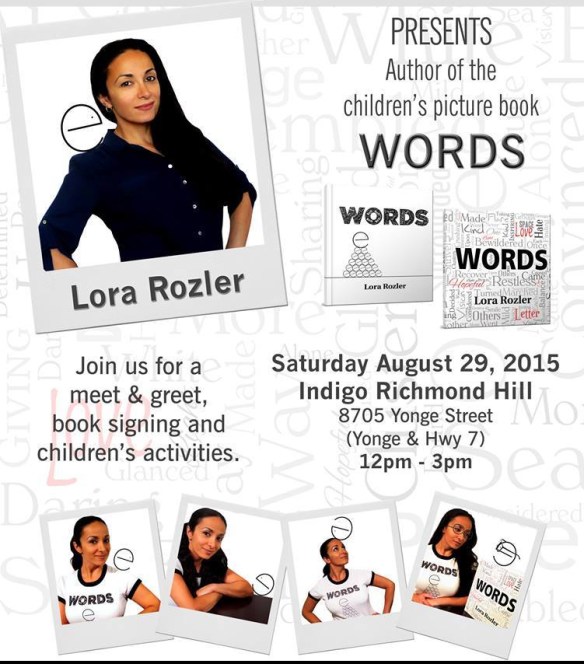
 Join me at Indigo Richmond Hill on Sunday, April 17 at 12 pm. I’ll be reading from my picture book WORDS and then hang around for some fun activities and book signing. Hope to see you there!



 What an absolutely beautiful summer we’ve had here in Toronto! Plenty of sunshine and heat – a much needed break from the otherwise crispy weather we are quite accustomed to. Though there is still ample of time to bask in the season’s warmth (so I’d like to believe), many of us teachers are beginning to prepare for the new school year ahead.
 Establishing firm rules and consistent routines is on every teacher’s immediate agenda. To the same degree however, September is a time of pure excitement and renewed optimism as we get to know our new students and gear up for lots of learning and fun together. Admittedly, this year is especially exciting for me, as I move to teach grade 2. Though I will dearly miss my Kindergarten students, they will be just across the hall from my new room (yay to visiting them often).
 Regardless of grade, I like to begin every school year by setting a communal tone in the classroom. After all, if we are to successfully work together for the next ten months, we need to respect and value each other, similarities and uniqueness all the same. With the goal of establishing a sense of togetherness, celebrating individuality and getting to know each other, while easing into a new school year together, I have prepared a few Back-to-School activities. You are more than welcome to download the resources for your personal use in the classroom by clicking the Back-to-School image on the bottom of the post.
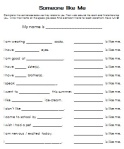 out the sentences on the Someone Like Me template. Then invite them to walk around the room and find classmates that share the same responses. Encourage children to write their friend’s name on the space provided, but be open to allowing them to have their friend write it out for them (this will help lessen the anxiety for those kids who are not yet able to). This serves as a great ice breaker and gets the kids interacting.
 fun and safe classroom environment. As part of that discussion, brainstorm qualities of a good friend and invite students to reflect on why this would be especially important as we begin a new school year together (and of course, all the time). You may want to write some of these ideas down on chart paper for students to reference as they fill out a personal Friendship Promise. Following their writing responses, invite students to have fun creating a mini-me template, adding hair, arms, and legs. Join the templates together and post them around the room so they can easily be referred to during the year. I also like to have a few spare copies around, for students who join the class later in the year.
 which we are all the same (i.e., we all have feelings, we all have needs, all in same grade/class, etc.). Then discuss what makes us all different and unique as well (i.e., we have different thoughts/opinions, different names, likes/dislikes, etc.). As a culmination of this discussion, invite students to depict these similarities and differences, via writing and/or pictures.
 Get to Know Me. Each day, invite 3-4 students to share something about themselves with the class. After each presentation, encourage students to ask questions as a way of getting to know one another better.
 students’ names and have them work in pairs (or independently) to find all their classmates names. If there is enough space, you may want to include your name, as well as other teachers that will work with your students this year. This is a a nice activity to use toward the end of the first week of school, since the class list will be more up to date by then and won’t leave anybody out.
 Divide the class into groups of 3 to 5 students. Provide each group with a bin of random objects and have them work together to build a free standing structure. Tell students that you will be observing them and taking notes as they work together, but be somewhat vague about how you will pick the winner (shhh, it will be a surprise). Most students will likely assume that the highest structure will win the challenge, but the ultimate goal of this activity will be to see which group can work together best as a team, supporting and including one another. As a reflection, discuss things you saw and heard as you walked around the room and begin a chart on effective teamwork strategies (more ideas can be added to this chart throughout the year).
 Back to School, Splat!
 It’s My School
 Nobody’s Mother Is in Second Grade
 First Grade Jitters
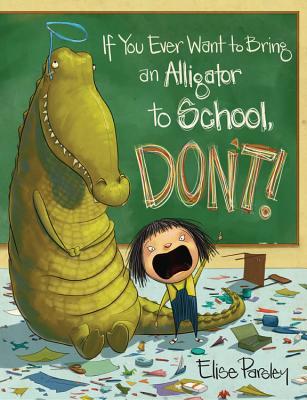 If You Ever Want to Bring an Alligator to School, Don’t!
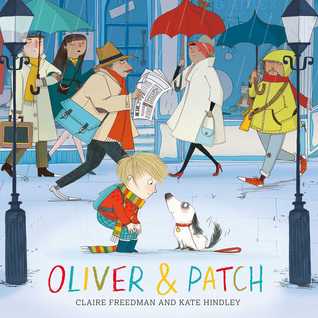 Oliver & Patch







 Get out your sketch pads, sharpen those pencils, it’s time fo
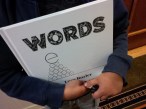 r an Art Competition. Words on a Limb would like to invite readers (ages 6-10) to send in their best illustrations, capturing the essence of the picture-book, Words. The winner will receive a hardcover edition of Words and have their work featured on our site, as well as Lora Rozler’s
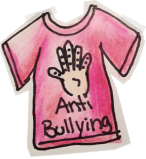 Bullying is a major problem in our schools, workplaces, homes, and over the Internet. During the month of February, many organizations across Canada will work to raise awareness on this issue and give us the tools needed to stand up against bullying and step in when we see it happening. February 25th is





 Words On A Limb