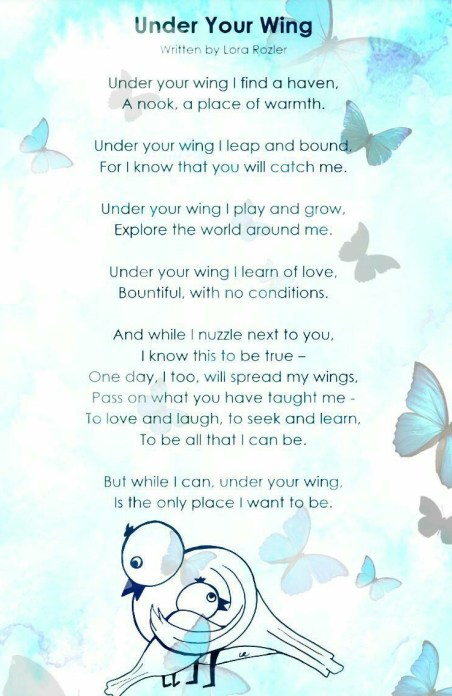
Happy Mother’s Day!
Image
6


Recently I was contacted by Jackie who shared with us that her husband’s mom had passed away, and as they went through the probate process, she began to feel like her husband and she hadn’t done enough to plan for the future.
She further shared, “Sure, we have a retirement plan and a will. But I worried that we hadn’t done enough to ensure our child on the autism spectrum would have a caregiver into adulthood. I realized I wasn’t clear on whether our home could be passed on to our children if something were to happen to us. And these concerns spun into others.”
So, she did tons of research, and with every new thing she learned, she began to feel better. Here is the piece she wrote for us to help bring more awareness to proper financial planning. Thank you Jackie for your insight.

It’s a tough subject to tackle, but I hope hearing about it from someone who until just recently felt equally overwhelmed will be helpful to those who just don’t know quite where to start.
“Financial planning” sounds a lot scarier and more complicated than it actually is—and in fact, putting it off could ultimately land you in an even more frightening and complicated situation. The sooner you get organized and prepared for the future, the better. Here are a few tips to get you started:
Establish Your Goals
It’s true that you can’t predict everything the future will bring, but you can start planning for the things you hope will happen. Sit down (with your spouse, if you have one) and lay out your goals and a tentative life plan. Perhaps you’re hoping to move up in your company within the next five years, or you hope to move to a new city as soon as it’s feasible. If you have children, consider how much you’ll need to put aside for their college education. For children with special needs, account for any home modifications they’ll need: both in the near-future and far. You should also include vacations you want to take or family events you’ll need to travel for like weddings and reunions.
Account for the Unexpected
Cars break down. Natural disasters strike. Illness and disease occur without warning. The fact is, there are a lot of variables in life, and it’s important to consider odds you might be up against. If you have an older home, it may need updates to ensure it’s a place where you can age in place safely and comfortably. Or if Alzheimer’s runs in your partner’s family, you’ll want to be sure you have funds set aside to cover the care they may need in the future. Even if your worries turn out to be wrong, it’s better to account for them in case they’re right.
Think about your own circumstances, as well. What would happen to your family if you passed away suddenly? Would they have a financial cushion? What would happen to your property? In addition to a will, some states offer a special kind of deed that automatically transfers control of your property upon your death. If you’re a single parent, this can be especially important because it can allow you to ensure your child will have a home should anything happen to you. Be sure to go through all your options of what’s available and legally sound in your area, and choose what’s best for your family’s needs.
Set and Stick to a Budget
You might be a pro at handling money without a set financial plan, but a budget allows you to actually look at how much you’re spending on what and where you should shift priorities. For instance, if your family eats out twice a week, sitting down and evaluating that total monthly cost is nearly identical to what you should be putting into your retirement fund. Once you’ve established how your money should be handled, make the commitment to stick to your budget each and every month. Don’t let yourself skip putting money in savings because of an unanticipated large purchase—perhaps you had to replace your vacuum this month, for example—and instead always make your contributions for the future a priority. Only pull from savings for emergencies and designated goals.
Check In and Reevaluate Your Budget Often
Though it’s important to stick to your budget as much as possible, that isn’t to say that you should never change it. Your needs and situation will change multiple times throughout your life, as well as your goals and needs for the future. Evaluate your budget quarterly, if not monthly, and assess how you’re doing on making progress toward your goals. If you get a promotion and begin making a higher salary, plan carefully for how you’ll spend your extra money each month. Perhaps you’re no longer interested in relocating your family, or you’re looking to enroll your child in a more academically-challenging private school. Talk to your partner about any changes you think should be made in your budget, and make sure the decision is one you are both comfortable with.
Don’t put off planning for the future. Keep these tips in mind for your financial planning and never forget: it’s better to be safe than sorry!
-Jackie Waters

 It takes courage to speak openly about our personal struggles, to invite the world into our private space. But sometimes, those brave words are just what another silent warrior might need; to feel that they are not alone, their experiences are not crazy, they are not just imagining things. They too, matter.
Thank you Julie, for your candidness and willingness to share your story. I hope your New Normal will empower another woman struggling with Endometriosis, to redefine Hers. You are one strong, beautiful, remarkable woman!
MY NEW NORMAL: LIVING WITH ENDOMETRIOSIS
by Julie Anna

You know the feeling of being diagnosed with a disease that 1 in 10 women worldwide has but never having heard of it in your life?
If not, I can tell you that it sucks.
As someone who is heavily vocal on female issues, here I was listening to a doctor tell me that I have endometriosis. Endo what? Slowly, I learned I was not alone. For a disease that plagues so many women, it is astonishing how little awareness there is. The short definition of this disease is that it is a disorder in which tissue that forms the lining of the uterus grows outside the uterus, which develops into lesions. For women with endometriosis, the blood and tissue shed during menstruation has no way of leaving the body, resulting in internal bleeding and inflammation which can cause a series of problems to follow.
For years I thought the pain was normal. Ridiculous when you think about it. Pain? Normal? I thought every girl was like me suffering through brutally heavy and long periods, constant nausea and fatigue, back pain, drinking a drop of water and instantly needing to pee, bowel pain, and the list goes on. Since my early teens, I was told that that’s “life for a girl” and it is nothing out of the ordinary. It was taboo to speak about it. Culturally, a girl’s reproductive health is uncomfortable for people to speak about – a reminder of how we haven’t evolved as much as we think we have. Doctors, the ones who I entrusted and believed in, never took me seriously. “See how it is in the next few months and if it persists come back”, I would be told. I’d come back. Once again, the pain was “normal” and to them, I was over exaggerating. Perhaps I was a hypochondriac. My pain tolerance may be too low, I was told. I had a few small cysts sure, but that was normal. They would go away. We would keep an eye on it but it was “normal”.
Normal.
That was a word I kept hearing and because of it, stopped caring for years. In the summer of 2016, I began caring once again. At first, I blamed myself for getting to the state I was in that summer (if you’re new to the party, I wrote about it here). I told myself it was my fault I stopped going to the doctor. My fault I stopped following up. My fault I started ignoring pain and going on with my day. My fault for neglecting my health.
But it was not my fault. I was told I was “normal” and so I continued. Normally.
Needless to say, last summer I learned I had endometriosis (and a cyst approximately 10 cm in size chilling in my right ovary and another burst, no biggie) after my first laparoscopic surgery to remove my appendix, which didn’t even need to be removed but after all my other misdiagnoses through the years why not throw appendicitis in there. Ultimately, this was a blessing in disguise because that is when I learned after all those years my pain was in fact not normal. I was suffering in unbearable silence up until that very moment, feeling weak, confused, and helpless. I was suffering thinking that I was small and weak because I couldn’t handle being a woman. I was suffering. Silently. Because pain is not normal. And I was told it was.
You know what the thing is with the pain? You don’t get used to it. I hoped after all the years I would. I’d get used to the pain. At my lowest, I hoped that maybe it would get so bad it would just go numb and I wouldn’t feel it anymore. That is when you know you hit your limit. When you just want to feel numb.
My diagnoses helped ease things. Not that it made the pain better. However, it was as if the puzzle started coming together. Every piece of research I found clicked more pieces together. I found the right doctors and started taking my health in better control. I stopped feeling weak and helpless and upset with myself. Instead, I started to feel strength. Understanding. Pride.
I was a freakin’ warrior.
I battled through the pain, the fatigue, the bladder and bowel discomfort, the mood swings. Oh, the pain. The crouching on the bathroom floor in tears until the pain went away so I could get out and continue on with the day so no one would know – not my friends, family, peers or colleagues. For years. That was “normal” and so I told no one, did nothing. Battled silently and got through every cycle. I felt like I was lazy because no matter how much I slept I was tired. I was always exhausted and justified that with my anemia. I took painkillers like candy and people that noticed it started judging me. Stop taking pills so much, they would say, it’s bad for you. You should only take it when you really need it, they would say. Little did they know I always needed it and in contrast to the pain, barely used it. The teachers that wouldn’t take it seriously when you would feel ill because of your period. The judgment of being too tired to go out, of canceling plans last minute or being late constantly, the persistent need to find a restroom, the random mood swings – sometimes that was worse than the physical pain. I battled.
I’m not alone.
1 in 10 women. 1 in 10 that have no cure. That’s right – no cure. Let that sink in. If you’re thinking to yourself, “how could that be, I’ve never even heard of this disease”, you aren’t alone either. There’s such a lack of press and awareness on the disease and one comes to think why? Is it because of the societal taboo that comes with talking about these issues?
I remember first-hand coming back to my daily routines post-surgery last summer. My first surgery performed in August was easy to talk about. When people asked, I said I had my appendix removed, avoiding the topic of everything they found when they went in. My second surgery performed in September – not so much. Telling people I operated on my reproductive organs was different. Telling them it took an extra few weeks of sick leave because of postoperative pelvic complications made them squeamish. The words uterus and ovaries were uncomfortable. Not for me. For them. And they made it seem like their uneasiness speaking about the topic should shame me.
No. This was my battle. I am strong. I’m a fighter. I have nothing to be ashamed of.
But for many women with endo, it seems like we should be. Most men don’t get it – anything to do with lady bits made them feel awkward and some are downright cruel, acting as if this is just another thing women are whining about to play the ‘victim’. Seriously?! Other women, surprisingly, don’t always sympathize either. In their minds, they have periods too. They know what cramps are like so they sometimes struggle to imagine the higher intensity of endo pain. Then there are the people that would look at you and say things like, you’re too young to feel this way. That is probably my favorite. I’d look at them frustrated, shrug and think, thanks for your input I’ll let my chronic illness know that I’m too young for it to do this to me.
It was difficult. As soon as I was diagnosed the first word to pop up during my google search of endometriosis was “infertility”. I wept. Suddenly, at 22 years old, something I joked about never wanting I was suddenly being told could be snatched away from me. I was heartbroken and I didn’t want to admit it. Many women with endometriosis are able to have a natural pregnancy but that doesn’t take away the potential implications.
I used to be fine with needles and giggled when people said they were afraid of them. Now? The sight of a needle makes me tense, and I look away with tears in my eyes at yet another vein being poked into. I was told I have a higher risk of ovarian cancer. I was presented with different methods of treatment, none of which cured the disease. Temporary fixes from the birth control pill to an IUD to Lupron. Injections that induce menopause. At 22.
Every day I learned more. Every day I reached out to different women in different forums. Found books and videos and articles (side note: I have provided a list of some of the resources that helped me at the end of this post). That’s when you know you have a community of women with a chronic disease: you form some kind of online family. I knew this disease was now for me to take care of. It has no cure. It goes misdiagnosed. In fact, through other rough experiences of other tough ladies, I learned that often this disease is diagnosed by ‘accident’. In my case, supposed appendicitis. The research, the knowledge, the awareness – that is what would empower me. I fought my shame of speaking about such a taboo issue and decided I had to talk about it. I didn’t start talking freely about my endometriosis for pity, attention, or sympathy. I don’t want any of it. I felt a duty to speak about it for the girls that don’t feel comfortable. The girls that struggle silently even after diagnoses from shame. To inform, explain, educate, and spread awareness. To benefit research to one day find a cure. I now know what to go to doctors with. I now know what normal meant. The normal doctors and others told me I was going through. It wasn’t “normal” in the sense we are used to.
It was a different normal. I get abdominal pain that can flare up at any time. It’s exhausting. It’s the feeling of thorns growing in my pelvis, multiplying every month, wrapping around like vines. It affects me financially, mentally, and physically. It affects my dreams, my desire to go back to school, my career aspirations. It affects my relationships and friendships. My family who watches me struggle. My work life. My quality of life. It’s poison affecting my organs, taking me prisoner at times and all I can do is fight. Fight like a girl. Because ladies, we are badass. We are strong. Tough.
It was my different normal. All cases of endo are different – I have spoken to women who have it but don’t feel it as drastically and others who had to quit their jobs and completely shut out from the world because of it. The stages (there are four) do not determine the pain. Most women, like myself, refuse to let this control our lives. We refuse to let it win. So we go on every day, doing everything in our power to attempt a sense of normalcy. People we interact with daily have no clue. They don’t see how distorted we look inside. How angry we are that our own body is betraying us. We put on a brave face and live as normally as possible. It’s a devastating disease, an invisible one, that requires respect, understanding, patience, and support. When you tell people about your chronic illness, and they tell you that they looked it up online, you feel incredibly touched that another person cared enough to do so. You feel happy that at least one person learned about it – awareness is being spread.
It is my new normal.
A normal with endometriosis. A normal with more bad days than good. A normal where I do things at pain levels others refuse to leave the bed at because if I didn’t, I wouldn’t have a life. A normal where I’ll get up and crack jokes, laugh, dance, and stuff my face. Where I’ll live my life. And it doesn’t always mean I’m having a good day. Rather it means that I was able to be stronger than the pain at that moment. Freakin’ warrior. Because this is not the flu. I won’t wake up one day and it’ll be better. But I’ll laugh it out. I’ll spread awareness and march for a cure. I’ll connect with my endo sisters. I’ll form relationships with people that are important enough that they will support me. I will live my normal.
A normal in which endometriosis does not defeat me.


“Endo What”: This film is one of the best resources I came across. My local library had it, to my surprise. I watched it with my boyfriend and again with my mother. It’s an incredible film and I would suggest it to everyone to watch.
“Living Well with Endometriosis: What Your Doctor Doesn’t Tell You That You Need to Know” by Kerry-Ann Morris: This is one of the first books I found about the disease when I was finally recovered and made a trip to my safe haven – the library. The book was published in 2006 but it is still a great resource. *
“The Doctor Will See You Now: Recognizing and Treating Endometriosis” by Tamer Seckin: I just got this book recently and I’m already loving it. *
“Rewired Life: A Journey To Untangle Chronic Pain And Endometriosis” by Audrey Michel: Another great book. There’s much more but we’ll go on for days. Check your local bookstores, libraries, or online. Books are always my favorite resources, after online forums/groups. *
Etsy: Not a resource, but they have amazing endo keychains such as this one which is a nice reminder to yourself that you are in fact a warrior and a fighter. Just bought mine today. You got this.
 Passionate. Creative thinker. Dynamic storyteller. Avid reader. World changer. Coffee addict. Julie lives in Toronto, Canada, and is the mastermind behind Beyond Bossy, a multi-niche lifestyle blog that discusses everything from life and relationships to finances and wellness.
You can also connect with Julie here:

 Anyone who has ever spent a day in mommy-mode, knows just what a demanding role it can be. Cooking, cleaning, shopping, washing, after-school activities, laundry, homework, you name it, the list is endless. But for many of us, our day’s work doesn’t begin and end there. Add a full-time career into the mix, and you’ve barely got time for yourself.
Here to give us some tips on keeping it all together is Jennifer Raskin. Jennifer is an internationally-published writer and blogger. She and her husband have two darling daughters. When she’s not busy writing, she enjoys reading, wine tasting, dining, shopping, and weightlifting at the gym.
Feel free to share your thoughts, or a tip or two, on what best works for you, in the comment section below. Have a fabulous week working moms (and dads)!
Six Tips to Balance Work and Home without Completely Losing Your Mind
Working moms are the hardest working people on the planet. Not only must we go into our jobs and give it our all, but when we get home we’re clocking into our other job as Mom. It’s exhausting but rewarding, however no matter how rewarding, it can be draining. If you feel like you’re being ripped apart at the seams, here are some tips to help you bring a little more balance into your life so you can do your best in every role you play.
1. Get organized and prioritized
In both work and at home, make sure you’re organizing everything that needs to be done and prioritizing those things. Does it need to be done immediately? If so, put it on your daily list and handle it like a boss. If not, add to your weekly list so you can handle it when the more important things are finished. By managing your time effectively, you’ll find you have more time to do what you want and less stress.
2. Leave office work at the office
Don’t take work home with you. Leave the drama at your desk and start fresh each day. You owe it to yourself as well as the people you love at home to focus on them instead.
 3. Don’t sweat the small stuff
So the kids made a mess in the living room. Just chill. It’s not the end of the world. Enlist their help in picking up. If they resist, maybe it’s time to offer an allowance for doing chores.
 4. Delegate whenever possible
You might be Super Mom, but no one likes a martyr. Both at work and at home, make sure you’re delegating tasks that someone else can handle, leaving you to take care of the bigger things that only you can do.
 5. Take some shortcuts
No one says you need to come home from a busy day at the office to make a 5-course dinner. Make it a taco night, or better yet, use your slow cooker to have dinner waiting when you get home. It will give you extra time to relax.
6. Make time for yourself
It sounds selfish, doesn’t it? But it’s not. Not at all. You need time to yourself to refresh and recharge so you can be your very best. Running yourself ragged and overlooking your own needs is not good. Whether it’s curling up with a book, taking a nap, soaking in the tub, going for a run, or gabbing with a friend, make that time to unwind each and every day, even if it’s only 10 to 20 minutes. You’ll feel so much better!
If you’ve been feeling like a circus clown trying to juggle everything in your life, take these tips and incorporate them so you feel more fulfilled. Everyone will thank you, especially yourself!

 Happy New Year! I hope 2017 has been off to a wonderful start for everyone. I’m excited to share something that has been rattling around my mind over the holiday season.
With only a day before the work week begins again, (for us teachers anyway), it struck me to reflect on the piece below about a moment in my life where a teacher made in an impact on me. I hope you enjoy it as much as I enjoyed mulling it over and finally putting it together.
They come to me like snapshots, images of a time long ago.
In one of them I am standing in a beautiful courtyard. The trees are tall and luscious, the grass is green and moist. Next to me is a small tub. I look down at it, eyes desolate, water slowly dripping onto my bare feet. Only moments before, the water which now trickled from my hair, belonged in the same pool. I had been playing alongside my friends, splashing, giggling, pouring water over our heads. The sun was shining. The air was warm. Life was good.
Well, at least until the Rooster appeared.
Rooster was the more-than-generous name I gave the meanest kindergarten teacher ever. Unfortunately, she also happened to be my kindergarten teacher.
“Don’t you dare go back in,” she clucked. “You know the rules. If you step out, you’re done,” bulging eyes looked down at me.
“Mr. Ducky fell out,” I began, but there was no use. The Rooster wouldn’t have it.
Just like that, the fun and games on Water Day were over. I stood there, staring at the others, envying that their stupid ducky stayed put. They looked so happy, so together. I supposed that’s how I looked not too long ago. It’s funny how in a matter of an instant I no longer belonged.
Lesson number one: It sucks being left out!
Rooster is mean!
I want my mommy!
Another snapshot lays itself atop the last, and I am five again, same place, similar time, same old Rooster.
This time I am sitting on a long wooden bench, head bowed, hands clasped rigidly on my lap. I am wearing my favourite blue dress, the one with the big colourful flowers. It seemed a shame to stare down at such beauty when everything else around me felt so ugly. The time-out bench was no place for me. I was in the wrong place at the wrong time. Someone pointed their finger at me. Now I had to ‘think about it’ when I had no clue what I’d done.
Lesson number two: Life is not fair!
Kids can be cruel!
Rooster is definitely the worst teacher ever!
I still want my mommy!
So there I was, slowly climbing out of the cozy cradle that had sheltered me for the first five years of my life. This was life though, sometimes not so nice, definitely not as nice as Mommy.
Sometimes the person you become is an amalgamation of the many experiences throughout your time on earth. I found that this moment helped mold the teacher that I would one day become, or at least the teacher that I did not want to be.
Here’s a thought exercise, think of a moment of impact that helped create the You of today. If you like, tell us about it in the comments below.
Have a great week!
Lora


As a little girl, I was daddy’s little princess. Looking back at home videos, it amazes me how happy I made him, like a little kid on Christmas morning. Now that I’m older, we have a tricky relationship but when everything is pushed aside he is still my hero and I am still his baby girl. Here is a man that was once a young boy himself and grew up to have his own kids and did everything in his power to make our lives perfect with love. Father’s aren’t just born, men grow into them and it’s a very important stage of their development. As my mother always tried to protect my siblings and me from the world, my father threatened us with it as we grew up. We aren’t kids anymore he would tell us; the real world is not all rainbows and ponies. For that I thank…
View original post 2,455 more words

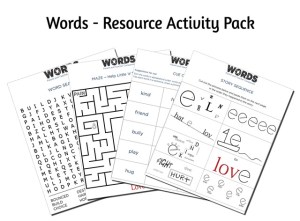
“Words! What power they hold. Once they have rooted in your psyche, it is difficult to escape them. Words can shape the future of a child and destroy the existence of an adult.”
―Vashti Quiroz-Vega
Written and Illustrated by Lora Rozler
 In this emotional and
highly visual picture book,
a lonely letter sets off on a journey to find meaning.
As it encounters various letter combinations, it is confronted by two distinct paths and must make an important choice.
Readers of all ages will be captivated by this simple, yet high concept, story that explores universal themes of discovery, relationships and the need to belong, with an underlying message about bullying. Both timeless and original, Words is an evocative tale about how letters become words and words create meaning – meaning which could ultimately build or destroy.
“A compelling story-line, simple yet poignant illustrations, engaging language, a great read-aloud that offers many opportunities for reflection and discussion with children.”
“A heart-warming story with a clever, powerful message about anti-bullying. An absolute must-have
for every parent and educator.”




Attention all Mini-Artists: Join our Words-Through-Art Sketch Competition
 Get out your sketch pads, sharpen those pencils, it’s time fo
 r an Art Competition. Words on a Limb would like to invite readers (ages 6-10) to send in their best illustrations, capturing the essence of the picture-book, Words. The winner will receive a hardcover edition of Words and have their work featured on our site, as well as Lora Rozler’s author website.
All entries must be submitted to wordsonalimb@bell.net by August 15, 2015. Please indicate Art Competition in the subject line and specify the artist’s age in the email. The winner will be announced on August 22, 2015. Let the sketching begin!

 Hello everyone. I hope you are enjoying the beginning of summer. We have something great to share with you. High school student, Kathleen, reached out to us after taking a look through our awareness-related articles. She wrote to us from Educator Labs where she is volunteering to speak out for Asperger’s Syndrome. Along with her research there, she is also creating an outreach program to share resources to empower others to overcome their obstacles. We felt it was a worthy cause and are delighted to share her story.
If you’ve ever been bullied, you know how humiliating it can be. Even though you’ve done nothing wrong, you end up feeling ashamed, inadequate, and isolated.
That’s how it was for me during my freshman year of high school when two factors converged to make me an easy target. First, when I entered high school I was around a lot more people who didn’t know me and who didn’t understand my Asperger’s. They saw someone who wasn’t like them and singled me out.
Second, during the summer leading up to freshman year and during freshman year, I gained several pounds. I had always been prone to a sedentary lifestyle. In fact, this is common among kids with autism and Asperger’s Syndrome and may be a factor that contributes to the high rate of obesity within the population. Because I wasn’t good at playing sports and I didn’t like exercising, I was always much more content reading a book or watching TV. Then, when middle school ended so did my required PE. It had been the only real exercise I was getting each week.
In high school, the kids who weren’t familiar with me thought I was odd. They’d pick on me because of the hand-wringing and clasping motions I often made and because of my weight.
Soon, just as I had begged my parents not to make me participate in PE when I was younger, I would now ask them if I could stay home sick from school. I even tried to convince my mom to start homeschooling me.
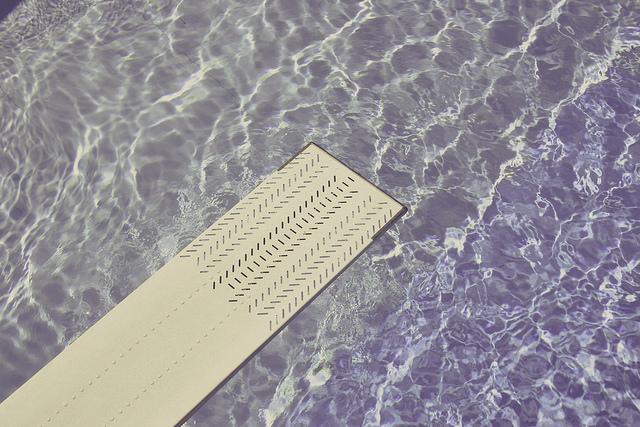
After a trip to the doctor revealed that I could now be classified as “overweight,” upon the recommendation of my doctor, my mom began taking me regularly to swim at the local YMCA. I had learned to swim when I was little, and while I liked being in the water, it was never something I had a deep desire to do. But it didn’t take long for all that to change. After those first trips to the YMCA, I fell in love with swimming. I began to feel better physically and mentally, and on really difficult days it gave me something to look forward to. Here are a few of the ways swimming helped me overcome being bullied:
 healthy weight. But it was another physical change that helped boost my self-esteem. With autism and Asperger’s Syndrome, repetitive motions such as hand flapping, or in my case, hand clasping are common. But as this guide on aquatic therapy explains, exercise can help reduce those motions. I think swimming and getting other exercise helped me relax a little. I was less anxious and therefore needed to comfort myself with those motions less often. And while kids continued to make fun of me for it, I knew that I had been working hard and that my motions were less noticeable. That gave me a much-needed self-esteem boost.
One, in particular, stands out for me: “Offers relaxation through the repetitive nature of movement.” Once I get in my rhythm many of my worries about school and being bullied drift away. The water has become somewhat of a safe haven for me. A place where I can just be, without worrying about what someone else might say about me. It has played an important role in helping me move past the negative feelings that being bullied caused me to have.
This is my story, but it isn’t necessarily unique. Many kids with Asperger’s Syndrome are made fun of or bullied by their peers. I want them to know that they shouldn’t lose hope. For me the pool has become my refuge. Find a similar place or activity that provides you the kind of comfort I get from swimming. It will help you make huge progress in getting over being bullied.
Kathleen Carter is a teen living with Asperger’s Syndrome. She enjoys educating her peers and others about AS. Recently, she began writing proudly about how her experiences differ from other people her age. She is so grateful to have the opportunity to write for EducatorLabs.

In a word
Hope, richness, belonging, open. These are a few of the words some naturalized citizens from across Toronto used to describe their feelings about Canada and their citizenship.
To celebrate Canada Day the Star profiled 10 naturalized citizens, representing 10 different countries. Some were refugees; others came as immigrants. Some have been here for decades; others are newly arrived.
But they all share a common love for the freedom Canada has guaranteed them and the security their citizenship has given them. They place great value on their Canadian citizenship and it has deep meaning for them.

Aisha Daanish, 42, laughed as she recalled how she missed Canada when she went back to Karachi, Pakistan to visit family and friends only a year after she first arrived.
It was an odd and surprising reaction, she confessed. She had spent most of her life in Pakistan. Yet, here she was back in her native land and all she did was miss Canada.
She chose the word warmth to describe a country that has some of the bitterest winters on the planet. But it isn’t the temperature that she’s referring to, but rather the warmth in people’s hearts.
In Pakistan, Daanish, a kindergarten teaching assistant in a private faith-based school in Mississauga, realized it was that warmth she was missing; craving. Even the tiniest gestures of friendship, such as a neighbor advising her and her children to dress warm on a crisp fall day, made her feel she was part of the fabric of the country.
“That really touched me because that’s what Grandmas used to do in my country of origin,” she said, explaining she doesn’t feel she can call Pakistan her home anymore. “This is home now so there has to be another word other than back home.”

Tolerance is the word Keren Stephen chose to represent her feelings about Canada.
“We are mindful,” she said of Canadians. “There is a reluctance to succeed at any cost here. And I guess the whole culture is one of tolerance and including people.
“I like Canada. I like its values. It’s amazing the amount of volunteerism that goes on here.”
The 50-year-old chartered global management accountant came to Canada in 2009 along with her brother, his wife and two nieces from Sri Lanka. They left because of the violence.
“Being in a war area there’s so much activity,” she said. “There’s so much negative. Even if you’re not personally suffering, you hear about others suffering. I was affected, but not directly. You’re living in a war. There is fear, risks.”
After travelling the world for business, she settled on Canada after ruling out the United Kingdom and Australia. “I had heard good things about Canada…One of the key things is values…Canada is a very inclusive country. I wanted to form my home base here.”
She got her Canadian citizenship in November, 2013. And it was momentous. “It was the final signing off,” she explained. “That’s it. You’re there now. You’re a citizen and have obligations. It also gave me the feeling that I can really behave like a citizen…I can call myself a Canadian.”

Imagine!
A frightened child sits beside you, her hand clasped tightly in yours. Silent tears stream down her face, clouding her otherwise golden brown eyes with a pool of grey. She is voiceless. Despite her heartbreaking pleas, you cannot help her. She must go.
Sitting on the damp bench, you wrap your arm around her quivering body and wince as you look at her grief-stricken face – the same sweet face that  nourished your soul for the past six years. Images of her inundate your mind, cascading from one scene to another. The day she was born was your happiest ever. You planted a tree in her honour that year. Will it continue to grow in her absence? You recall how easy it was to soothe her then. You’d hold her in your arms and sing sweet lullabies, the very ones your mother once sang to you. But who will comfort her now when she’s lonely and scared? Will they care for her when she is unhappy or sick? What if she’s hurt? What if she’s hungry? You panic. You try to restrain the fear that is taking over.
You close your eyes and pray. Please take care of my baby. Oh hush, you mustn’t let her see you cry, or she will surely realize your comforting words were nothing but lies.
 It will not be alright when they tell her she must abandon her birth name. It will not be alright when they cut off her braids. It will not be alright when she feels homesick and is denied her brother’s embrace. It will not be alright when she wonders why you cannot be there on her birthday or why she has to miss grandpa’s 70th. Time will surely not fly. But you do and say what you must, for the choice is not yours.
The cruel rain continues. They will come for her and you must let her go. You gave birth to her but somehow you do not know what is best for her. You raised her, nourished her, taught her, but she is not yours.
A van emerges from around the hills, slowly making its way up the road. She squeezes your hand, a final plea. I n just a few moments the scent of your hands will be all she has left of you.
“Please Mommy, I don’t want to go”.
A kiss, a hug and a swift smell of her hair, your heart is in pieces, yet you pry her hands out of yours. You try to sound sensible when you know nothing you say or do will ever be so.
“I will see you in the summer, my sweet rose,” agony overwhelms you as you watch her climb aboard, sobbing and confused. Why is mommy letting this happen? What did I do wrong? Doesn’t she love me anymore?
 You are numb. You wave when all you want to do is shout at the world. That is my baby disappearing into the thick mist.
You continue to stare long after the van disappears behind the hills. Surely this must be a horrible dream, a nightmare.
You look around. All is still. You pick up the discarded doll and hold it close to your body. You weep for the child they thieved from your home.
Imagine!
Lora Rozler
It was a few months ago that my friend and colleague, Michele Parkin, enlightened me with one of her picture books, Shin-Chi’s Canoe by Nicola Campbell. I had reached out to her a few days prior when I sought an Ojibway translation for a picture book I was working on at the time. As always, she was more than happy to help and the discussion that ensued left me wanting to learn more about the Aboriginal people’s struggles. Knowing my passion for children’s literature, Michele kindly offered her book.
I brought the book home with me the same day and as I read it, a sense of rage began to build. My children happened to be playing in a nearby room and and all I remember feeling is deep sadness for those families whose children were taken away from them, stolen from their home, their culture, their life. There was something about the the way the story was told that touched me deeply. As a mother, the thought of having to endure something so horrific is beyond comprehension.
I’d like to share an article I read online, written by Erin Hanson, a researcher at The University of British Columbia. It beautifully articulates and captures the effects of the Residential school experience on the Indigenous people. You can visit the article by clicking the image below: Continue reading


 Words On A Limb