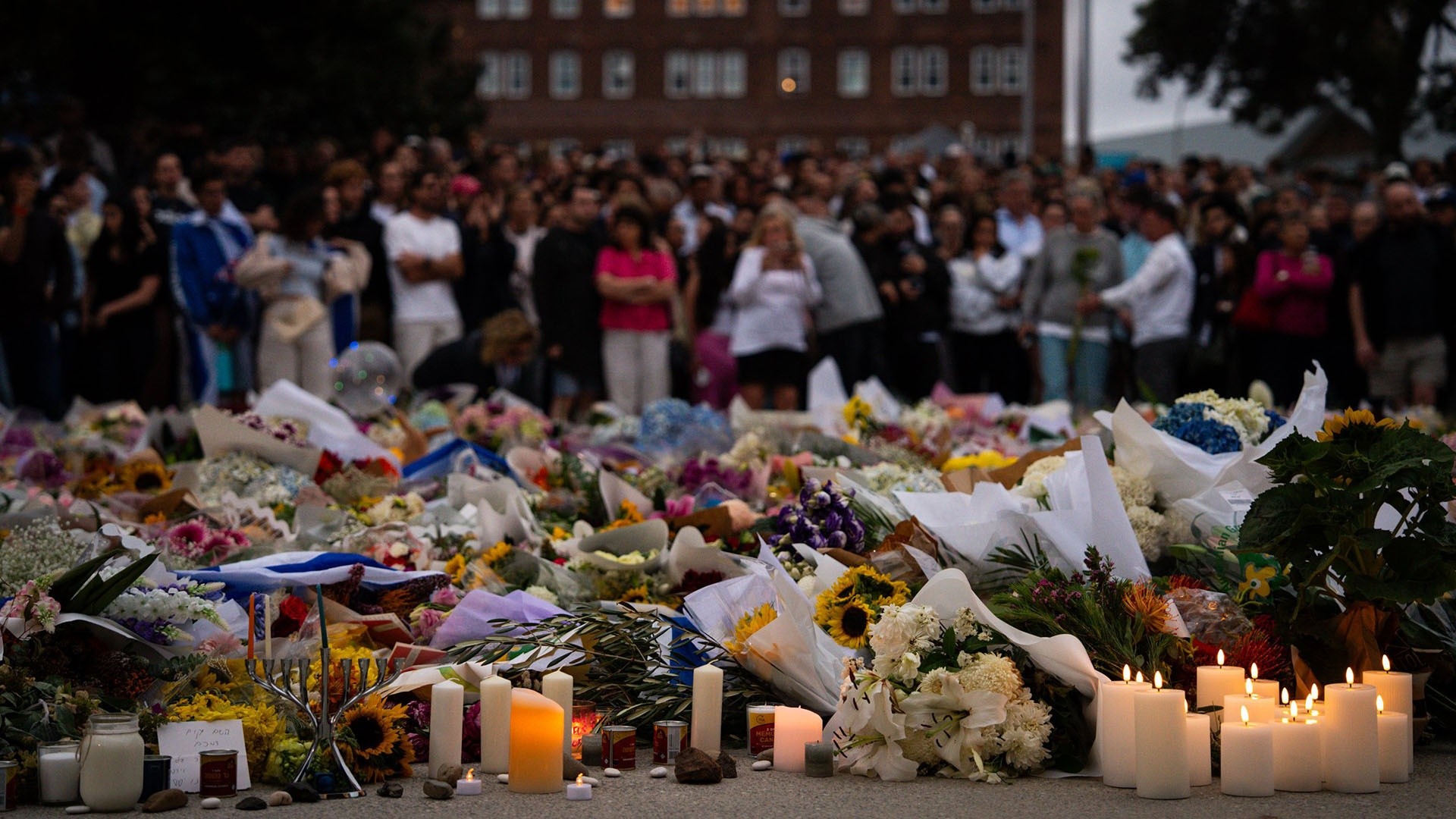
For more than two years, alarm bells have been ringing—warnings that have been ignored. The horrific terror attack at Bondi Beach, in which a father and son, radicalized by the Islamic State, opened fire on a Jewish crowd celebrating Hanukkah, killing fifteen people, including a Holocaust survivor, did not occur in a vacuum. It was the culmination of a growing wave of hatred, propaganda, and ideological radicalization that used words as weapons.
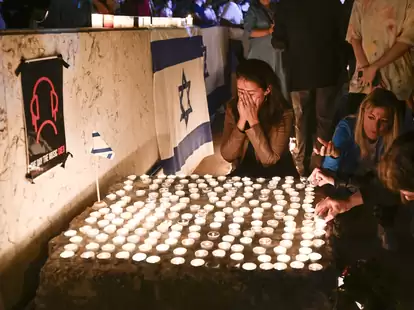
Bondi Beach Memorial
The deliberate spread of lies, misinformation, and dehumanizing rhetoric against Jews, often repackaged today as antizionism, has fueled this climate. The vilification of Jewish people and Israel has become socially tolerated in ways that would never be accepted toward any other group. This normalization of hate follows a familiar historical pattern: propaganda leads to dehumanization, and dehumanization ultimately leads to violence. Ideologically driven hatred played a direct role in the Bondi Beach attack. The perpetrators were influenced by radical movements that thrive on division and moral confusion.
In recent years, public rallies have too often featured inflammatory rhetoric and slogans advocating harm or erasure of groups, such as “Globalize the Intifada” and “From the river to the sea, Palestine will be free.” In Australia, on October 8, hate marches saw demonstrators openly chanting “Gas the Jews”, an event that should have been a turning point but was not met with swift, unequivocal condemnation by many leaders. That silence sent a dangerous message: that some forms of hate could be tolerated, and tolerated hate predictably spills into violence. Words are not harmless; they carry weight and consequence. The chants once shouted in hate rallies – calls to “globalize the intifada” or erase a people – were never just slogans. When language dehumanizes, it arms minds long before hands ever touch weapons. The intifada was globalized.
Not all wars are fought with guns. The conflict being waged today – against Israel, against the West, and against democratic societies themselves – is being fought through ideologies. This is a battle of narratives, where hatred is often disguised as activism and moral outrage, and where young people encounter radical messages long before any physical attack takes place.
This ideological assault is being amplified by foreign-funded stakeholders and networks that seek to divide societies from within. Their reach extends beyond social media into institutions, schools, universities, and even government bodies, where anti-Western and antisemitic narratives sometimes circulate unchallenged under the banner of “diversity of thought.” Such influence undermines trust, weakens civic values, and places students at risk of gradual radicalization.
At the same time, extremism exists across ideologies. Right-wing hate movements, neo-Nazism, and other radical groups have a long history of terrorizing Jews, Black people, and other minorities, while far-left and Islamist extremists increasingly drive antisemitic incidents worldwide. No society can afford to ignore any ideology that rejects equality, freedom, and human dignity.
The data paint a sobering picture. In Canada, antisemitic incidents reached a record 6,219 cases in 2024 – a 7.4% increase over 2023 and a 124% jump since 2022, with B’nai Brith warning that antisemitism is becoming “normalized.” In the United States, the ADL recorded 9,354 antisemitic incidents in 2024, the highest figure in nearly 50 years, representing an 893% increase over the past decade and averaging more than 25 incidents per day. Globally, the World Zionist Organization and the Jewish Agency reported a 340% increase in antisemitic incidents between 2022 and 2024, nearly doubling from 2023 alone.
As teachers and parents, there is a vital responsibility to shape the next generation’s understanding of justice, empathy, and courage. Schools and homes must be places where open dialogue and critical thinking thrive, where children learn to recognize propaganda, question hate, and see the humanity in those who are targeted. Confronting difficult truths is not about assigning collective blame; it is an act of protection and love for communities and children.
A practical call to action can include:
Creating classroom and family discussions about antisemitism, extremism, and media literacy.
Challenging dehumanizing language and false narratives whenever they appear, online or offline.
Partnering with reputable organizations that track and combat antisemitism to bring resources into schools.
Each lesson, conversation, and act of courage helps build resilience against those who weaponize ideas.
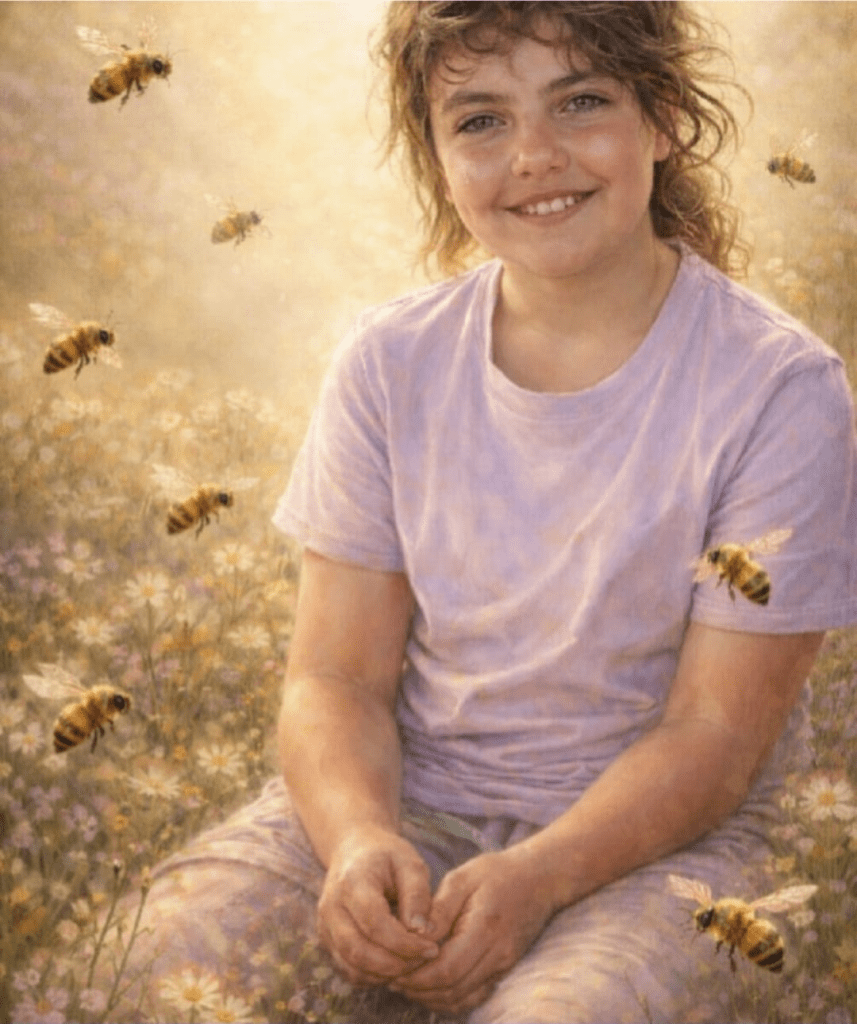
As this loss is remembered, it is important to honour Matilda, a vibrant ten-year-old and the youngest victim whose life was cut short in the Bondi Beach attack.
Matilda adored bees – tiny creatures that work together to build, nurture, and bring sweetness into the world. In honour of her memory, her father asked that images of bees be shared, as a symbol of the gentleness and cooperation she loved.
Let Matilda’s bees remind everyone that even in grief, there is a choice to build rather than destroy, to protect rather than hate, and to fill the world with kindness and care. 🐝
This is not an easy piece to write. My blog usually celebrates stories, poems, children’s books, teaching resources, author spotlights, and moments of inspiration that remind us why we do what we do as educators and writers. But sometimes, the world around us demands that we look up from our books and ask harder questions.
This post may not fit the usual rhythm of this space, but that’s precisely why it belongs here. Because if we, as educators and storytellers, are not talking about what kind of world we are preparing our children for, then what are we teaching at all?
My hope is that this article offers perspective, clarity, and courage. That it gives you, not just as educators, but as Canadians, a lens through which to understand what’s happening, to recognize the patterns, and to feel empowered to say, “This is wrong.”
Patterns Repeating: Vilification and Dehumanization
History teaches us that mass tragedies never begin with violence – they begin with narratives.
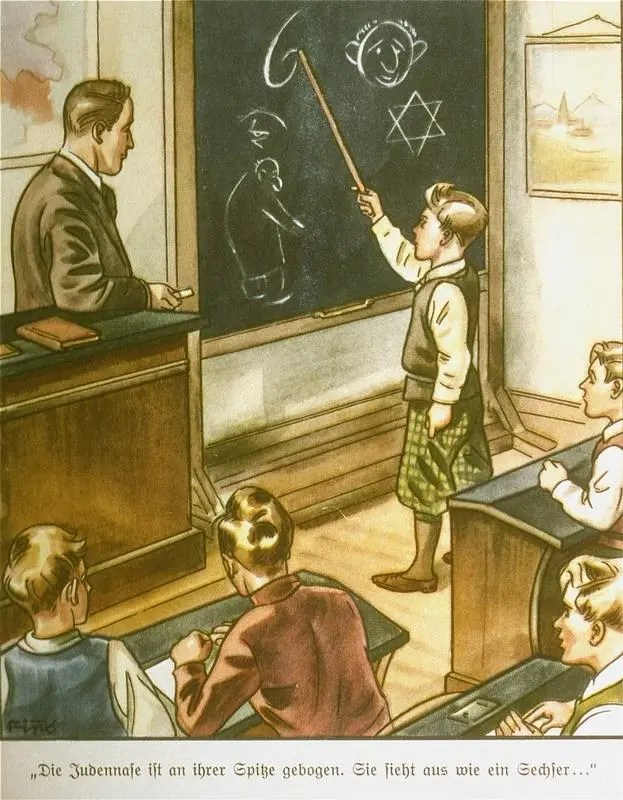
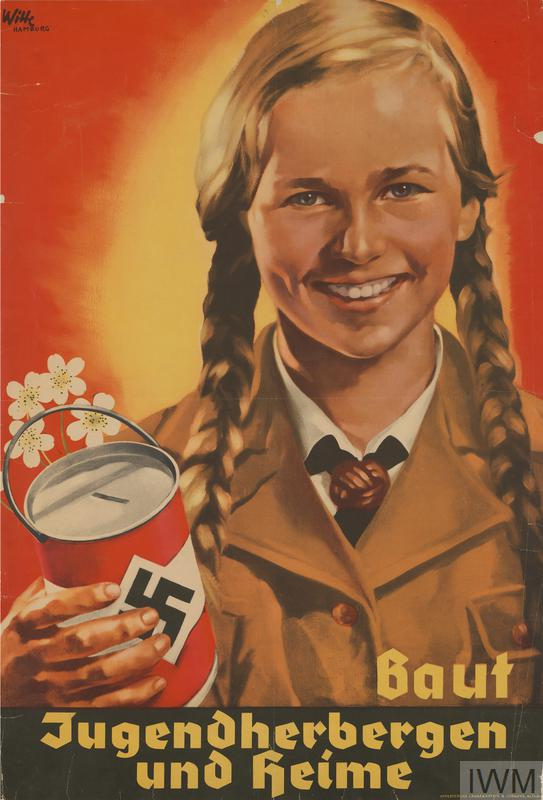
For the Jewish community, the brushstrokes of hate often start with casting Jews as the root of society’s problems, followed by exclusion, scapegoating, and relentless public vilification. The propaganda that swept through 1930s Germany, where Jews were painted as outsiders and subhuman, did not erupt overnight. It grew slowly, normalized by silence and apathy.
Antisemitic Children’s Book From the 1938 antisemitic children’s book The Poisonous Mushroom. The boy is drawing a nose on the chalkboard, and the caption reads: “The Jewish nose is crooked at its tip. It looks like a 6.”
That process feels disturbingly familiar today. From campus protests to mainstream news outlets, the narratives of victim and oppressor often exclude Jews or justify their suffering. The world’s response to Israel’s struggle since October 7, 2023, highlights this pattern unmistakably. Public marches and campus rallies are often framed as activism but are saturated with slogans and symbols reminiscent of older, dangerous prejudices.
Even more troubling is how these events are met with institutional ambiguity, tacit approval, or outright denial that hatred is taking place at all – especially when Jews are the targets.
A society desensitized to this moral contagion cannot thrive, nor can it survive. History has taught us this well. We said “never again.” Yet here we are, watching familiar shadows reemerge, cloaked in different uniforms, using different phrases, but spreading the same hate.
As educators, we carry a sacred responsibility to help students recognize when language and ideals are being twisted into tools of hate. Education is never neutral when it comes to moral truth. Silence, too, teaches – and if we are not intentional, it teaches indifference. By giving students the tools to identify antisemitism, even when it hides behind the language of advocacy, we not only preserve memory – we protect humanity.
Alarming Statistics: The Evidence of Escalating Hate
The numbers speak for themselves, and they paint a grim picture.
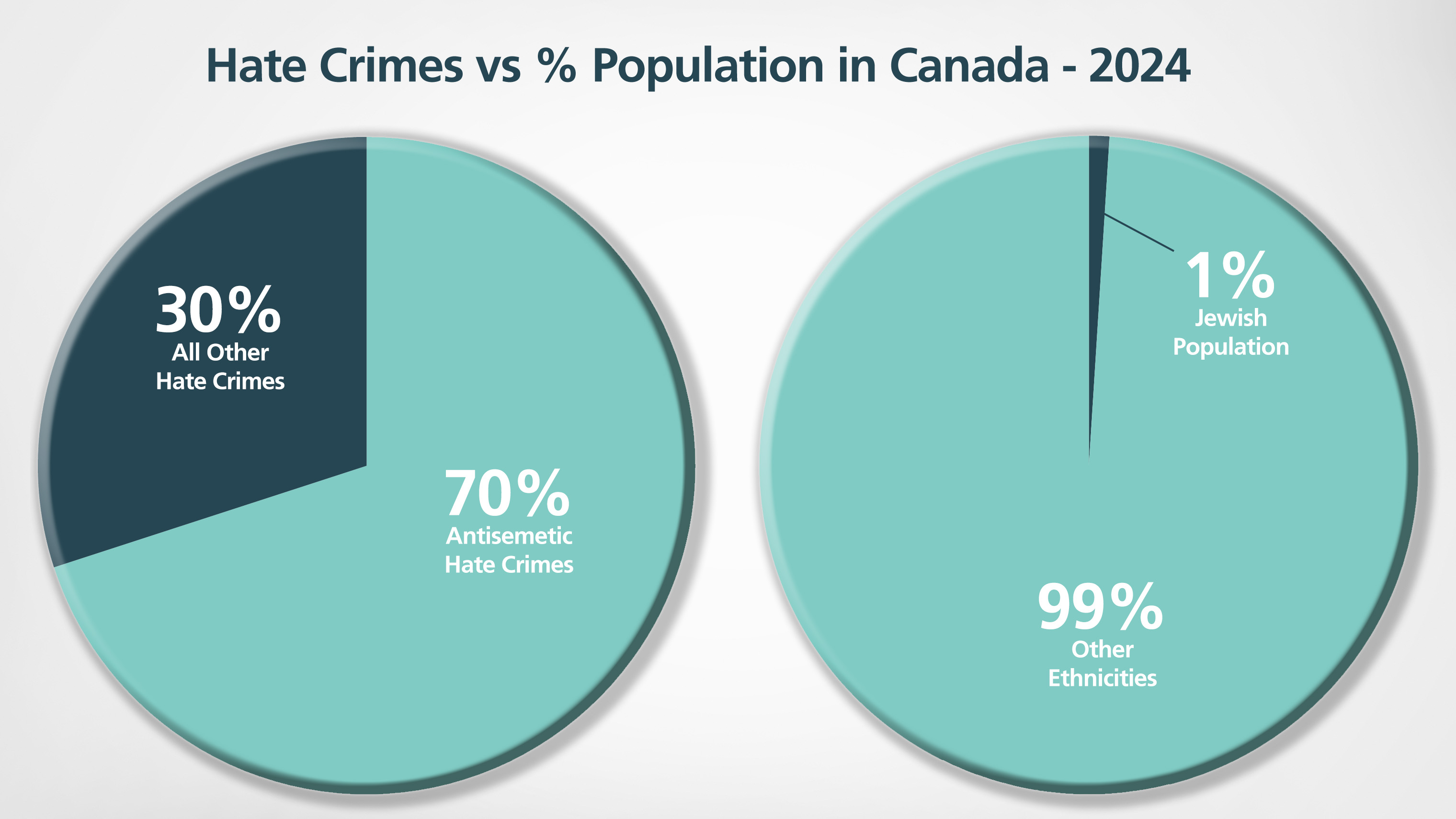
Despite Jews comprising less than 1 percent of the Canadian population, they remain the victims in about 70% of religion-based hate crimes reported to the police, according to recent national data (2023–2024).
In 2024 alone, B’nai Brith Canada recorded 6,219 antisemitic incidents, a staggering 124% increase in just two years. These included violent assaults, threats, and acts of vandalism. Police-reported hate crimes against Jews jumped 71% between 2022 and 2023.
Antisemitism today rarely announces itself outright. It arrives cloaked in moral language, woven into movements that claim to fight for justice. When hatred is framed as activism, it gains moral cover and social legitimacy. What was once condemned as prejudice is now too often excused as advocacy — a dangerous evolution that normalizes hostility toward Jews within the public conscience.
And this isn’t only happening on our streets – it’s happening in our schools.
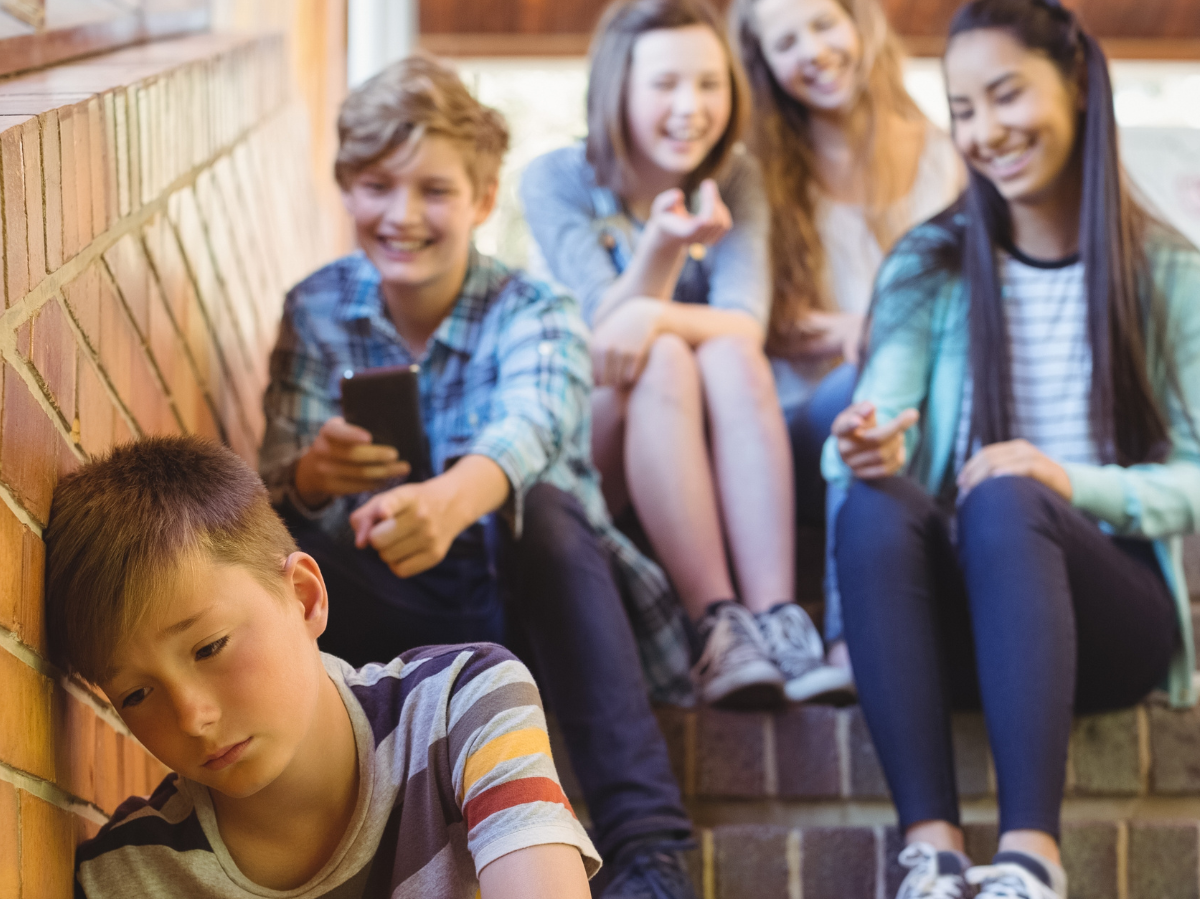
According to the Government of Canada, nearly three-quarters of all reported antisemitic incidents in Ontario schools occurred within the Toronto District School Board (TDSB) and York Region District School Board (YRDSB)—two of the country’s largest and most diverse educational institutions. These incidents range from antisemitic graffiti to verbal harassment and threats.
These aren’t isolated acts of ignorance. They are warnings. Indicators that antisemitism is not just resurfacing – it is embedding itself into the environments where our children learn and grow.
Institutional Failure: Inclusion That Excludes Jews
Despite these realities, antisemitism often remains a blind spot in many anti-hate and equity initiatives. School boards, universities, and advocacy groups have introduced vital programs addressing anti-Black racism, anti-Asian hate, Islamophobia and LGBTQ+ inclusion. Yet, the fight against antisemitism is frequently absent, diluted, or dismissed as political rather than moral.
Government measures—like Ontario’s expansion of Holocaust education—are welcome but far from enough. Too many anti-hate toolkits and professional development sessions omit or minimize antisemitism, leaving Jewish students and staff isolated, misunderstood, or afraid to speak out.
Inclusion, when practiced selectively, becomes exclusion. When “everyone is welcome—except for Jews,” we are replicating the very logic of the ideologies we claim to oppose.
Diversity Misused: When Inclusion Gives Space to Hate
Diversity is one of Canada’s greatest strengths – an ideal that promises a society where all cultures and identities thrive. Yet, this noble concept can be manipulated, cloaked in progressive language that enables harmful ideologies to flourish in plain sight.
When hate, especially antisemitism, is disguised as advocacy or “legitimate discourse,” it grants prejudice a seat at the table. That distortion creates a paradox: principles meant to unite us are twisted to divide us.
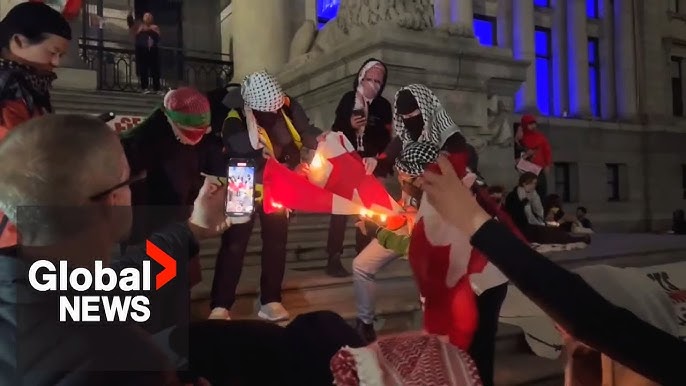
Protesters in Toronto waved Hezbollah flags and desecrated Israeli flags.
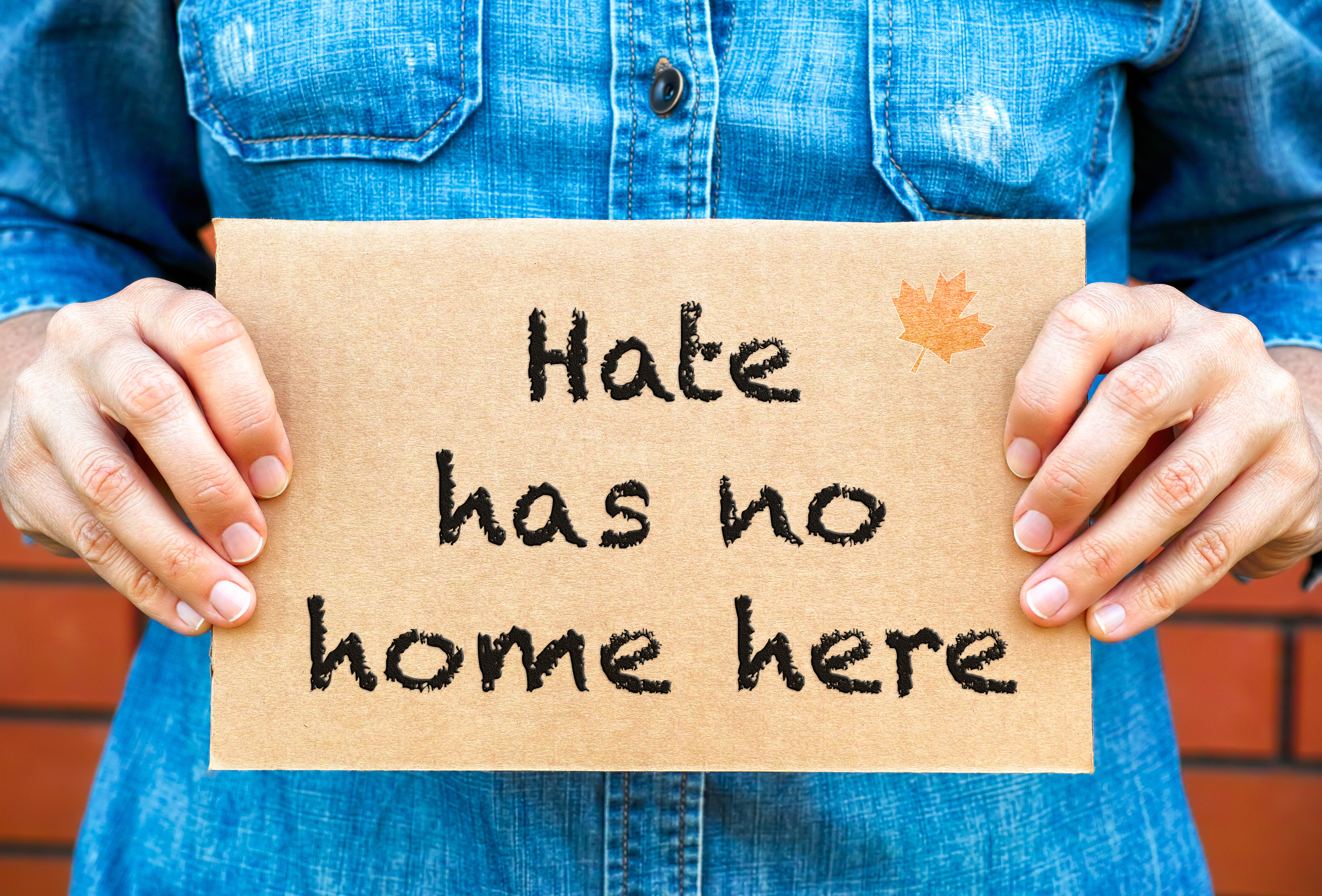
The hate visible in our streets, our schools, and online is not a Canadian value. Canada’s strength lies in genuine respect and moral consistency, not selective empathy. If we fail to defend our shared values, we risk having them redefined by those with ill intent.
Diversity must never be a shield for hate, nor a pretext to silence Jewish voices. True inclusion protects every community and ensures diversity builds bridges – not walls.
Embracing Individual and Collective Identity: Unity as Our Strength
Canada’s multicultural identity is often described as a mosaic – a beautiful blend of differences. But while we celebrate our individuality, we must not lose sight of our collective identity as Canadians.
When society fractures into competing groups, when empathy is distributed based on identity, we lose the cohesion that sustains democracy and peace.
Our enduring strength lies in unity – in the shared values of dignity, respect, and justice. Hate marches on our streets are profoundly un-Canadian and must be unequivocally condemned. Just as we would never tolerate KKK marches, we must not excuse those that target Jews.
Without leadership and accountability, chaos fills the vacuum. Laws meant to protect all citizens must be applied consistently, or they lose their moral power. If we remain silent, we allow others to define what it means to be Canadian, and to rewrite our shared values in the process.
Bridge: From Awareness to Responsibility
The numbers are sobering, but statistics alone do not drive change—people do. Educators, writers, and community leaders hold an extraordinary power to shape the moral imagination of the next generation. Our classrooms, our words, and our silence each send messages about whose pain matters and whose does not.
The presence of antisemitism in our schools, particularly where inclusion should thrive, reminds us that awareness is not enough. What’s needed now is moral courage—the willingness to name antisemitism even when it is uncomfortable, and to ensure that every conversation about equity includes Jewish identity as part of our shared human story.
What We Can Do: Education as the Antidote to Hate
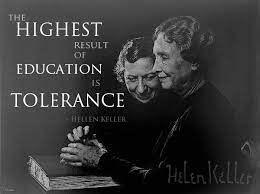
Education has always been the first line of defense against ignorance—and the most enduring force for empathy.
To counter antisemitism, we must make its study and recognition a living part of our educational culture, not a historical footnote. That means ensuring professional learning, curriculum design, and classroom conversations reflect a deep understanding of antisemitism – its history, its modern expressions, and its devastating consequences.
This isn’t about politics. It’s about humanity.
When educators frame these lessons through universal values – fairness, dignity, and moral clarity – they help students see that hate doesn’t exist in isolation. It grows in silence, and it spreads when unchallenged.
We can model true inclusion by:
Naming antisemitism explicitly in anti-hate policies.
Including Jewish voices and stories in literature and classroom conversations.
Teaching critical literacy, so students can recognize when “advocacy” masks prejudice.
Responding consistently – in tone and in policy – to protect all students equally.
These small acts build moral resilience. They teach that being Canadian means standing up for one another, even, and especially, when it’s uncomfortable.
A Call to Courage
#NeverAgain is not a slogan – it’s a promise. Yet for the past two years, institutions we counted on, to remind us of the dangers of forgetting, are sitting idly by, and in some cases, allowing it to take root in their spaces, yet again.
The same mechanisms – scapegoating, vilification, institutional neglect, and social normalization – are again visible today.
To stay silent now is to let others define what it means to be Canadian, and what it means to be human. To speak up is to affirm that our values are not negotiable.
As educators and writers, we hold a quiet but profound power: the power to shape conscience. The classroom, the page, the conversation, each can become a place where clarity and compassion take root.
Antisemitism will not vanish on its own. But through education, truth-telling, and moral conviction, we can ensure it never finds comfort here again.
Lora
It is my hope that, as educators, we can lead thoughtful conversations about empathy, respect, and truth in our classrooms. If you are looking for a simple place to start, the Antisemitism Teacher Toolkit provides ready-to-use activities and discussion prompts to guide meaningful dialogue.
As we witness an alarming rise in antisemitism worldwide, we’re reminded of the important role parents and educators play in pushing back against violence, intolerance and hate.
Now, more than ever, it is imperative for us to lead by example and instil compassion in our students’ hearts, an essential ingredient for a healthy, morally driven society.As our children’s most powerful influencers, we are their conduit to the world. The way we interact and talk about others, what we say, or don’t say, becomes vital in their understanding of the world. By reinforcing kindness, tolerance, and compassion, we embolden our children with the skills to live peacefully and comfortably in a diverse world.
Equally imperative is that while we teach our students to be accepting of different views, ideas and thoughts, a hard line must be drawn to disallow tolerance for destructive ideologies based on hate. Violence and its glorification should never be the end result of differing viewpoints. Nothing but destruction awaits there. Teachers can counteract learned biases and attitudes of intolerance that children may learn elsewhere. Stereotypes and lies must be challenged and rooted out through education.
When we explicitly teach our students to respect those who are different from us, the cycle of hate is challenged and disrupted. This is especially important in today’s world where we see hostility based on national and religious differences. We must prepare our students to live in a diverse world, with people that may have different beliefs and experiences than them. We must teach our children to look at the world from different perspectives and challenge the notion that differences make us enemies. Simply put, diversity means we have more partners to learn from. It is this uniqueness that enriches the world.
Most importantly in today’s world, we must teach our children not to tolerate hate. We must encourage them to counter evil with acts of kindness and love, with the inner light they all have.
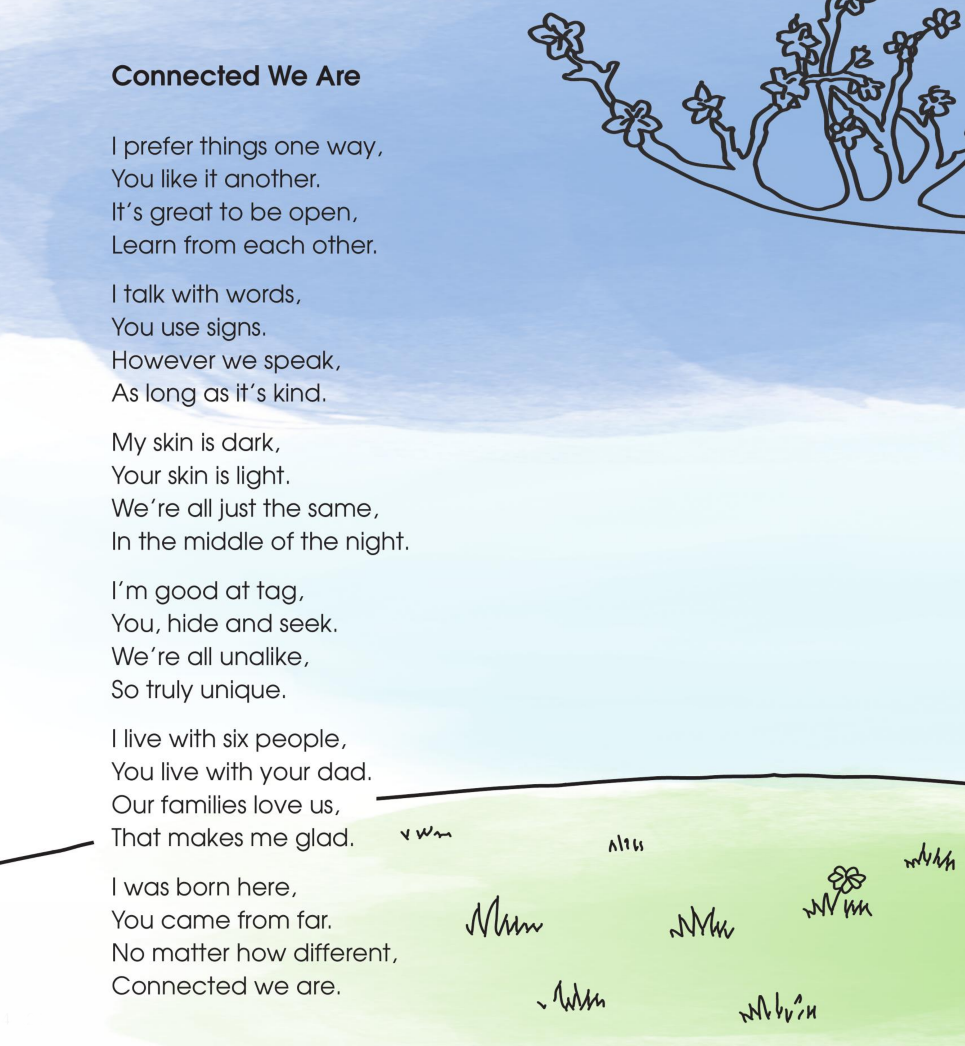
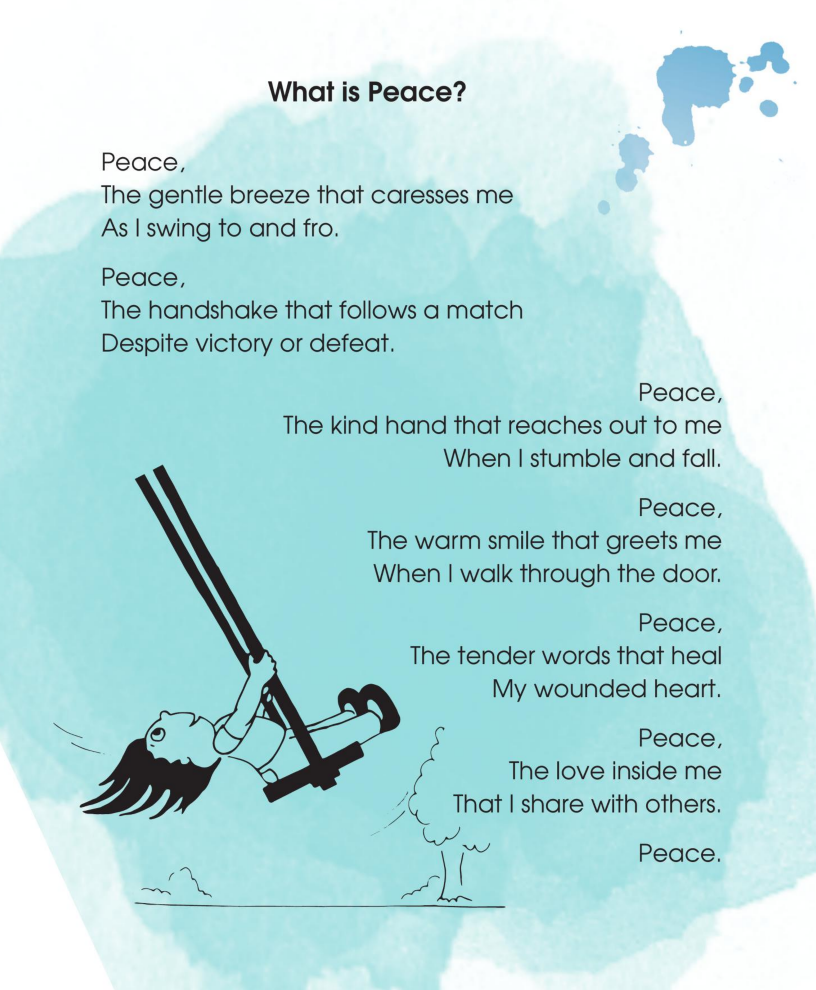
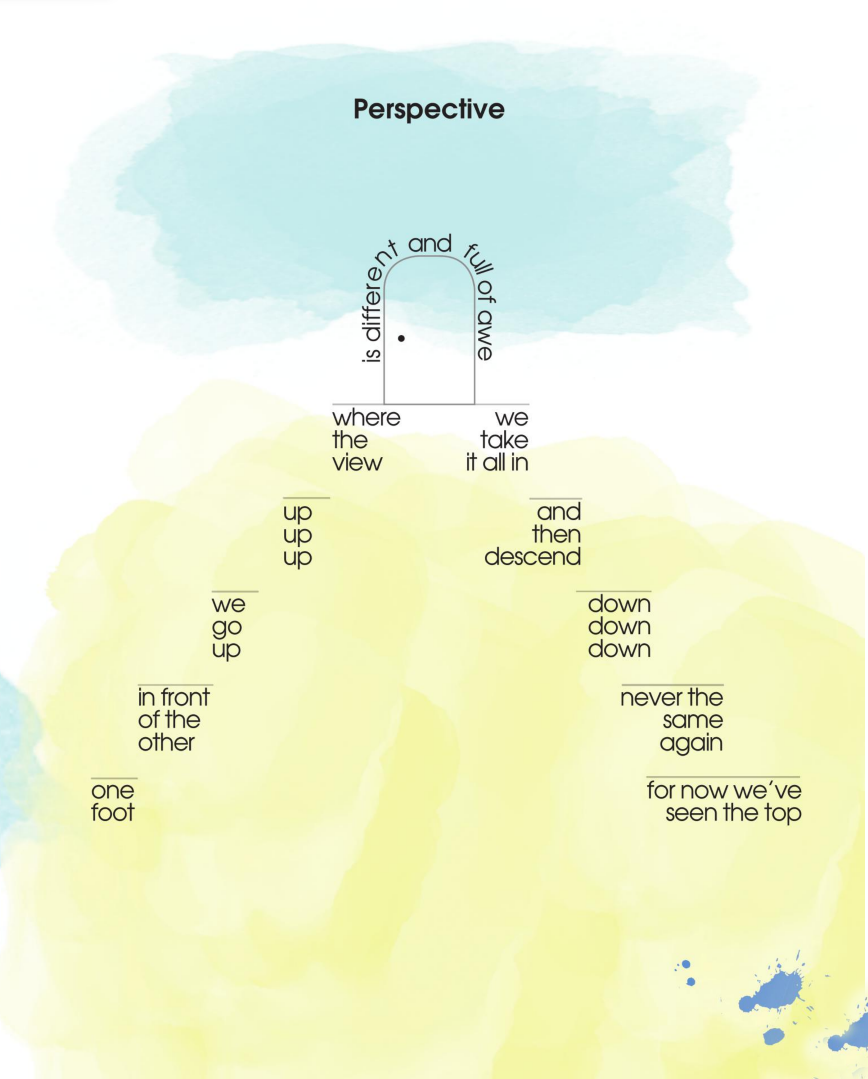
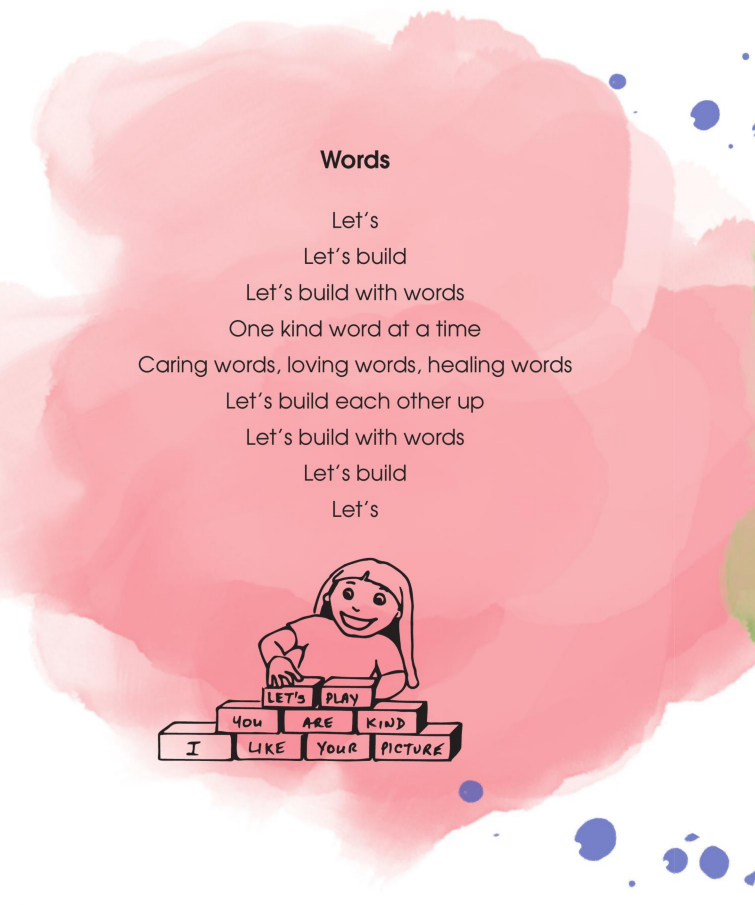
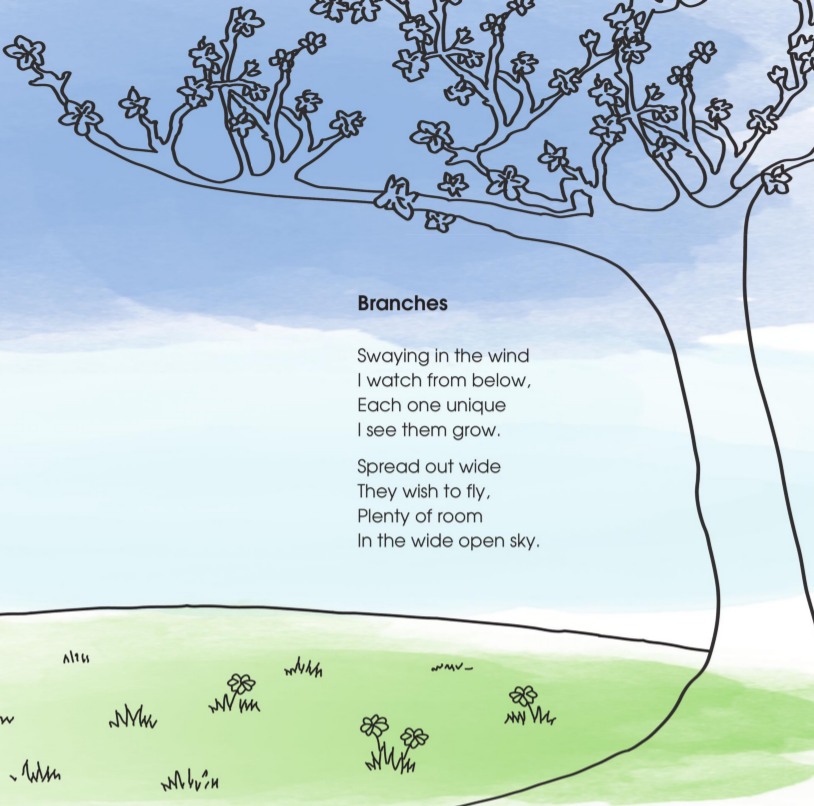
With that in mind, I would like to share some of my poems from the book, A Sackful of Poems. It is my hope that they can be useful in starting important conversations with our students – discussions about tolerance, peace, empathy, kindness, diversity, acceptance, appreciating differences, and recognizing how our words and actions can hurt or heal.
With hope for a more compassionate future,
Lora
To download a free copy of the poems for your personal use at home or in the classroom, please click HERE.
On October 7th, 2023, Hamas, an internationally recognized terror group, invaded Israel and committed unspeakable, inhumane atrocities against innocent Israeli civilians – an act that has left the global community in heart-wrenching shock.
Babies snatched from their mother’s arms, shot and beheaded. Children axed, murdered while sleeping, tied and piled, burnt alive. Girls raped and maimed, paraded as trophies. Parents and children, bound, beaten, tortured in each other’s sight. Men and women, young and old, kidnapped to a fate unknown. Families terrorized as they answered calls, witness to their loved ones’ execution.
Pure evil.
All of this, while Hamas supporters in Gaza cheered and celebrated, proudly waving their flags and antisemitic placards. All the while, here in Canada, on our streets and school campuses, terrorist sympathizers celebrated the massacre of innocent lives, echoing vile sentiments of Jewish genocide.
Vicious. Heartbreaking. How on earth did we get here? Here, where rape is celebrated by other women. Here, where shooting Holocaust survivors is cheered post a Never Again era. Here, where slicing a mother’s womb and taking a life not yet born is glorified.
While most of the world came together in love and support, heartless human beings celebrated; celebrated the shooting, burning and beheading of children and babies! There are simply no words.
In times of heart-wrenching tragedy and chaos, it is often educators who find themselves at the forefront of efforts to make sense of a world gone awry. I often reach out to you to recommend books for kids, enlighten you on important people in children’s literature and sometimes comment on how we see the world and how it could make sense for kids. Today, I’m reaching out to you for something completely different. Today I seek your support to help change this devastating trajectory, where the global moral compass has gone askew, where young minds can no longer decipher truth from corruption, where the media infects to breed a heartless society, while others yet, sit silently and watch.
The ensuing celebrations by terrorist sympathizers is absolutely abhorrent and inexcusable. It is indicative of an ethical decay permeating our “woke”, yet morally adrift world. While Jewish communities worldwide mourn the death of their loved ones, Hamas supporters taunt and inflict more pain to the wounds, chanting, Gas the Jews, holding signs that call to wipe Israel off the map, handing out sweets, dancing, cheering, celebrating. How on earth did we get to a place so callous and vile, a world so detached from what it means to be human? A world where the barbaric slaughter of innocent Jews is met with a call to murder all Jews worldwide? Where is the outrage?
Regrettably, this horrifying call for genocide echoes a dark and haunting chapter in history. It is a disturbing reminder of the sentiments and principles that once facilitated the systematic extermination of six million Jews during the Holocaust in Nazi Germany. This malevolent ideology thrives on vilification, dehumanization, desensitization, and unwavering justification, shamelessly parading on our streets still today, infiltrating school campuses, dominating news outlets, and permeating social media platforms.
The relentless indoctrination of young minds has left an indelible mark, grooming them with an onslaught of hate-filled propaganda directed at Israel, and by extension, Jews across the globe. This prolonged exposure has reached a point where distinguishing fact from fiction, discerning good from evil, has become an overwhelming challenge. Tragically, this distorted reality finds its expression in the odious rallies that endorse terror and violence. We witness a disheartening culmination of toxic messaging, misleading teachings, revisionist history, fake news, biased media narratives, celebrity endorsements, the intersectionality of minority groups, and the exploitation of a victimhood mentality.
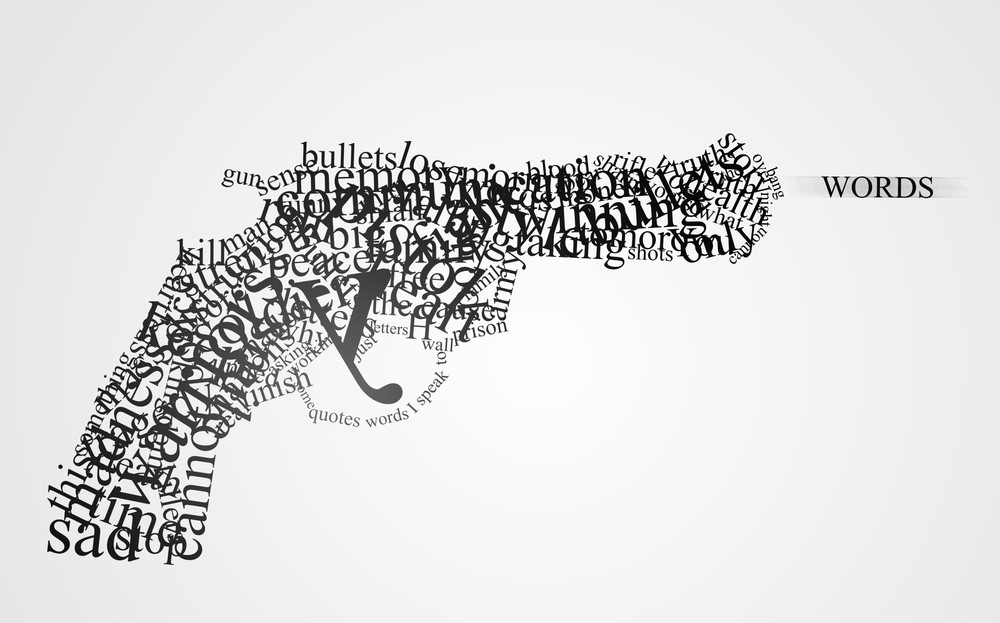
In the dynamic realm of social media, words are powerful, capable of building or destroying with precision. As educators, we bear the responsibility to ensure that our students understand the gravity of their digital expressions, not falling prey to the insidious influence of memes, hashtags, likes and facile buzzwords. Words fired without comprehension are akin to firing bullets oblivious to where they land, an action both reckless and harmful.
It is our role to guide students in comprehending the impact of their words. We must equip our youth to resist the allure of the herd mentality, to withstand social pressures that may lead them to parrot ideologies they do not fully understand. The path to moral literacy in our present world necessitates the ability to discern and sift through propaganda and bias, in pursuit of what is genuine and truthful. Our mission is to raise a generation of critical thinkers, not keyboard warriors whose words aim to hurt and destroy from a detached distance.
As teachers, we must ask ourselves, where have we lacked? Where do we need more education? Is it science or math, or perhaps the injection of emotional intelligence and a sense of morality? We’ve seen this before, we’ve lived through the horror, yet the world is sleeping. The murder of six million Jews did not begin with gas chambers, it began with a wicked idea and people turning a blind eye. It began with finger pointing and blaming. It began with lies. What we see today is a new oppressor, but an old propaganda.
I remember the terror attacks on 9-11. It was 22 years ago and my first year teaching. I had a grade two class. The announcements came on and I froze as I tried to digest what I was hearing. How would I explain this to my students? After our lessons about love, respect and kindness, how would I make meaning of something that lacked all of that? Then driving home that day I heard someone on the radio quote Mr. Rogers, “Look for the helpers”. And so after the questions and digesting the facts, we focused on rebuilding with the love that poured out.
Twenty two years later, another evil has crept on our doorstep, this time targeting Jewish communities worldwide. I can only hope that my students remember my words today, and look at the massacre in Israel with nothing but compassionate eyes. I pray that today they are the helpers. This gives me hope in a world gone awry.
I’d like to end with an excerpt from a book by Dr. Chaim Ginott’s, “Teacher and Child.” It speaks to our role as educators, and what the world needs more of right now.
I am a survivor of a concentration camp. My eyes saw what no person should witness: gas chambers built by learned engineers. Children poisoned by educated physicians. Infants killed by trained nurses. Women and babies shot by high school and college graduates. So, I am suspicious of education. My request is this: Help your children become human. Your efforts must never produce learned monsters, skilled psychopaths or educated Eichmanns. Reading, writing, and arithmetic are important only if they serve to make our children more human.
As Remembrance Day approaches, we are reminded of the sacrifices made for a better tomorrow. This moment of reflection serves as a poignant reminder of our duty as educators to steer our students away from moral decay. Let this day inspire us to embrace our role, engage in meaningful conversations, and cultivate empathy in the young minds we nurture. As we remember the past, let us also shape a more compassionate and ethical future, where the values that underpin our society are not commodities, but pillars of our shared humanity.
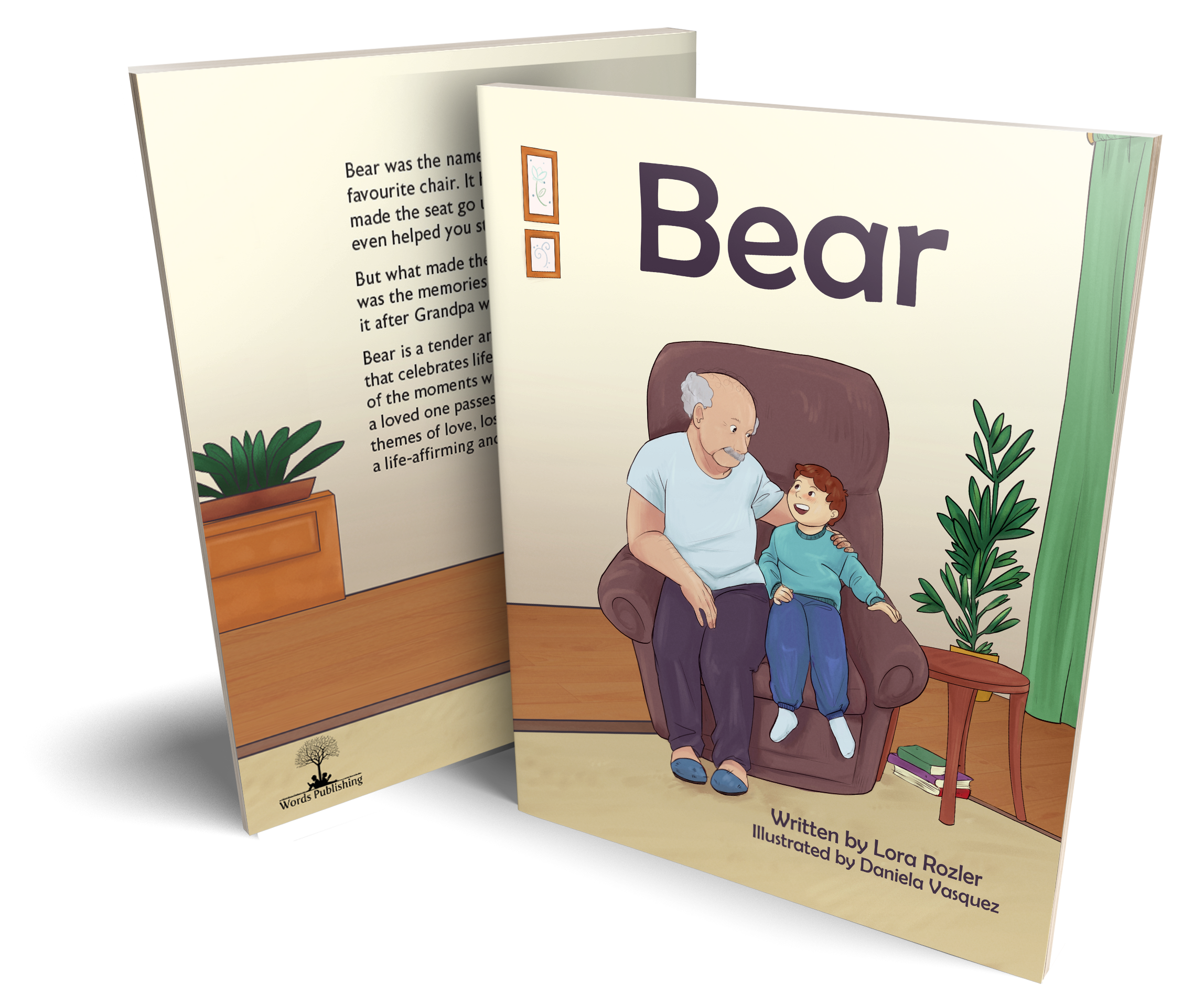
I’m excited to announce the release of my latest picture book, Bear. This one is especially close to my heart! Almost two years ago I lost my father to ALS. Through the heartache I found peace in Bear, a story about love, loss, and connection after losing a loved one.
Bear was the name of Grandpa’s favourite chair. It was big and brown and furry. It had buttons that made the chair go up and down, and even helped you stand. But what made it really special was the memories that lingered long after Grandpa was gone. Bear is a tender and comforting tale for young readers that celebrates life and the significance of the moments we hold dear when a loved one passes away. Bear explores themes of love, loss and connection in a life-affirming and uplifting tale, reminding us that those we cherish are never more than a memory away.
Publication Date: November 22, 2020 Available in major retailers including Amazon | Barnes and Noble
Whether it be in your classroom or your home, it’s not always easy to start difficult conversations or clarify confusing times for children. But the best conversations can begin with a story. They are a great way to expose children to different narratives and teach them about people outside of their immediate family. Having a diverse range of books can be a powerful tool in teaching children about tolerance and acceptance, all the while celebrating uniqueness and individuality. With that in mind, I’ve put together a list of books to help begin important discussions, not only about race, but also about inclusion, diversity and the differences that make us special.
Follow a group of children through a day in their school, where everyone is welcomed with open arms. A school where kids in patkas, hijabs, and yarmulkes play side-by-side with friends in baseball caps. A school where students grow and learn from each other’s traditions and the whole community gathers to celebrate the Lunar New Year.
Lily and Salma are best friends. They like doing all the same things, and they always eat lunch together. Lily eats peanut butter and Salma eats hummus-but what’s that between friends? It turns out, a lot. Before they know it, a food fight breaks out. Can Lily and Salma put aside their differences? Or will a sandwich come between them? The smallest things can pull us apart-until we learn that friendship is far more powerful than difference.
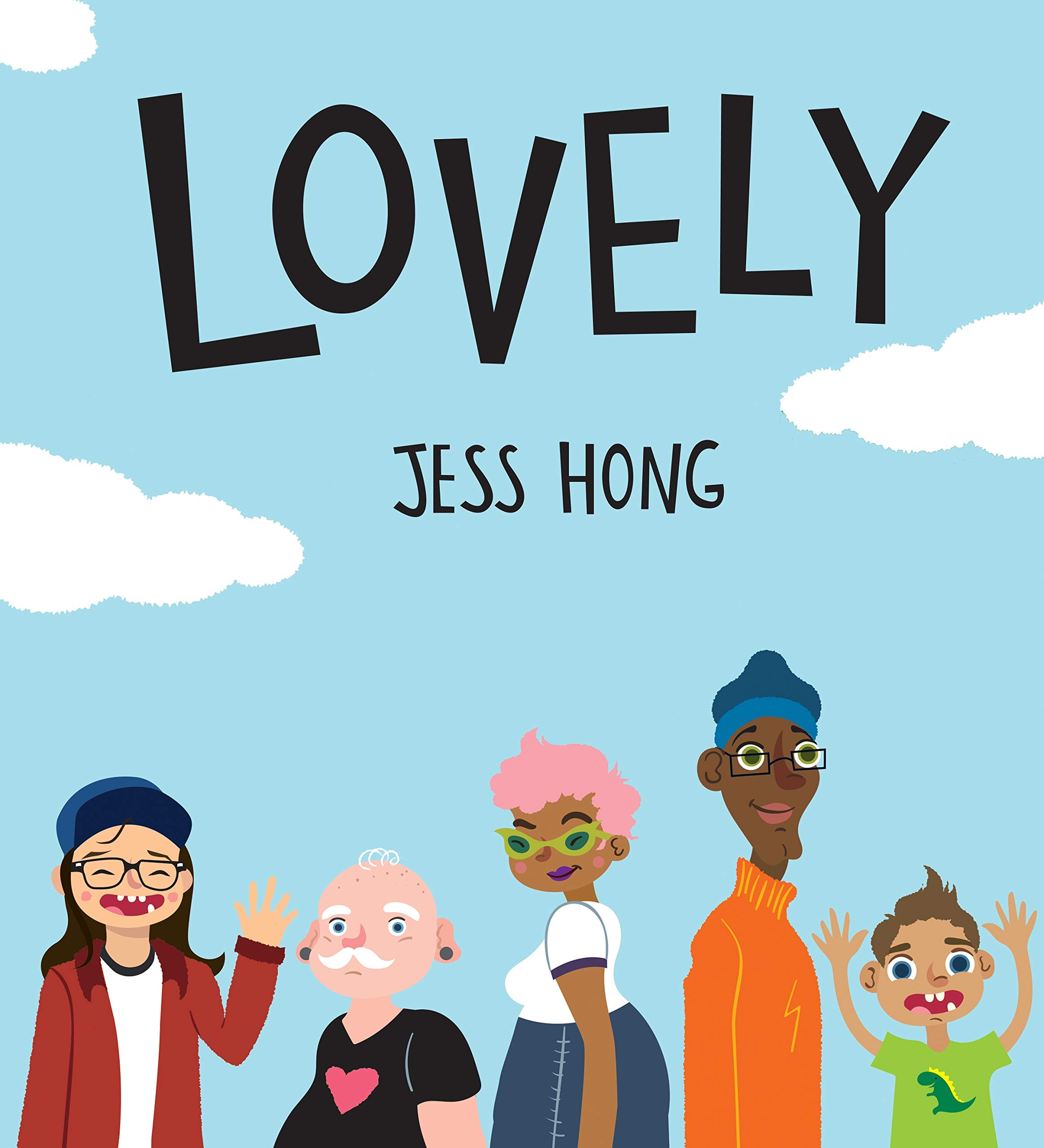
Big, small, curly, straight, loud, quiet, smooth, wrinkly. Lovely explores a world of differences that all add up to the same thing: we are all lovely! The simple, minimal text shows opposites: “black”—represented by a white woman in all black, “white”—a black woman with white hair, but includes them all under the umbrella of “lovely.”
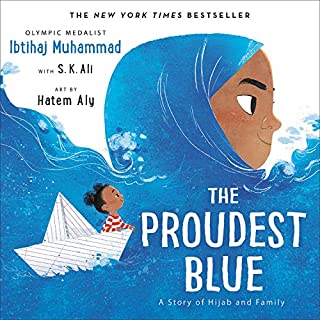
With her new backpack and light-up shoes, Faizah knows the first day of school is going to be special. It’s the start of a brand new year and, best of all, it’s her older sister Asiya’s first day of hijab, a hijab of beautiful blue fabric, like the ocean waving to the sky. But not everyone sees hijab as beautiful, and in the face of hurtful, confusing words, Faizah will find new ways to be strong.
“Like the sun, I’m here to shine,” the rhyming text begins, and each page that follows offers an affirmation of all the strength, talent, and promise that young girls have within them. While praising their inherent strengths and virtues, the text also encourages girls to show kindness, to be fighters, and to accept their fellow female for who she is and embrace all the unique qualities that make her that way. And no matter what, to know that no matter what the world expects of her or tells her she must be, she needs only to remind herself of the truth: “I am enough.”
Skin Like Mine is a fun and creative way to address and celebrate diversity among young children. It emphasizes the importance of not only accepting others, but accepting and loving yourself. This story compares skin colors with foods instead of with other people. From brownies, cakes, and caramel, this book is a lighthearted way of breaking the barrier down when talking about different skin colors and loving the body we were given.
The story of the beautiful relationship between a little girl and her grandfather. When she asks her grandfather how to say something in his language – Cree – he admits that his language was stolen from him when he was a boy. The little girl then sets out to help her grandfather find his language again. This sensitive and warmly illustrated picture book explores the inter-generational impact of the residential school system that separated young Indigenous children from their families.
Nate has a tough decision to make. Purim, a Jewish holiday, celebrated in part by the wearing of costumes, is coming up, and Nate has to decide between being an alien, his all-time favorite thing, or being a superhero like the rest of the boys in his class. He wants to fit in with his friends, but he really wants to be an alien. With the help of his two dads and his sister, he comes up with a costume that works for him. One of his dads shares the story of Queen Esther to help Nate see the value in being who you really are, even if it’s different from other people. Through the support of his family, Nate decides to be both brave, like a superhero, and original, like himself, to become a “super alien.” A really nice picture book about self-expression.
Zuri’s hair has a mind of its own. It kinks, coils, and curls every which way. Zuri knows it’s beautiful. When Daddy steps in to style it for an extra special occasion, he has a lot to learn. But he LOVES his Zuri, and he’ll do anything to make her, and her hair happy. Tender and empowering, Hair Love is an ode to loving your natural hair and a celebration of daddies and daughters everywhere.
Henry Brown doesn’t know how old he is. Nobody keeps records of slaves’ birthdays. All the time he dreams about freedom, but that dream seems farther away than ever when he is torn from his family and put to work in a warehouse. Henry grows up and marries, but he is again devastated when his family is sold at the slave market. Then one day, as he lifts a crate at the warehouse, he knows exactly what he must do: He will mail himself to the North. After an arduous journey in the crate, Henry finally has a birthday — his first day of freedom.
Elliot lives in America, and Kailash lives in India. They are pen pals. By exchanging letters and pictures, they learn that they both love to climb trees, have pets, and go to school. Their worlds might look different, but they are actually similar. Same, same. But different!
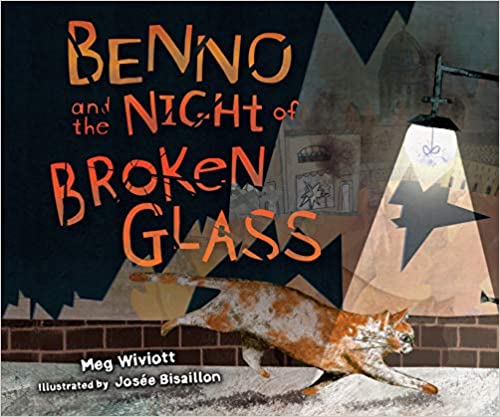
A neighborhood cat observes the changes in German and Jewish families in its town during the period leading up to the Night of Broken Glass – that becomes the true beginning of the Holocaust. This cats-eye view introduces the Holocaust to children in a gentle way that can open discussion of this period.
The new kid in school needs a new name! Or does she? Being the new kid in school is hard enough, but what about when nobody can pronounce your name? Having just moved from Korea, Unhei is anxious that American kids will like her. So instead of introducing herself on the first day of school, she tells the class that she will choose a name by the following week. Her new classmates are fascinated by this no-name girl and decide to help out by filling a glass jar with names for her to pick from. But while Unhei practices being a Suzy, Laura, or Amanda, one of her classmates comes to her neighborhood and discovers her real name and its special meaning. On the day of her name choosing, the name jar has mysteriously disappeared. Encouraged by her new friends, Unhei chooses her own Korean name and helps everyone pronounce it—Yoon-Hey.
These children and animals are all very different to each other. Some are big, some are small. Some are gentle, some are rough. Everyone is playful, but who’s the best at hiding? One thing’s certain: they all love a good bedtime story! The perfect picture book for little ones who are just beginning to make sense of their place in the world.
A timely book about how it feels to be teased and taunted, and how each of us is sweet and lovely and delicious on the inside, no matter how we look.The boy is teased for looking different than the other kids. His skin is darker, his hair curlier. He tells his mother he wishes he could be more like everyone else. And she helps him to see how beautiful he really, truly is.
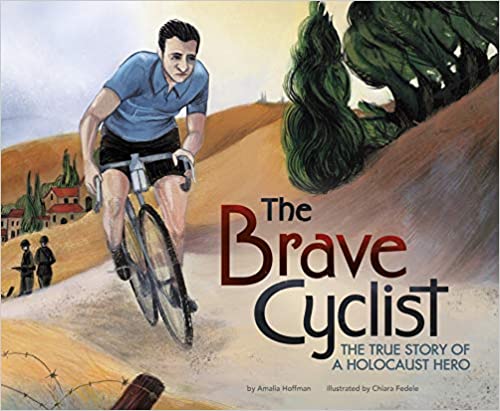
Once a skinny and weak child, Gino Bartali rose to become a Tour de France champion and one of cycling’s greatest stars. But all that seemed unimportant when his country came under the grip of a brutal dictator and entered World War II on the side of Nazi Germany. Bartali might have appeared a mere bystander to the harassment and hatred directed toward Italys Jewish people, but secretly he accepted a role in a dangerous plan to help them. Putting his own life at risk, Bartali used his speed and endurance on a bike to deliver documents Jewish people needed to escape harm. His inspiring story reveals how one person could make a difference against violence and prejudice during the time of the Holocaust.
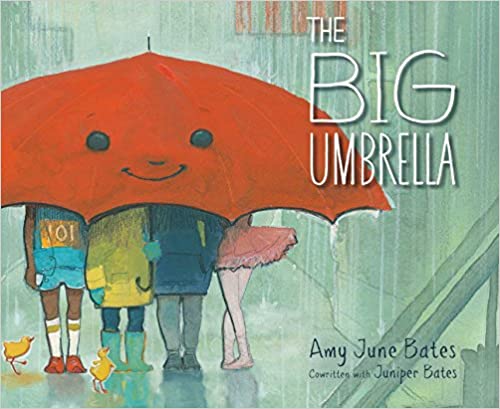
By the door there is an umbrella. It is big. It is so big that when it starts to rain there is room for everyone underneath. It doesn’t matter if you are tall. Or plaid. Or hairy. It doesn’t matter how many legs you have. Don’t worry that there won’t be enough room under the umbrella. Because there will always be room. A timeless picture book about acceptance.
Every Sunday after church, CJ and his grandma ride the bus across town. But today, CJ wonders why they don’t own a car like his friend Colby. Why doesn’t he have an iPod like the boys on the bus? How come they always have to get off in the dirty part of town? Each question is met with an encouraging answer from grandma, who helps him see the beauty—and fun—in their routine and the world around them.
Noah is different. He sees, hears, feels, and thinks in ways that other people don’t always understand, and he asks a lot of questions along the way. Noah loves science, especially the weather. His books usually provide him with the answers he needs, until one day, there’s one question they don’t answer—and that is where Noah’s windy adventure begins.This book celebrates the inquisitive nature of all children, including those on the autism spectrum, who cannot stop asking a question until an answer has been unearthed. The book contains a page of information for parents, caregivers, and educators about the importance of helping children feel good about their differences and know that being different is okay.
A young boy dreads his visits to his grandfather. They don’t share a language, so their time together is strained, awkward, and silent. Until they discover a shared love of drawing. Together, they find a common language through art. Drawn Together shows that meaningful relationships are possible even across communication barriers, and as their illustration styles start to blend together, it shows the connections they’ve made without words.
The Family Book celebrates the love we feel for our families and all the different varieties they come in. Whether you have two moms or two dads, a big family or a small family, a clean family or a messy one, Todd Parr assures readers that no matter what kind of family you have, every family is special in its own unique way.
The journey starts on a sunny day in New York City and ends on a beautiful San Francisco night, with stops in Mexico City, Rio de Janeiro, London, Paris, Cape Town, Cairo, Beijing, and Tokyo. These friendly babies welcome us to their cities with delightful greetings in their original languages (with English translations) in a simple narration that will appeal to any global mini citizen.
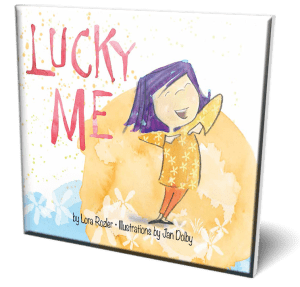
Lucky Me invites readers on a journey around the world to explore life’s simplest, yet often overlooked treasures. Pages come alive with a series of evocative, gratitude-filled messages, accompanied by Thank-yous translated into various languages, emphasizing global diversity.
Is there anything more splendid than a baby’s skin? Cocoa-brown, cinnamon, peaches and cream. As children grow, their clever skin does, too, enjoying hugs and tickles, protecting them inside and out, and making them one of a kind. Fran Manushkin’s rollicking text and Lauren Tobia’s delicious illustrations paint a breezy and irresistible picture of the human family — and how wonderful it is to be just who you are.
Seven-year-old Lena is going to paint a picture of herself. She wants to use brown paint for her skin. But when she and her mother take a walk through the neighborhood, Lena learns that brown comes in many different shades. Through the eyes of a little girl who begins to see her familiar world in a new way, this book celebrates the differences and similarities that connect all people.
With its heartfelt message and colorfully whimsical illustrations, “Our Class is a Family” is a book that will help build and strengthen that class community. Kids learn that their classroom is a place where it’s safe to be themselves, it’s okay to make mistakes, and it’s important to be a friend to others. When hearing this story being read aloud by their teacher, students are sure to feel like they are part of a special family.
Carl is an earthworm. He spends his days happily tunneling in the soil until a field mouse asks him a simple question that stops him short: “Why?” Carl’s quest takes him on an adventure to meet all the animals of the forest, each of whom seems to know exactly what they were put on this earth to do, unlike the curious Carl. But it’s not until the world around him has changed that Carl begins to realize everyone, no matter how small, makes a big difference just by being themselves.
Today is Pet Club day. There will be cats and dogs and fish, but strictly no elephants are allowed. The Pet Club doesn’t understand that pets come in all shapes and sizes, just like friends. Now it is time for a boy and his tiny pet elephant to show them what it means to be a true friend. A sweet story of friendship, acceptance, and inclusion.
Celebrating all that makes us unique and different, Skin Again offers new ways to talk about race and identity. Race matters, but only so much–what’s most important is who we are on the inside. Looking beyond skin, going straight to the heart, we find in each other the treasures stored down deep. Learning to cherish those treasures, to be all we imagine ourselves to be, makes us free.
So we’ve been cooped up at home for quite some time now due to the pandemic. For us adults, the use of technology plays a pertinent role in maintaining our social connection to the outside world. But for the little ones whose main form of socialization stems from the school environment, this can be especially difficult.
Social distancing keeps our children physically safe but how do we ensure they don’t socially wilt during this era of isolation?
Here are some simple ways to help your child stay connected to family and friends and develop important skills while doing so:
Phone conversations – This form of communication seems to have gone by the wayside with the increase of smartphones (talking has been traded in for texting) but it can be quite beneficial for our little ones who are still developing their oral communication and social skills.
Talking over the phone helps children learn how to start (and end) conversations, engage in a back and forth dialogue (understand the reciprocity of communication), improve attention span, increase vocabulary, build empathy, give insight into other’s lives, develop oral language skills (speaking, listening, questioning, clarifying, rephrasing) as well as build and maintain friendships.
Video chatting (i.e., WhatsApp, Zoom, Meet, Skype) – Just like speaking over the phone, this form of interaction is quite valuable as well. The added bonus here is the ability to see the other person’s expressions and reactions during the conversation. Reading body language is very important in understanding non-verbal communication. Learning to read gestures, tone of voice, posture and facial expressions can tell us a lot about our listeners. Are they attentive, bored, relaxed, happy, excited, confused? This can help young ones navigate the conversation better as they start to understand the give and take of communicating with others.
Video chatting can also allow children to introduce another branch of topics into their conversation. We all know from Show and Tell that children love to talk about their favourite toys and share their work with others. Video chatting allows for this kind of engagement more readily (and gives you a bit of a break).
Social Games (Roblox, Fortnite, Mindcraft, Maker 2) – Although you may to limit the amount of time your child spends on video games, certain games can provide your child with the opportunity to interact with friends virtually.
Just as physical exercise helps in improving and strengthening muscles, cognitive games can help with cognitive functions. It can help improve coordination, memory, attention, concentration, as well as problem-solving and social skills.
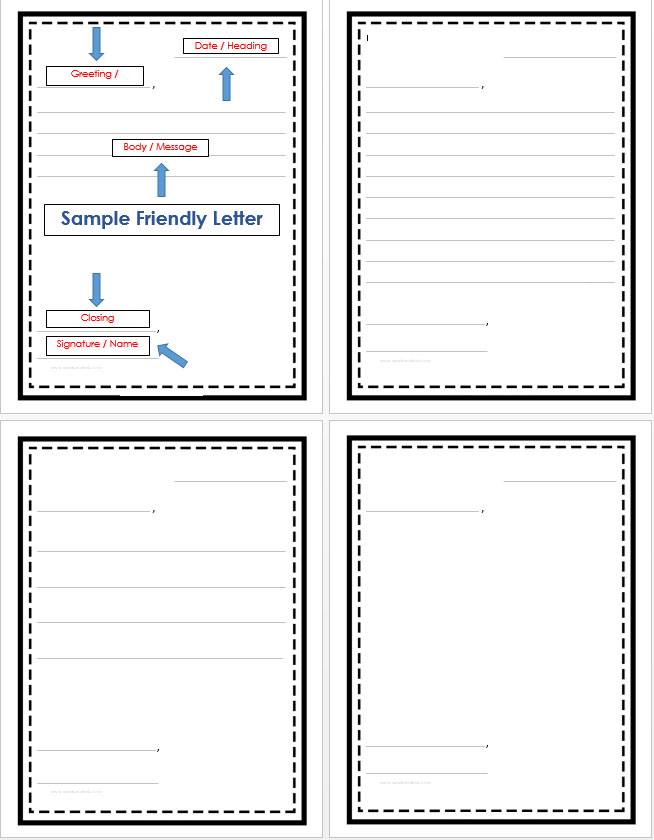
Writing Letters – Despite the prevalence of emails and text messages, everyone has to write letters at some point. Encouraging children to write letters from an early age will improve their communication, social and handwriting skills. It will also teach them how to structure letters. Letters can be valuable keepsakes as well.
Letter-writing does not only help children stay connected, but also reinforces important literacy skills and concepts. Writing letters can also be a lot of fun, especially if you can include different kinds of stationary, writing material, decorative stickers, stamps, and photos. The more creative children can get, the more they will gravitate toward this form of communication.
To introduce my students to the format of letter-writing, I wrote and shared a new poem with them, titledI Wrote a Letter.
The poem highlights the five elements of a friendly letter in a fun and lyrical way. If you are interested in downloading a copy for your personal use at home or in the classroom, please head over to my TPT store HEREto get the complete package. It includes three letter-writing templates (to accommodate different writing stages) and a sample page with headings.
Everyone loves to get mail, especially a nice note addressed just to them. Introducing this form of communication to your child will open up a new world to them, especially in today’s technological age where this is becoming a rarity.
Here are some amazing books to have on your bookshelf at home.
Fantastic book introducing kids to the concepts of discovery, relationships, the need to belong, bullying and adventure. Available in French as well. Amazon
Cute story book about a little girl and her conversation with a pie. Kids will love the delightful illustrations and the engaging story. Never has examining rules and consequences been so much fun. Amazon
This dynamic, beautifully illustrated picture book explores how the world says Thank You. Kids will discover the importance of gratitude in their everyday life. Amazon
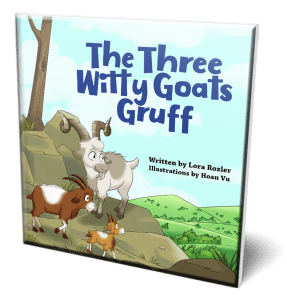
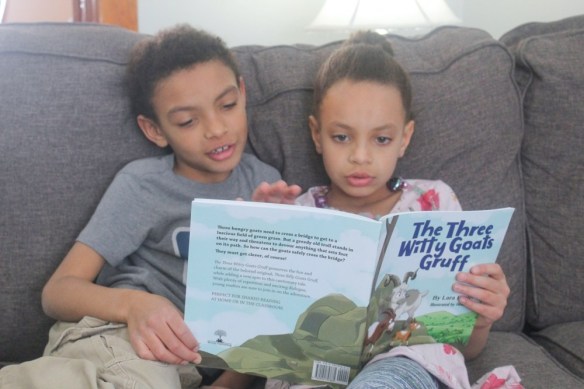
A charming and gorgeously illustrated adaptation of the old time favourite. Kids will enjoy the engaging conversations between the clever goats and the fearsome troll. Amazon
This inspiring collection of poems for children range in topic from educational to humourous, from seasonal to downright heartwarming. With over 90 pages of poems that will become timely treasures. Coming soon …
Hello everyone – happy Monday! I wanted to share my latest poem with you.
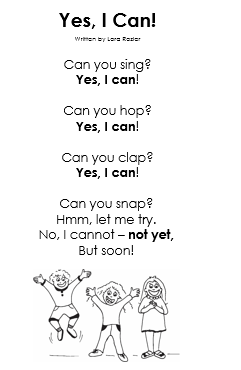
Yes, I Can! was inspired by a lot of self-defeating comments I’ve come to hear over the last 18 years teaching. Truthfully, if I had a nickel every time I heard a student say I can’t do it, I’d be off on a yacht somewhere right now (nah, maybe not – I get sea sick). Joking aside, the reality is that none of us are perfect. None of us can do everything. And sometimes, no matter how hard we try, we still don’t master various things – and that’s okay, at least we tried.
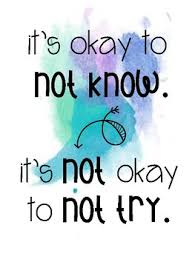
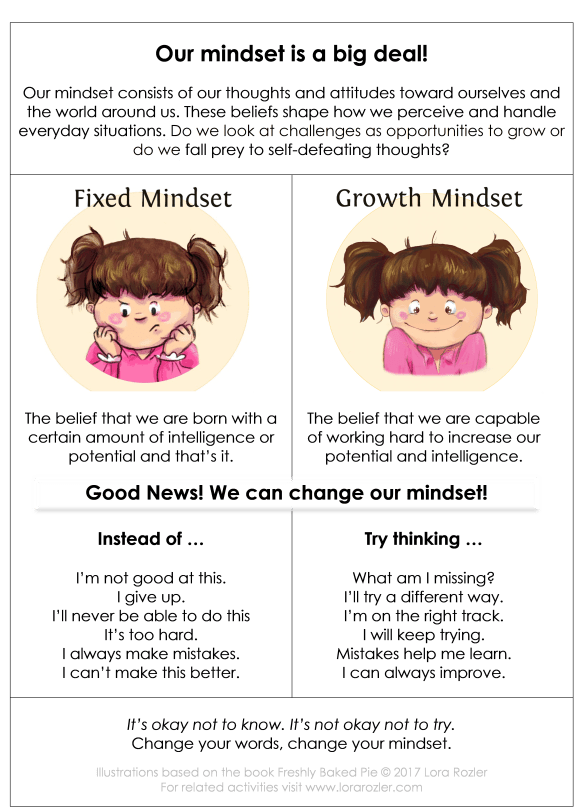
It’s when students give up before they even try that it’s NOT OKAY. That’s the point I’ve been trying to make with my students last week. Yes, some things are hard. Some tasks will challenge us. But the attitude we have toward challenges is what determines the outcome. It is this mindset, over time, that will shape and condition our thoughts and beliefs about ourselves. Our mindset consists of our thoughts and attitudes toward ourselves and the world around us. These beliefs shape how we perceive and handle everyday situations. Do we look at challenges as opportunities to grow or do we fall prey to self-defeating thoughts?
Yes, I Can! is a poem I wrote that celebrates what children can do, as well as embraces that which they cannot, yet, do. Teaching children to have a “Growth Mindset” is crucial in helping them become better learners. After all, in order to succeed at anything, we must persist and push ourselves forward, despite the challenges. Positive self-talk is what helps children persevere and not give up. Yes, I Can! encourages children to adopt positive self-talk. Instead of focusing on ‘I can’t do it!’, it re-frames their thinking, ‘I can’t do it, yet!’
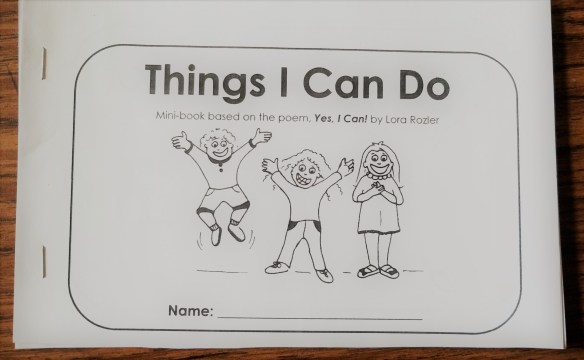
Along with the poem, I created a follow-up worksheet (rehearsing high-frequency word can) and a mini-book that is co-authored with me (my students were thrilled with the idea). It invites students to fill in a missing high-frequency word, as well as add a skill or task they can complete successfully, as well another skill they aspire to learn, reminding them that their mindset is the only thing in the way.
In all the excitement to teach children that our mindset is not a fixed state, I created a visual anchor for the classroom. Feel free to download a copy for your personal use by clicking on the image below.
To download a copy of the poem, Yes, I Can! along with the follow-up activities, click on the image below.











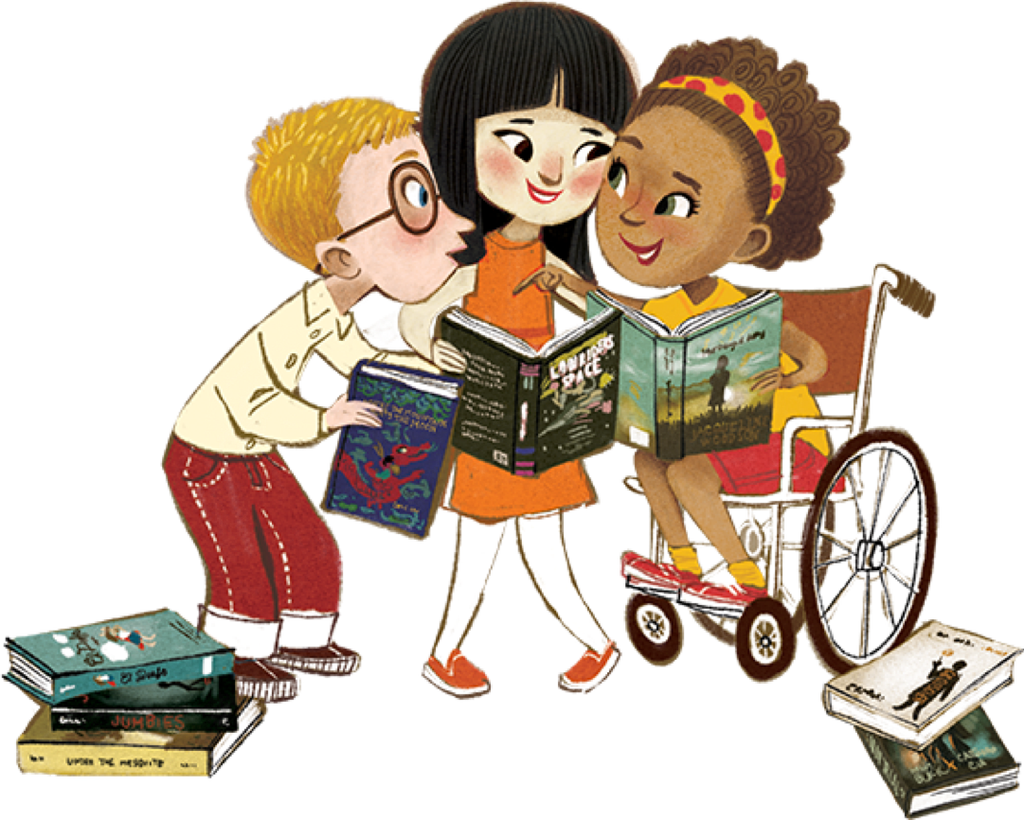 Whether it be in your classroom or your home, it’s not always easy to start difficult conversations or clarify confusing times for children. But the best conversations can begin with a story. They are a great way to expose children to different narratives and teach them about people outside of their immediate family. Having a diverse range of books can be a powerful tool in teaching children about tolerance and acceptance, all the while celebrating uniqueness and individuality. With that in mind, I’ve put together a list of books to help begin important discussions, not only about race, but also about inclusion, diversity and the differences that make us special.
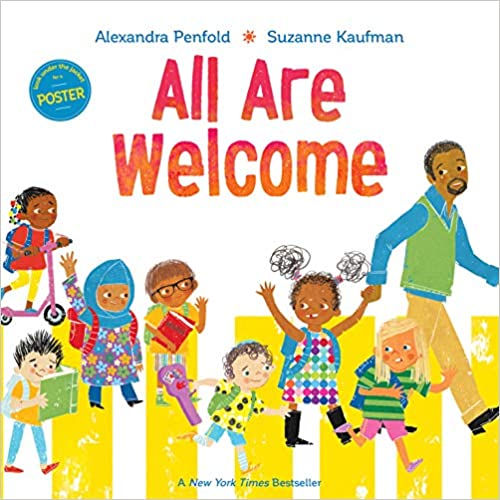 Follow a group of children through a day in their school, where everyone is welcomed with open arms. A school where kids in patkas, hijabs, and yarmulkes play side-by-side with friends in baseball caps. A school where students grow and learn from each other’s traditions and the whole community gathers to celebrate the Lunar New Year.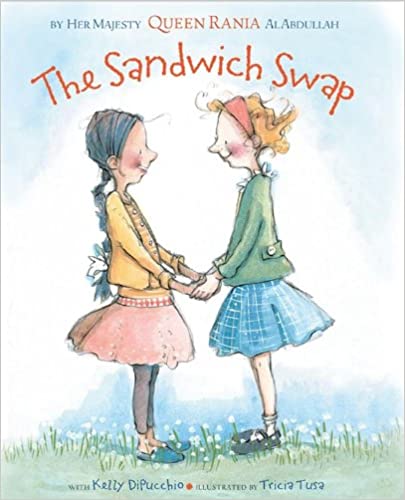
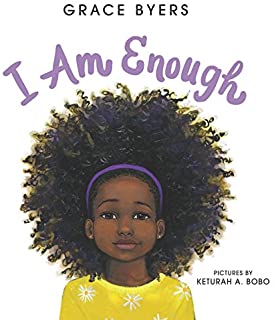 “Like the sun, I’m here to shine,” the rhyming text begins, and each page that follows offers an affirmation of all the strength, talent, and promise that young girls have within them. While praising their inherent strengths and virtues, the text also encourages girls to show kindness, to be fighters, and to accept their fellow female for who she is and embrace all the unique qualities that make her that way. And no matter what, to know that no matter what the world expects of her or tells her she must be, she needs only to remind herself of the truth: “I am enough.”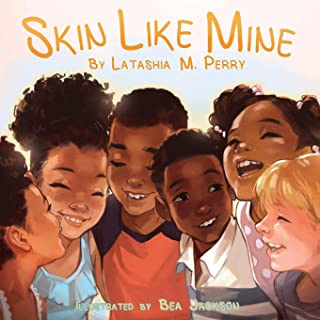
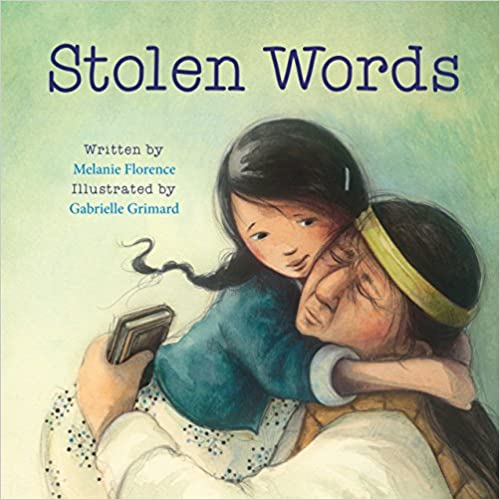 The story of the beautiful relationship between a little girl and her grandfather. When she asks her grandfather how to say something in his language – Cree – he admits that his language was stolen from him when he was a boy. The little girl then sets out to help her grandfather find his language again. This sensitive and warmly illustrated picture book explores the inter-generational impact of the residential school system that separated young Indigenous children from their families.
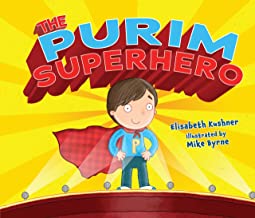 Nate has a tough decision to make. Purim, a Jewish holiday, celebrated in part by the wearing of costumes, is coming up, and Nate has to decide between being an alien, his all-time favorite thing, or being a superhero like the rest of the boys in his class. He wants to fit in with his friends, but he really wants to be an alien.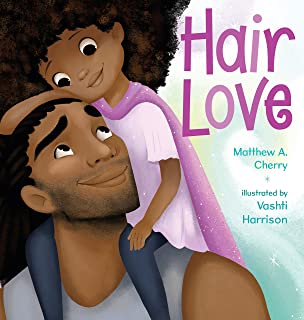
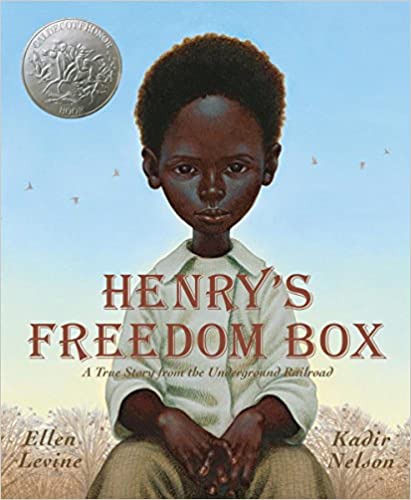 Henry Brown doesn’t know how old he is. Nobody keeps records of slaves’ birthdays. All the time he dreams about freedom, but that dream seems farther away than ever when he is torn from his family and put to work in a warehouse. Henry grows up and marries, but he is again devastated when his family is sold at the slave market. Then one day, as he lifts a crate at the warehouse, he knows exactly what he must do: He will mail himself to the North. After an arduous journey in the crate, Henry finally has a birthday — his first day of freedom.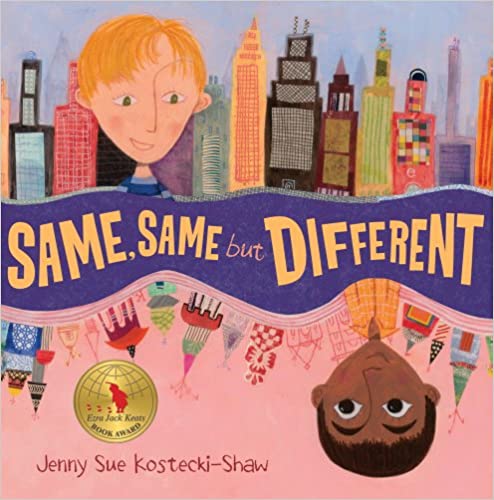
 The new kid in school needs a new name! Or does she? Being the new kid in school is hard enough, but what about when nobody can pronounce your name? Having just moved from Korea, Unhei is anxious that American kids will like her. So instead of introducing herself on the first day of school, she tells the class that she will choose a name by the following week. Her new classmates are fascinated by this no-name girl and decide to help out by filling a glass jar with names for her to pick from. But while Unhei practices being a Suzy, Laura, or Amanda, one of her classmates comes to her neighborhood and discovers her real name and its special meaning. On the day of her name choosing, the name jar has mysteriously disappeared. Encouraged by her new friends, Unhei chooses her own Korean name and helps everyone pronounce it—Yoon-Hey.
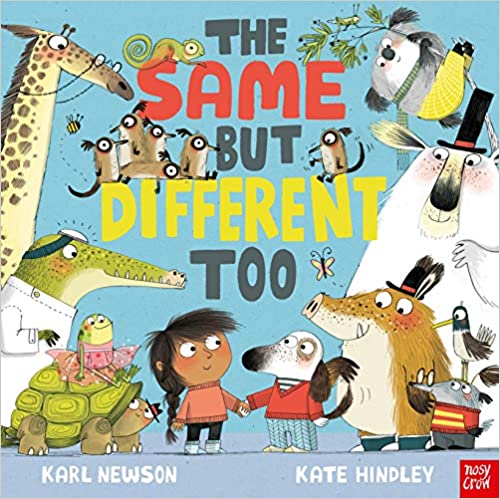 These children and animals are all very different to each other. Some are big, some are small. Some are gentle, some are rough. Everyone is playful, but who’s the best at hiding? One thing’s certain: they all love a good bedtime story! The perfect picture book for little ones who are just beginning to make sense of their place in the world.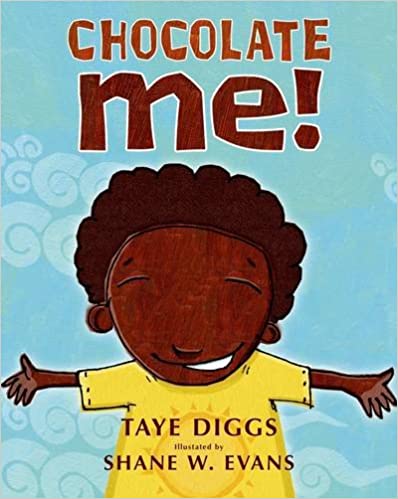
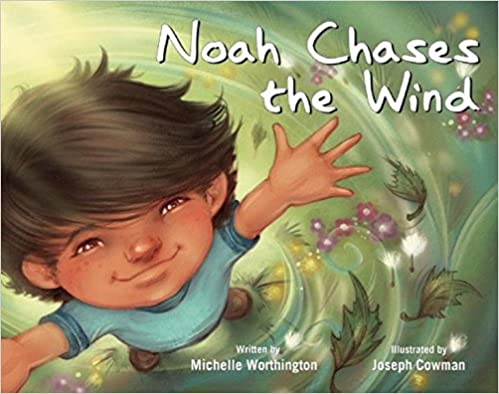 Noah is different. He sees, hears, feels, and thinks in ways that other people don’t always understand, and he asks a lot of questions along the way. Noah loves science, especially the weather. His books usually provide him with the answers he needs, until one day, there’s one question they don’t answer—and that is where Noah’s windy adventure begins.This book celebrates the inquisitive nature of all children, including those on the autism spectrum, who cannot stop asking a question until an answer has been unearthed. The book contains a page of information for parents, caregivers, and educators about the importance of helping children feel good about their differences and know that being different is okay.
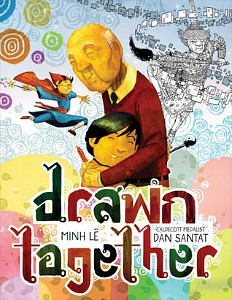 A young boy dreads his visits to his grandfather. They don’t share a language, so their time together is strained, awkward, and silent. Until they discover a shared love of drawing. Together, they find a common language through art. Drawn Together shows that meaningful relationships are possible even across communication barriers, and as their illustration
 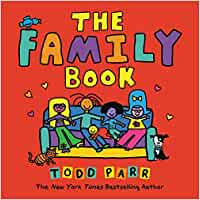 The Family Book
 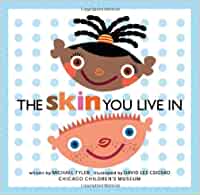 The journey starts on a sunny day in New York City and ends on a beautiful San Francisco night, with stops in Mexico City, Rio de Janeiro, London, Paris, Cape Town, Cairo, Beijing, and Tokyo. These friendly babies welcome us to their cities with delightful greetings in their original languages (with English translations) in a simple narration that will appeal to any global mini citizen.
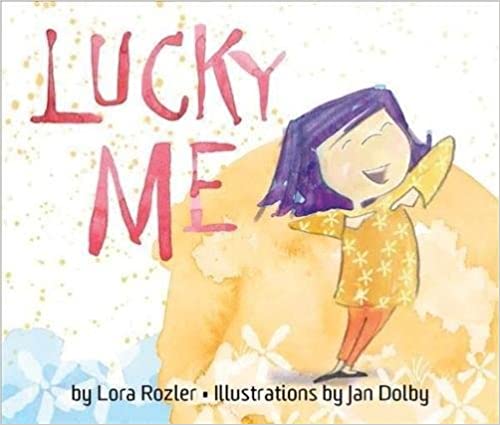 Lucky Me invites readers on a journey around the world to explore life’s simplest, yet often overlooked treasures. Pages come alive with a series of evocative, gratitude-filled messages, accompanied by Thank-yous translated into various languages, emphasizing global diversity.
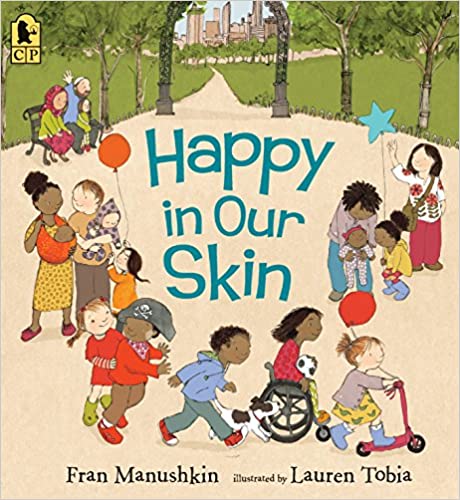 Is there anything more splendid than a baby’s skin? Cocoa-brown, cinnamon, peaches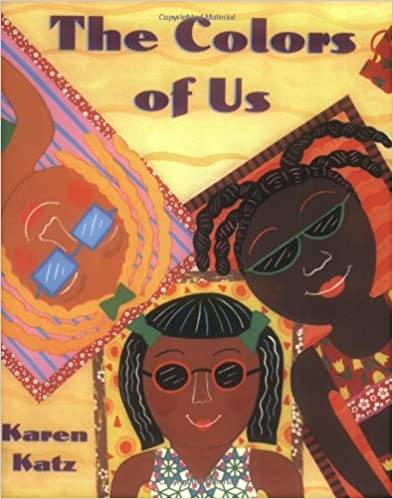
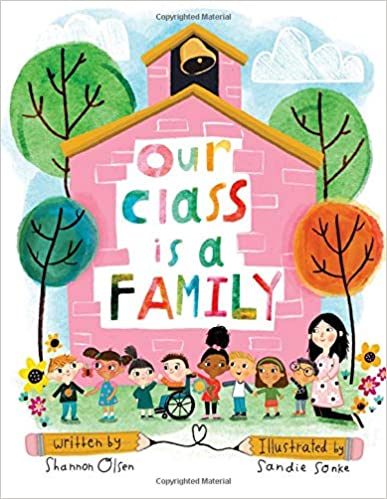 With its heartfelt message and colorfully whimsical illustrations, “Our Class is a Family” is a book that will help build and strengthen that class community. Kids learn that their classroom is a place where it’s safe to be themselves, it’s okay to make mistakes, and it’s important to be a friend to others. When hearing this story being read aloud by their teacher, students are sure to feel like they are part of a special family.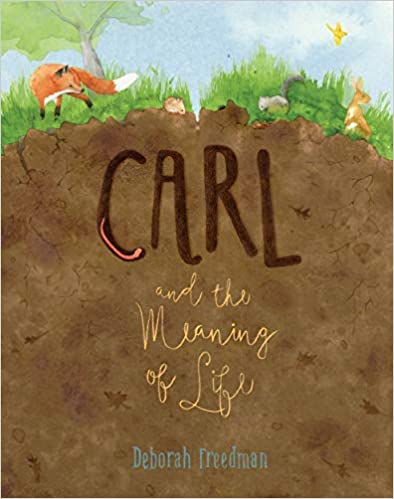
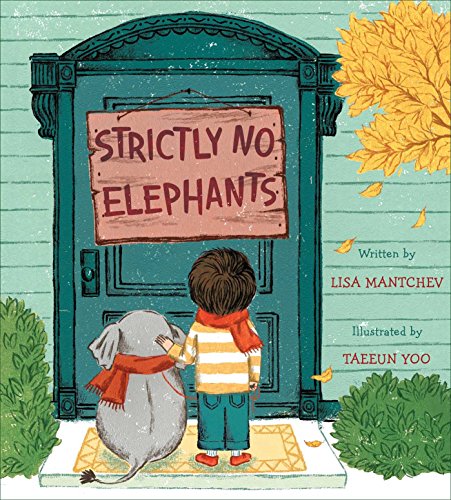 Today is Pet Club day. There will be cats and dogs and fish, but strictly no elephants are allowed. The Pet Club doesn’t understand that pets come in all shapes and sizes, just like friends. Now it is time for a boy and his tiny pet elephant to show them what it means to be a true friend. A sweet story of friendship, acceptance, and inclusion.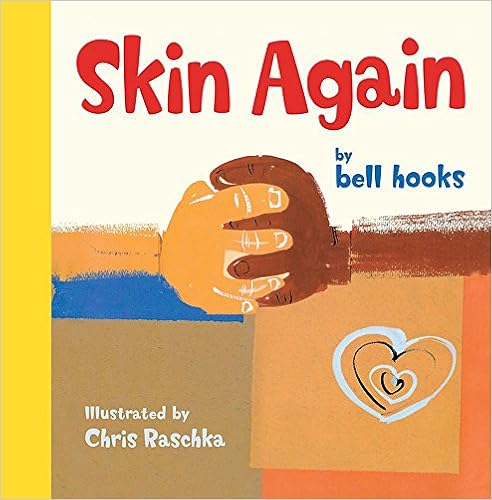

 So we’ve been cooped up at home for quite some time now due to the pandemic. For us adults, the use of technology plays a pertinent role in maintaining our social connection to the outside world. But for the little ones whose main form of socialization stems from the school environment, this can be especially difficult.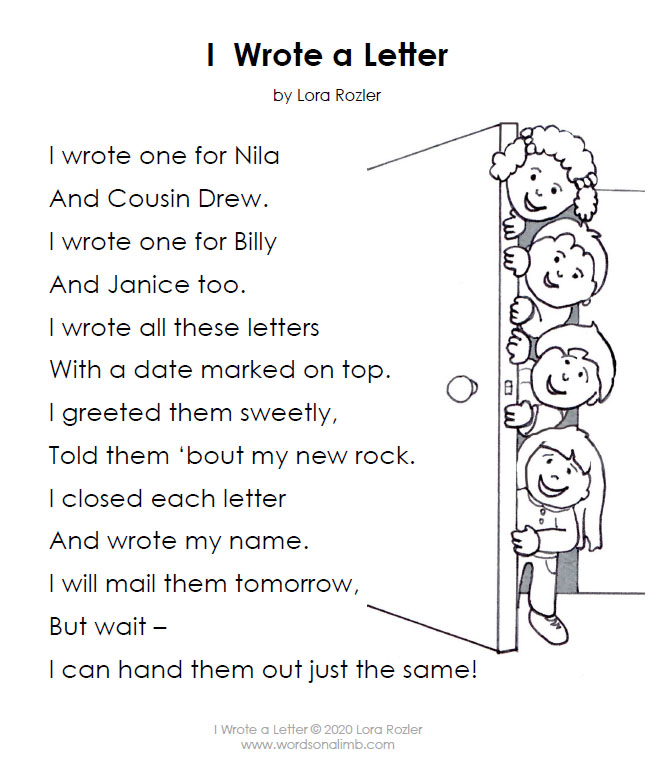


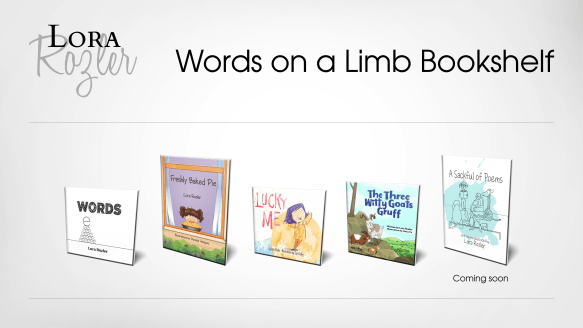

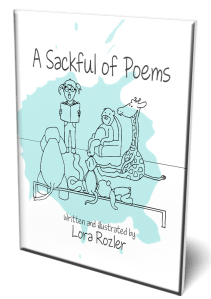 This inspiring collection of poems for children range in topic from educational to humourous, from seasonal to downright heartwarming. With over 90 pages of poems that will become timely treasures.



 Words On A Limb