by Teresa Villegas co-author and illustrator of children’s book “How We Became a Family”
 Talking with children about difficult topics (such as sex, birth, death, war, politics, etc.) doesn’t have to be so difficult, if you have already established an open style of communication with your child. What exactly is an “open style of communication” and how to achieve this?
Well, it turns out that it’s basically the same kind of communication style that you would have with anyone; adult or child, relative or friend. And it’s founded on a handful of common courtesies: listening, respect, empathy and love.
Open positive communication with children means paying attention by listening to them without interruption, respecting the child’s thoughts and feelings, and connecting with them by empathizing with their opinions and views. Love is what binds this all together in how we express ourselves to children and watching the tone of our voice when we speak can either cause the conversation to open or to close.
 Listening and respecting others are pretty much self-evident, and is only a matter of allowing yourself to put them into action. Children learn “active listening skills” from their grade school teachers and keep us reminded of this elementary skill we adults and parents now call “being present.” When we talk to other adults, we can openly challenge that which we do not agree with. However, this approach can stifle a child’s willingness to speak openly. Since their desire is to please us, we need to make sure we do not curtail their emoting by our statements. We need to acknowledge their point of view, and then we can proceed to explain why we believe our point of view.
Empathy can be defined as the ability to feel or imagine another person’s emotional experience. An innate quality we are born with that allows us to make personal and social connections with others and to further the line of our species. Children are closer to their feelings than most adults, and that’s a good thing! We can all respect and understand the feelings of anger, frustration, uncertainty, loss, grief, and joy.
Love and the tone of voice when we are communicating, are not always one and the same. Our tone of voice conveys more to our children than any words. Statements can spill out of our mouths without our realizing how it can sound to a child. Tone of voice and listening were the two skills I immediately noticed and admired when I first met my husband before I knew what he did as a profession. As we became friends, then newlyweds and then as new parents, his listening-skills-training as a psychologist and physician, fostered an open communication style within our relationship and with our children. But you don’t need to be a doctor or married to one to put these skills into use. When attention is given to listening and noticing our projected tone of voice with our responses, we learn a lot about ourselves and how we come across to others with whom we are communicating, especially our children. When we convey patience and serenity in our conversation, it opens up discussion.
When our children ask us questions and/or interrupt us, our tone of voice may often be saying “what now?”or “can’t this wait?” or “I really don’t know how to answer that” combined with our curt words answering “yes, sure, maybe, no, not now, later, ok?” When I catch myself doing this dance of communication avoidance, especially with  tough questions or topics I’d rather put off for an eternal “another time”, I’m reminded of two thoughts I’d like to share with you. I don’t remember which of the gazillion parenting books or articles where I read these, so I apologize for my failure of referencing the particular sources. Their emphasis on focusing on the moment and their wisdom reached out and grabbed my attention and my heart. They have helped me and have stayed with me to this day. I hope they do the same for you.
• Ask yourself “when your child walks into your room, does your face light up? Is your child aware of how important they are to you and how much you value their presence?”
• When you find yourself talking with another person or child, ask yourself
“Is love available here? Can I make space for love to enter into this conversation?”
When I can stop (this is a conscious ongoing process for me), and if I can remind myself of these two concepts above, it helps me to come to center with every tough question or conversation our children bring up and it becomes easier to communicate in an open, honest and authentic way.
One of the toughest topics we are very familiar with and have been talking a lot about 
since our children were born, has to do with how many different ways that families are made. In today’s society, along with the advocacy of open communication and open information on the internet we know that there are many different kinds of families. For some families like ours, it takes more than the traditional concept of family. Sometimes, it takes science and the help of others.
Talking about infertility and how you built your family via IVF and an egg donor or a sperm donor is more accepted now than it was 10 years ago. Awareness is growing. However, it’s still a topic that can be hard to broach with your family, friends, and your children. It is our hope that creating a family with donor assistance will become as common to talk about and accepted in our society as adoption has become.
Within the U.S., more than 10% of all couples suffer from infertility and one in eight couples need medical help to create their families. Fortunately, there are many options with the help of medical science and a donor, but many parents are at a loss to explain this process to their child.
With so few role models to follow, it’s hard to know how to approach this conversation with young children. The following tips will help parents feel comfortable and begin telling their donor-conceived child, how they became a family through science and the help of others.
For more in-depth information please visit our website HowWeBecameaFamily.com.
How To Talk With Your Child About Their Donor Origins
1. Let Go of Your Genetic Dream Family. Acknowledging that you wont be raising a child with yours and your partners’ genes combined is heartbreaking for most couples, and it’s normal to experience this grief – if you allowed it. After experiencing years of infertility, and in your drive to become pregnant, you may have skimmed over or delayed this first crucial step. If you have not begun this subtle, yet necessary step, it may be part of what’s holding you back from feeling ready to talk about it.
2. Define Your Beliefs About Family. Defining what family means to you will strengthen your ability to communicate about how you chose to build your family, should you encounter any negativity about your decisions. Perhaps what you’ve discovered is that love, trust, relationships and support are the foundations that make up a family – not genetics. Understanding how you feel about your choices will make it easier for you to explain them to your child.
3. Affirm The Donor. Regardless of whether you chose to have an open or anonymous relationship with your donor, it’s a good idea to talk with your child about the significance of the donor’s role with appreciation and respect. Children intuitively tune in to your feelings about the donor. Because the donor will forever remain in your awareness, and because how you think and feel about the donor will affect your child, embrace them and celebrate them wholly.
4. Tell Your Child Early. Generally, it is not conception that you want to communicate about as much as the unique path by which your child has entered into your family. Therefore, begin to practice talking about the presence of the other people in that child’s life to whom they may be genetically related, normalize it as it is – a basic fact about their life. “Before you were born, we needed help from a very kind person, for us to make you.”
5. Embrace Your Child’s Curiosity. As your child learns about their donor origins, they may be curious about the donor and wonder and ask questions such as “What are they like?” What do they look like?” As your child grows, they may ask more mature questions such as “Why did they donate?” “Do they have children too?” Research shows that donor conceived people are inquisitive about their donor origins even when they experience positive parent-child relationships. Curiosity will continue and evolve and they will look to you to help them understand it all.
 Using a children’s book to introduce the conversation with your child about their donor conceived beginnings is an easy way to start. The How We Became a Family children’s book series is a welcome relief for parents of children born through IVF with donor conception. There are four versions available depending on your family’s needs. Two versions are for families whose children were conceived with an egg donor, resulting in either a single child, or twins. Two other versions are for families whose children were conceived with a sperm donor, resulting in either a single child, or twins. The books are beautifully designed, with highly-nuanced illustrations with remarkable combinations of depth and whimsy to be read with children ages 2-10. Introduce the conversation with ease by simply reading together. Published by Heart and Mind Press it is now available. Each book is a high quality hardcover children’s picture book with a matte varnish cover, full color, 32 pages of heavyweight uncoated interior pages, 8″x 8″ for parents to read with their child. For more details on how to purchase a book, for your family or as a thoughtful gift, visit HowWeBecameaFamily.com.




 I was able to connect with Teresa and Bernard through our site’s various communications with authors and illustrators. After reading their book, I felt their story shone a light on a topic that most of us do not typically have a chance to discover, unless of course our lives are touched by this miracle. As a bonus, we also learned some healthy tips on relating to the most important loved ones in our lives.
I want to extend a warm thank you to Teresa for taking a moment to enlighten us today. We wish them love, happiness and continued success with their blessed home and their endeavor to help educate. I encourage you to visit their website and “fill your tool box”.
Lora

 Words on a Limb would like to wish everyone who is celebrating, a Happy Passover and a Happy Easter!
 To make the soup, grate and combine 1 of each of the following: carrot, zucchini, turnip, sweet potato.
 In a wide pan, boil water, adda dash of salt, 1 tablespoon of oil, and cook a few of the balls at a time (not to overcrowd pan). When the balls rise to the top (about 5 minutes), scoop them out. Continue until all are done.
 When vegetables in soup pot are tender, add enough boiling water to go just below rim. Season the soup with 2-3 tablespoons of chicken seasoning mix. Add additional seasoning to your liking, including paprika, turmeric powder, and salt.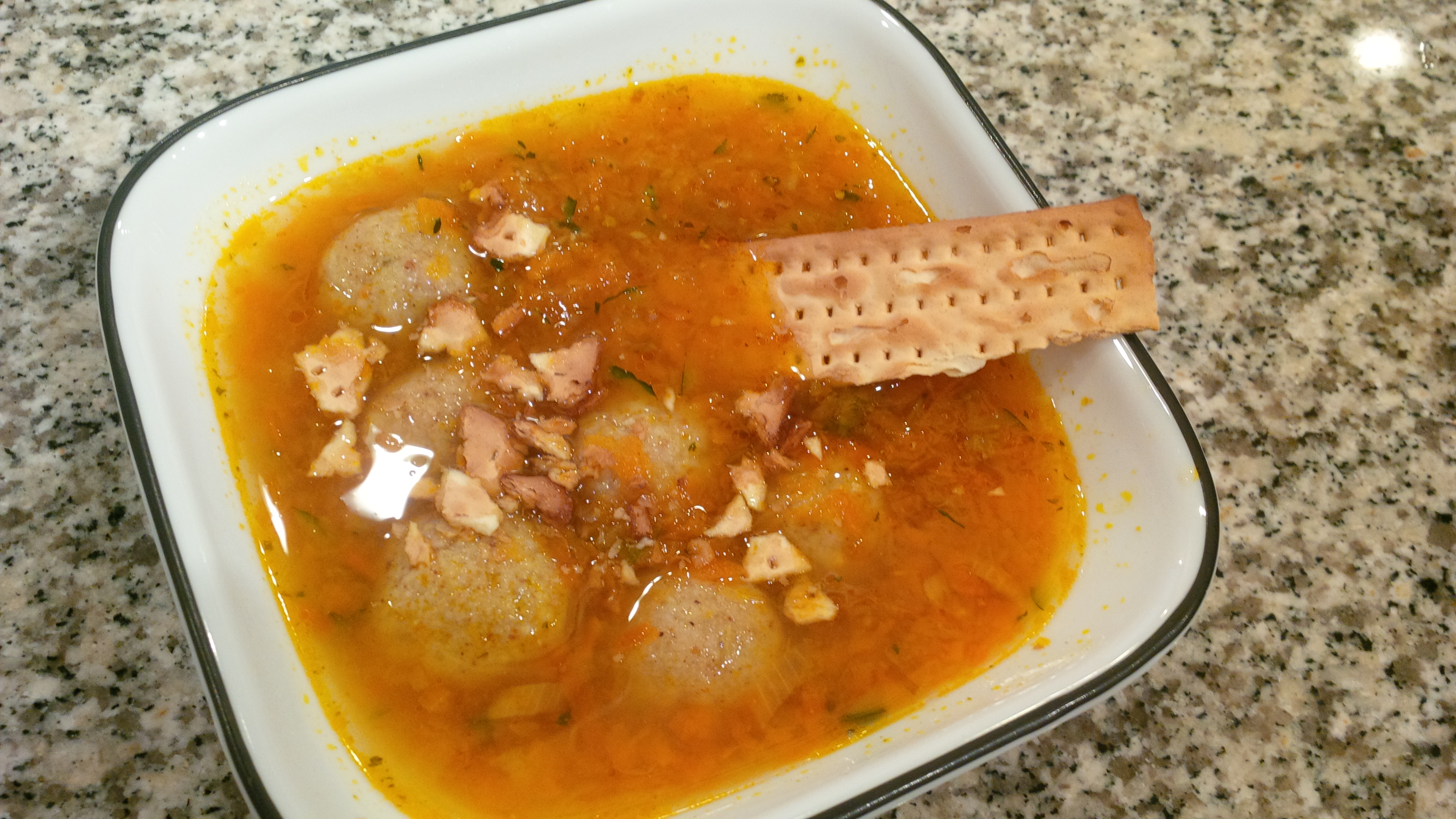
 olive oil. Season the beef pieces with salt and pepper, and add them to the oil. Let the beef brown on both sides. Cut the onion in half; stud each half with 3 cloves. Cut the celery and carrots into chunks add them to the pot with
  the onion, the herbs, and 3 quarts cold water. Let broth come to a boil, then reduce heat to a simmer. Skim off any gray foam that forms on top; simmer soup for one hour. Add the lamb pieces; simmer the broth for another hour, skimming as needed.
 save the meat for a delicious salad: Shred the meat finely and dress with olive oil, red wine vinegar, minced red onion, chopped capers, fresh parsley, salt, and pepper—terrific on top of toasted bread rubbed with a little garlic.) The broth can be made a day ahead of time and refrigerated overnight.
 and let it sit in the pot for about 3 minutes. Taste for seasoning and add salt if necessary. It is important that the broth is hot, but not boiling, which would curdle the egg yolks. Place a warm, toasted round of bread, dribbled with some extra-virgin olive oil, in the bottom of each soup bowl.
 lightly with the minced fresh marjoram and parsley, a few grinds of pepper,
  and the lemon juice. Slowly ladle in the hot broth,whisking simultaneously to prevent the egg yolks from curdling. Immediately ladle the soup into the bowls and over the bread; grate plenty of Parmigiano-Reggiano over the top.
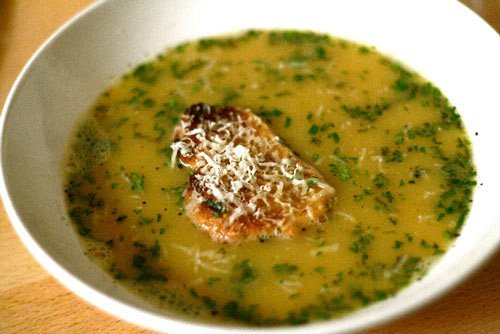 Enjoy your soup!

 Another reason I love multi-race marriages is that they are creating new ‘breeds’ of children. We are now able to loosely and humourously identify them as Filatinos, Blacknese, Chicanese, Chindian, Korgentinian or even Blaxican! From blue-eyed kids with afros to freckled brown skin with natural blonde hair, these children no longer fit in distinctive racial silos. I look at these families and I see nothing but beauty and a whole new world ahead of us.
 Multi-race children inherit multiple ethnic backgrounds and by understanding the heritage of both their parents, they usually have a broader sense of the world. It allows them to be more empathetic in different scenarios instead of just having the one view-point. They become naturally open to understanding that different people make different decision based on diverse motivations. Possessing more than one language also contributes to children being more open-minded and worldly. The subtle etymology of their language brings about insights into their ethnicity.
 Bullying is a major problem in our schools, workplaces, homes, and over the Internet. During the month of February, many organizations across Canada will work to raise awareness on this issue and give us the tools needed to stand up against bullying and step in when we see it happening. February 25th is





 Today is the day.





 generally cheer for Canada. We are fairly interested in how well our country, or adopted nation, is doing. During this time, we are all Canadian. Also, people are watching events they only care about once every four years. But when you talk about the World Cup, there’s a greater fascination with it because more people around the world watch football every week of every month of every year. When the big tournament finally rolls around, people begin to identify with their country of origin, a nationalistic fever rises up. Ethnic groups that were proud to cheer for Canada during the Olympics, suddenly discover their roots. Furthermore, even if your nation did not make it through the grueling 2 year World Cup qualification period, you will find a country to raise your voice for. That is the magic of football. It unites us all, under the umbrella of a global spectacle.
 I was lucky enough to see Ecuador make it into the World Cup this time around, in a tough group, no less. But for 2 weeks, I was Ecuadorian, and staunchly so. That’s right; I was out on the street, waving my flag, in my nation’s jersey, shoulder to shoulder with other compatriots when they defeated Honduras. Then, I was proportionately devastated when they could not score just one more goal against the mighty French to see themselves through to the next round.
 coverage of stadia, bars, streets and homes all around the world, you see women, men, children, grandparents, people from all walks of life, uniting to express their cultural pride for their colors. Cars honk to acknowledge your allegiance, people give you high fives in the supermarket when they see you in your nation’s jersey, and people share your pain walking down the street when your colours are defeated – the ultimate cultural expression.
 in the world, and they know what to do. I’ve actually experienced this unique pleasure when I travelled through Europe. Wherever I visited, I picked up a little football souvenir and on several occasions, kicked it around in airports and train stations with people I had never met in my life, regardless of the fact that we did not share a language. That is powerful.
 imagine. I watched the final in front of a massive screen on the streets of Avellino. When the last penalty went in and the blessed Azzurri were proclaimed world champions, I was embraced by hundreds of euphoric fans. What followed was an incredible, jubilant, yet peaceful celebration in the quaint little avenues of the small Italian town.
 representation is, by no means, unique to football. But the World Cup manages to elicit a more passionate, fervent and almost religious-like following from more fans around the planet than any other event, including the Olympics. The tournament has a way of enabling citizens to puff out their chest; of giving them license to say this is our team and having great pride in their nation, and no other sporting event does that because no other sport truly embraces so many people from every corner of the globe. It is the ultimate economic equalizer. It is enjoyed in the poorest as well as the richest nations on the planet. It removes all obstacles and boundaries. Case in point, legends like Pele and Maradona used football to escape abject poverty. Magnates have built vast empires on the power of its fanaticism. The beautiful game is talked about in the most desolate favelas of Brazil just as it is in the wealthiest lunch rooms of Wall Street in New York.
 the key one: it is the simplest and therefore most accessible game to play. No need for special equipment or confusing rules. Simply kick the ball. You can use tin can, a coconut, rolled up sock, I used to play with tennis ball before my parents bought me my own shiny new football. Find a couple of shirts or jackets, or anything for that matter, as posts, a couple of friends and you have a game.
  You can play anywhere – on grass, on pavement, in the school or office hall, in the rain, mud or snow, indoors or outdoors, on the beach. This, by the way, is a distinct indulgence for me – sun shining, bathing trunks,

 Words On A Limb